A Living Surface of Goa’s Sacred Architecture
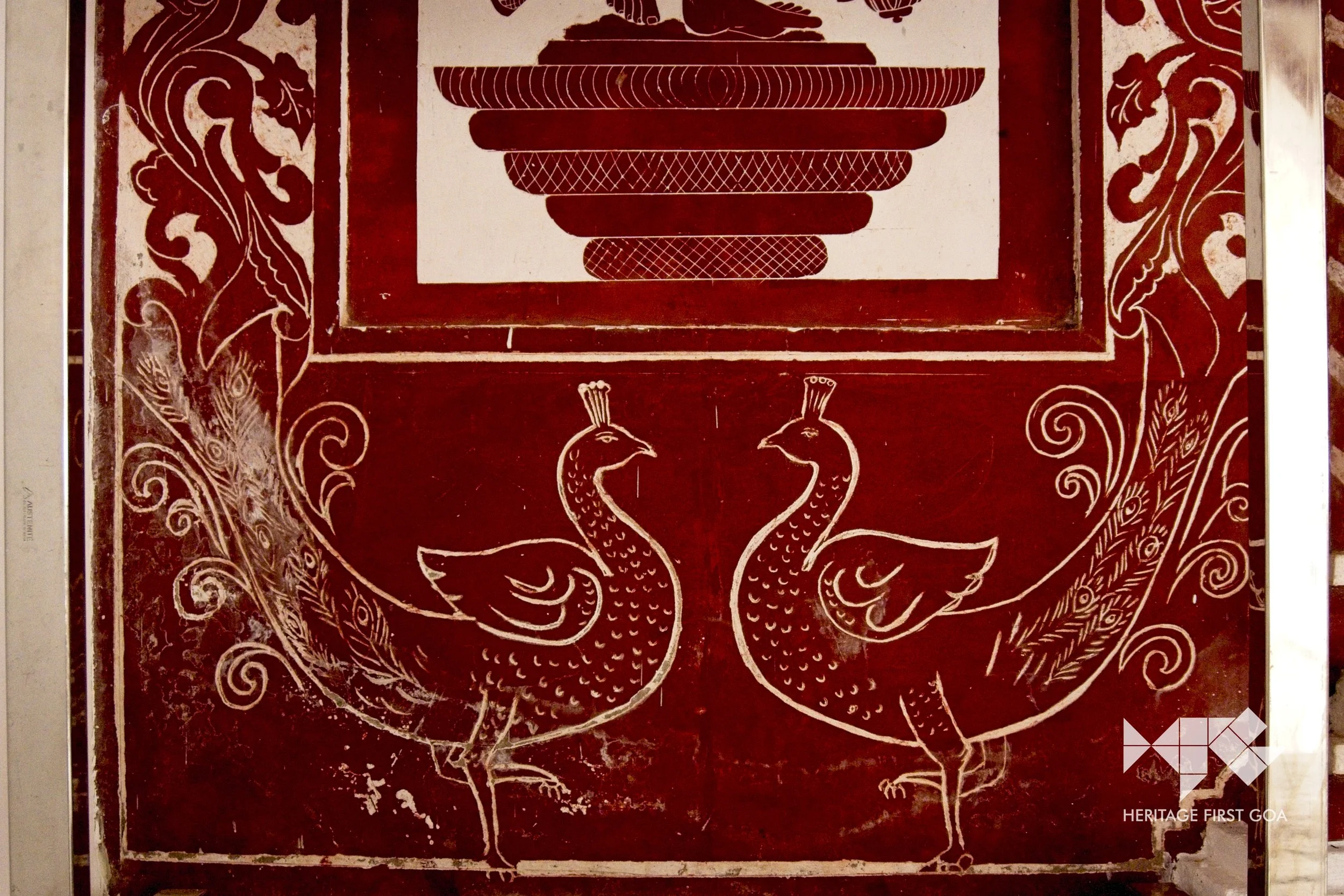
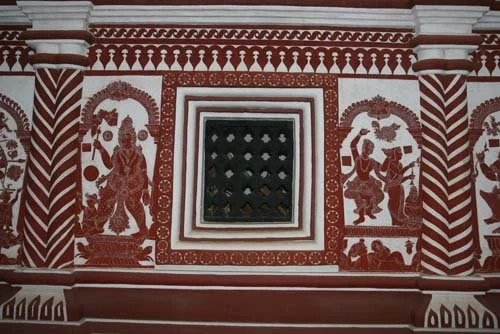
Across temples and traditional homes in Goa, one often encounters a striking visual language. Deep red surfaces emerge through crisp white patterns of flowers, geometry, and mythological symbols. This technique is known as Kaavi art, one of the region’s most distinctive decorative traditions.
Kaavi art is not simply ornamentation. It is a layered craft that combines architecture, material knowledge, ritual symbolism, and local mythology. Historically found on temple walls, prayer spaces, and occasionally residential architecture, Kaavi carries within it stories of place, belief, and craft traditions that evolved over centuries.
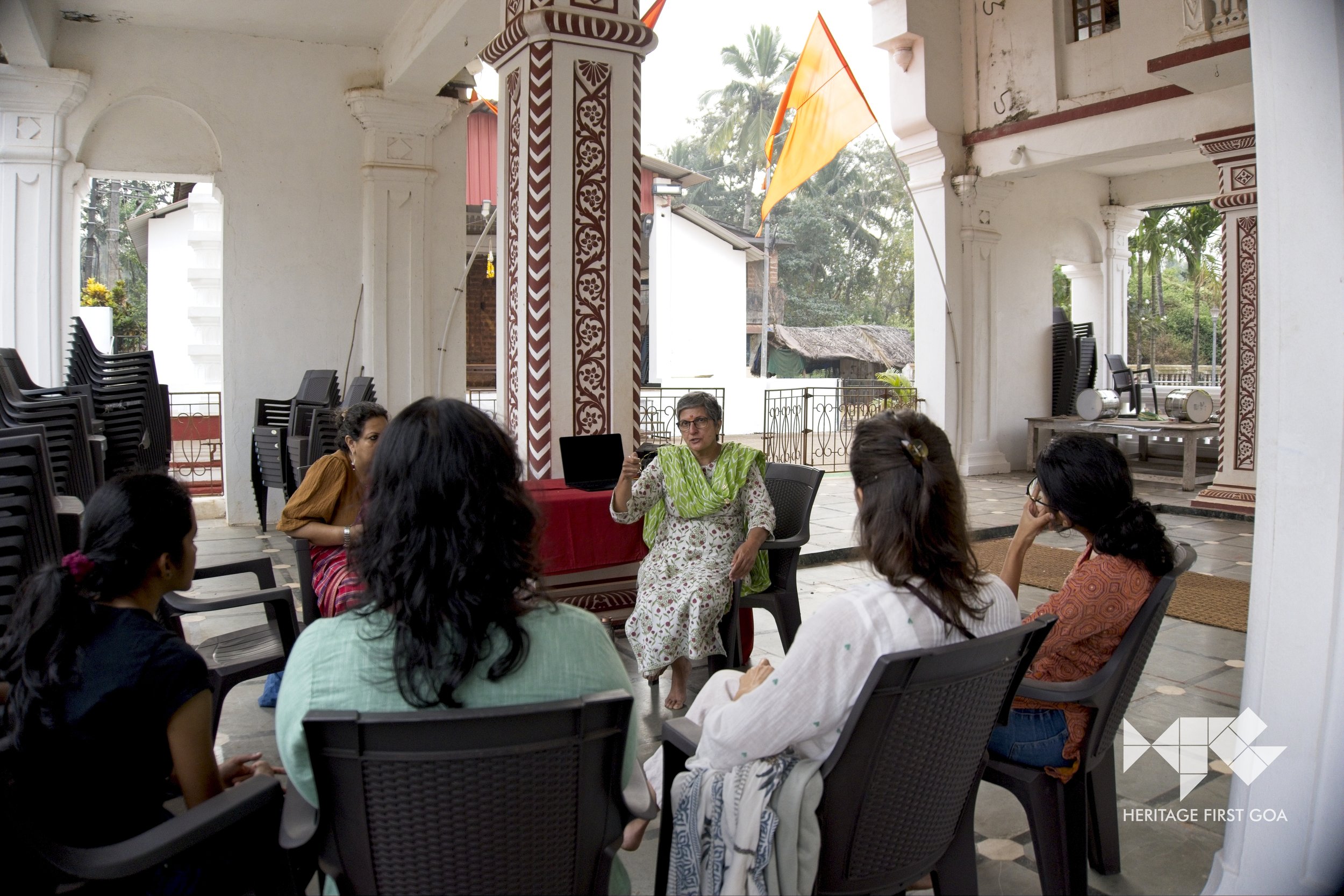
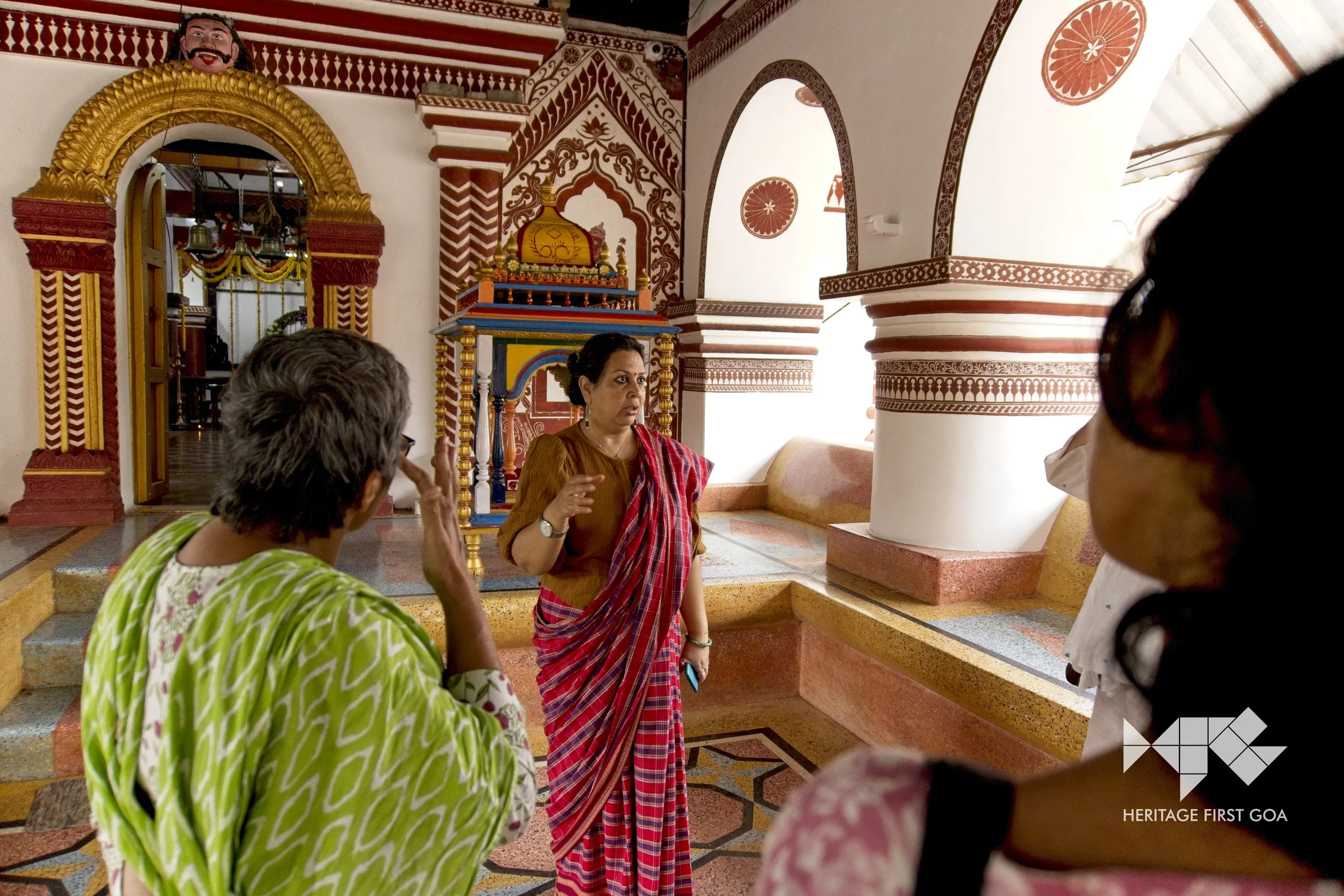
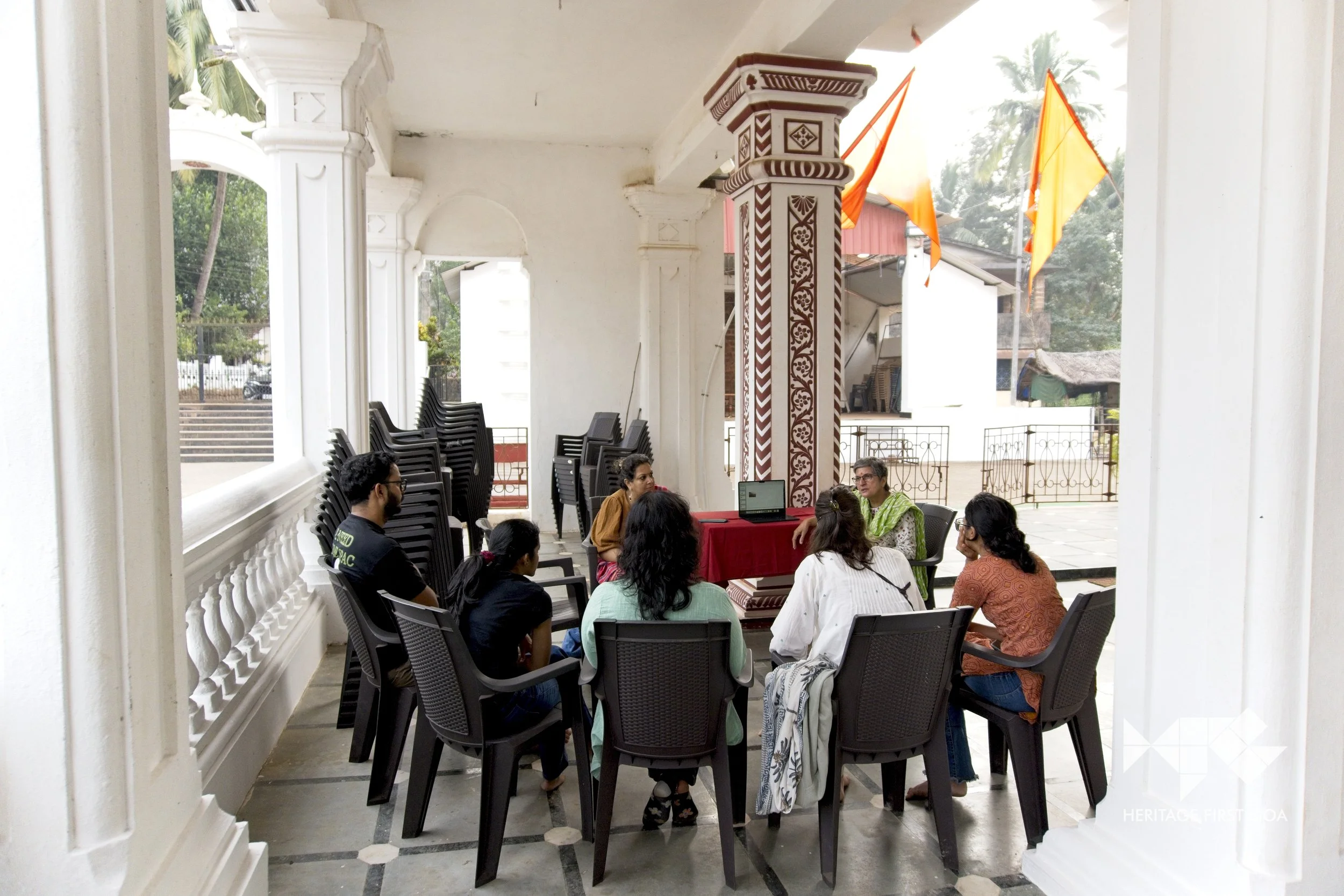
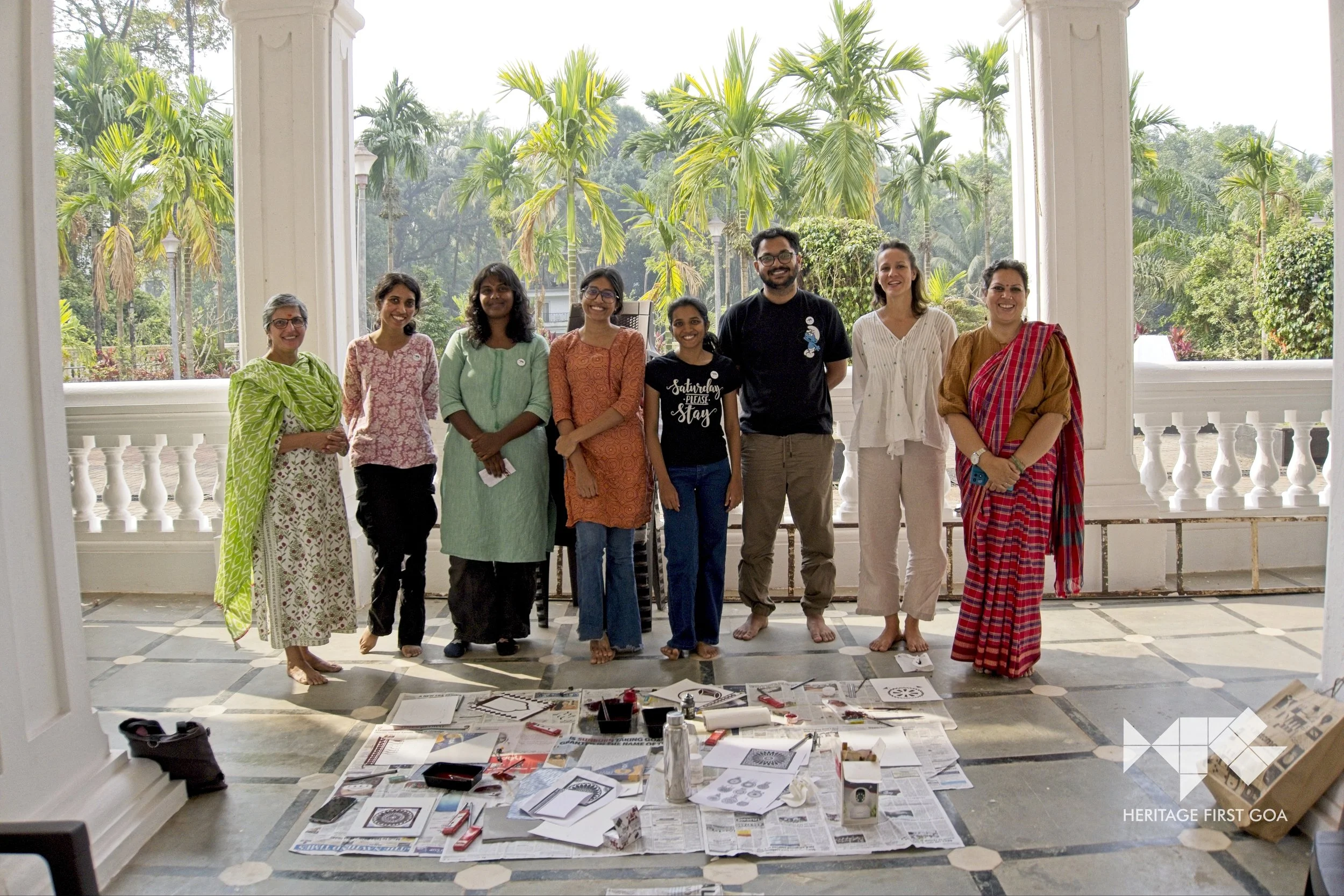
On 6 December 2025, a Kaavi art workshop organized by Heritage First Goa at Morjai Temple offered an opportunity to engage directly with this tradition. The workshop allowed participants to explore both the cultural context and the hands-on techniques that define Kaavi art.
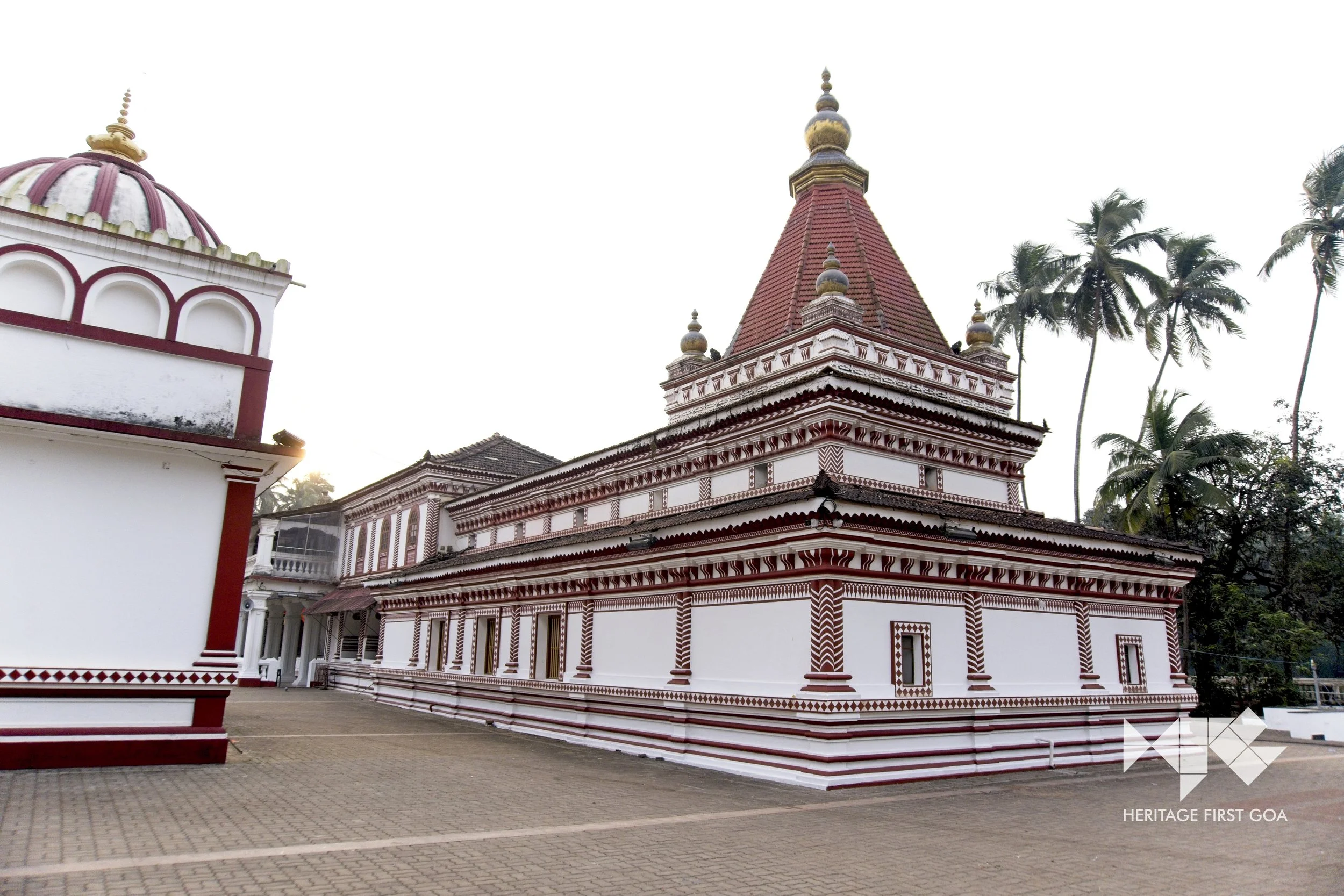
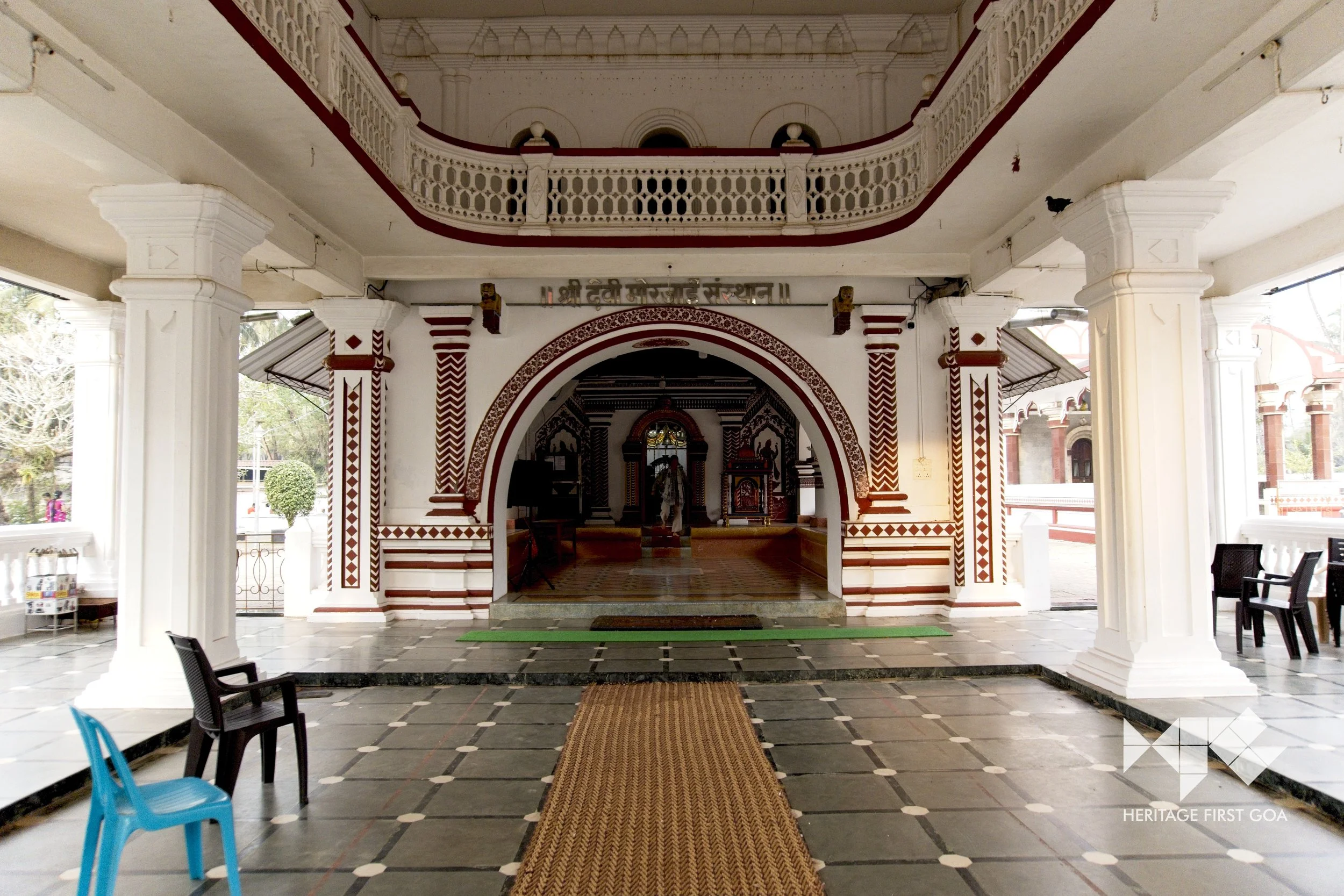
Morjai Temple, Morjim
The Story of the Seven Sisters
Several temples across Goa are tied together through the local mythology of the Seven Sisters, a group of goddesses believed to have once lived together before establishing their own sacred spaces across the region. Over time, each sister came to be worshipped in a different temple, forming a network of shrines that are culturally and spiritually connected.
Morjai is regarded as one of these sisters.
According to local narratives, the sisters eventually chose their own territories, where they became guardians of the surrounding communities. These temples grew into important social and cultural centers for nearby villages, hosting rituals, festivals, and gatherings that continue to shape community life today.
Within such sacred spaces, decorative traditions like Kaavi art take on deeper meaning. The motifs and patterns are not only ornamental but also part of the visual language of devotion. At Morjai Temple, this layered relationship between mythology, architecture, and craft becomes particularly visible, where the built environment reflects both belief and artistic tradition.
Understanding the Red in Kaavi Art
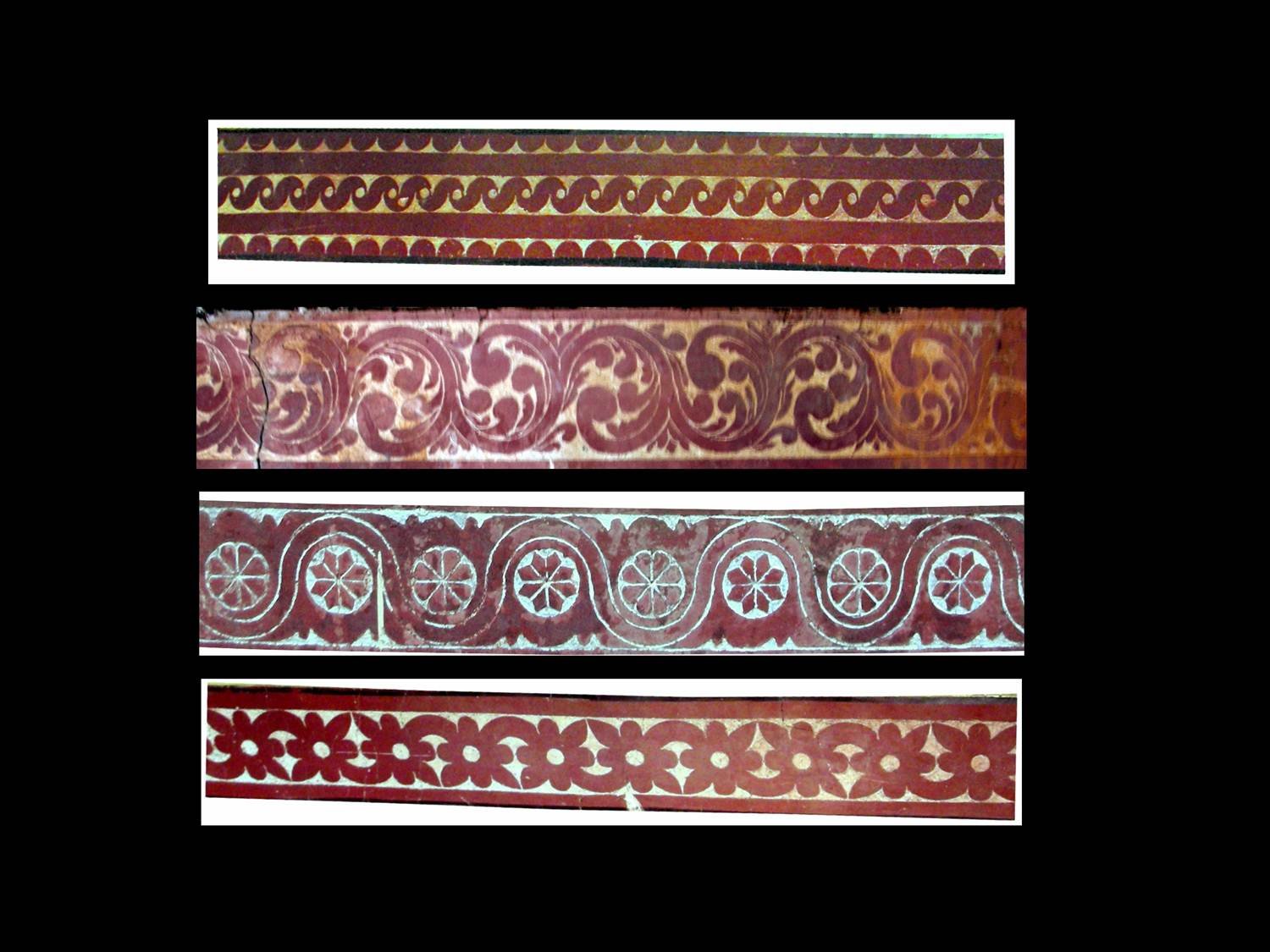
One of the defining features of Kaavi art is its intense red background.
The colour comes from red ochre pigment, traditionally derived from locally available lateritic soils. Goa’s laterite-rich landscape naturally lends itself to this palette. The red surface is not painted in a superficial sense. Instead it forms part of the layered lime plaster system used on the wall.
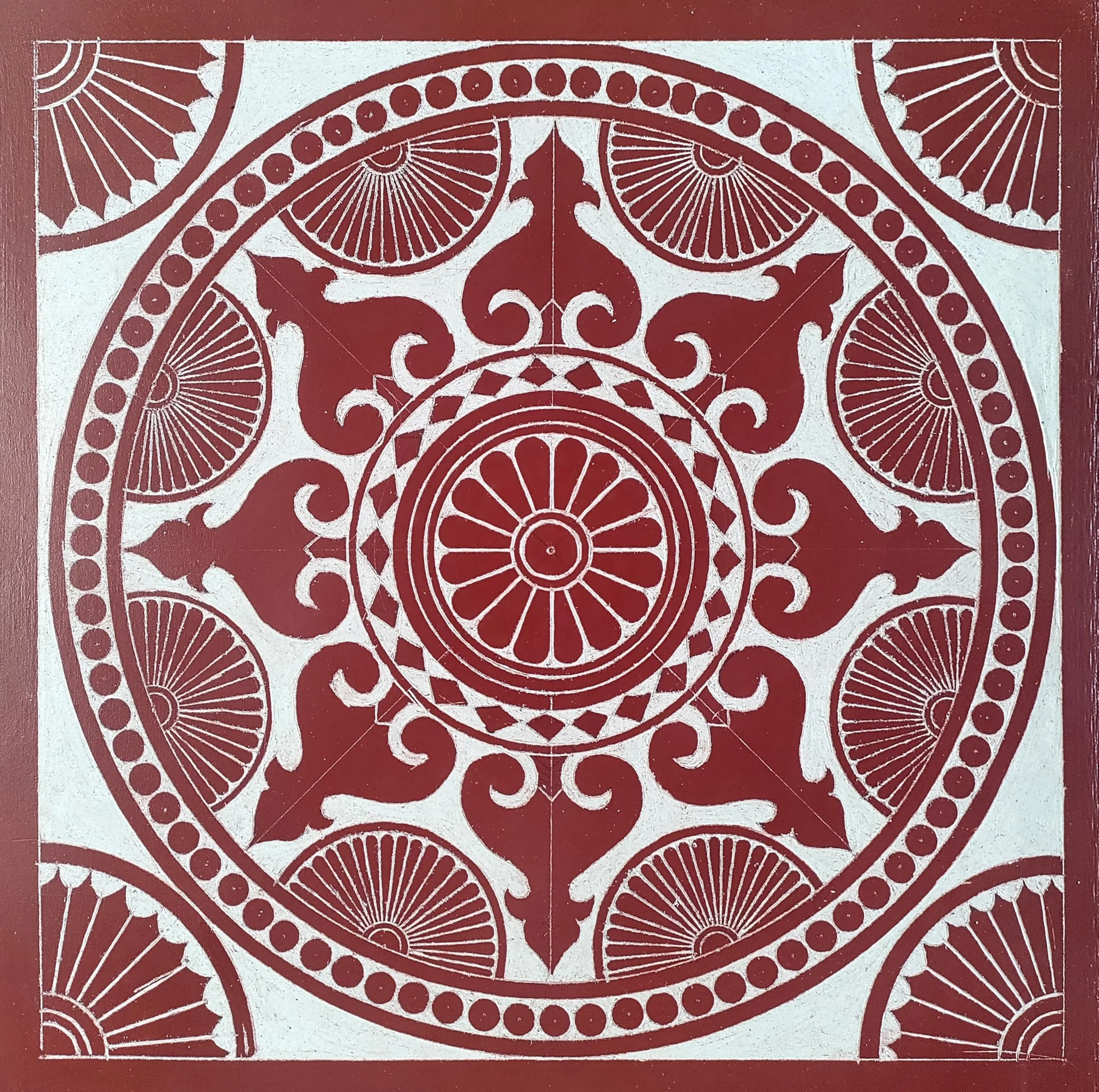
In traditional practice, a layer of lime plaster is mixed with red ochre pigment. While the plaster remains moist, artisans carve or scrape patterns into the surface to reveal the white lime beneath. This process creates the characteristic contrast of white motifs emerging from a red field.
The red colour carries several associations. It connects to the earth, to laterite stone, and to ritual symbolism where red often represents fertility, strength, and protection. In temple architecture the colour also visually anchors the building to its landscape.
The Craft and Process of Kaavi Art
Kaavi art is defined as much by its process as by its visual outcome.
The traditional technique involves several stages:
1. Lime plaster preparation
A smooth plaster surface is prepared using lime and sand mixtures. The quality of the plaster determines the clarity of the carved patterns.
2. Red ochre layer
A layer of lime mixed with red pigment is applied over the plaster.
3. Pattern tracing
Designs are marked onto the surface using stencils, charcoal, or freehand drawing.
4. Scratching or carving
Artisans carefully scrape away sections of the red layer using metal tools. This reveals the white lime base beneath.
The result is a relief-like graphic surface where motifs appear crisp and precise.
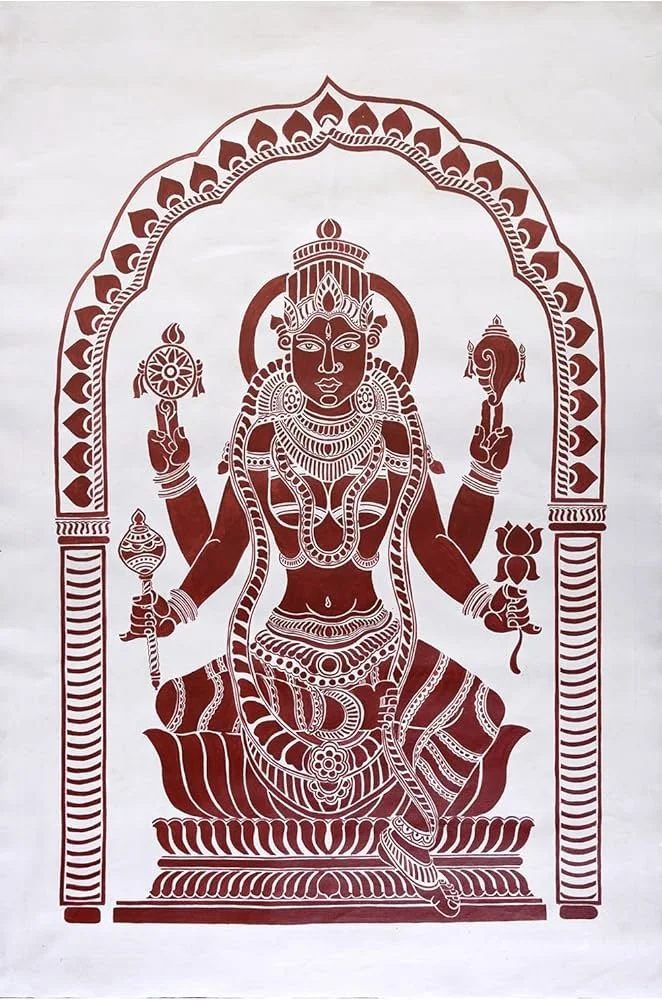
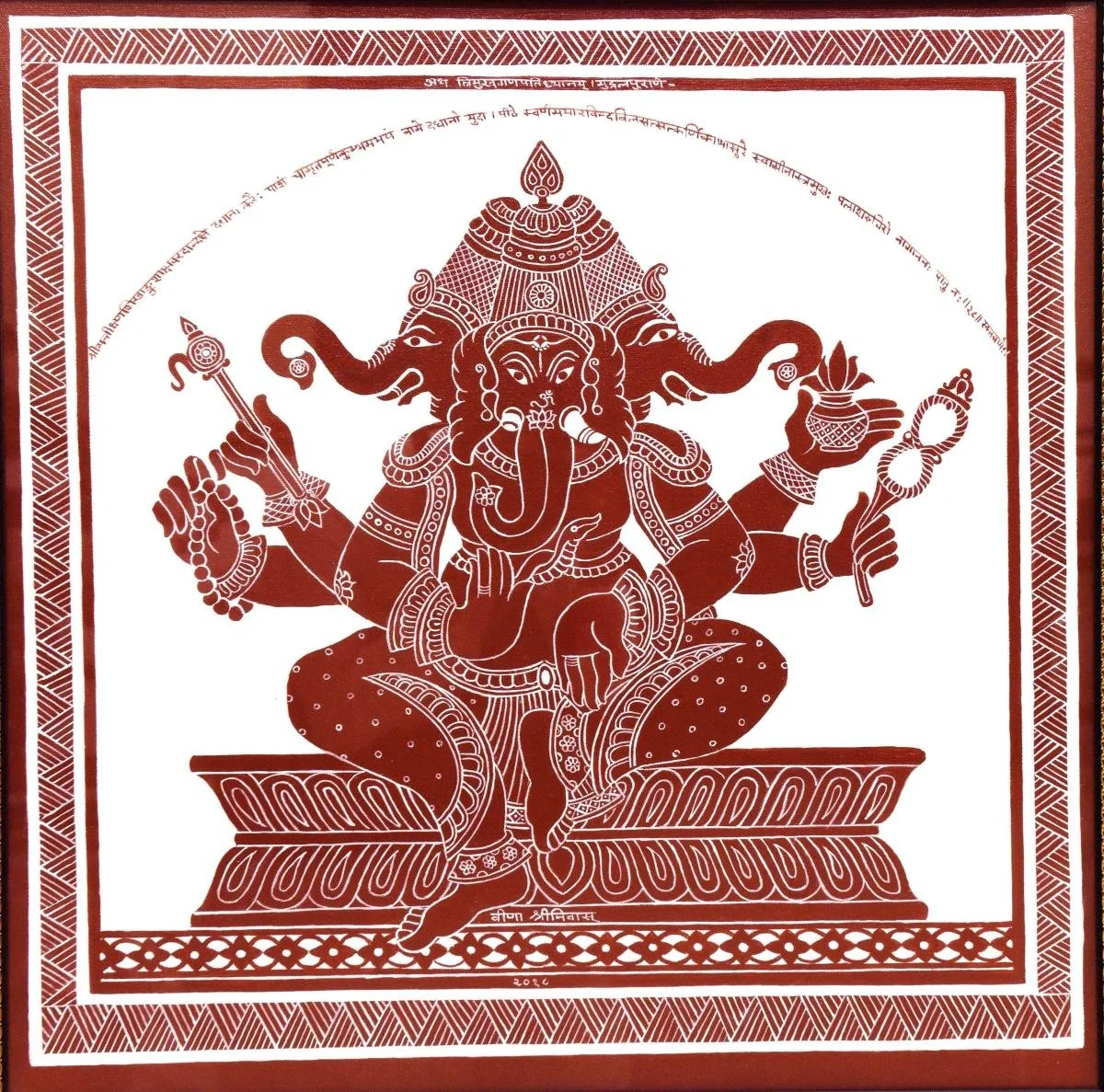
Common motifs include floral patterns, mythological symbols, sacred geometry, and decorative borders. Many patterns carry influences from both local Hindu temple traditions and broader decorative languages that traveled along the western coast through centuries of trade and cultural exchange.
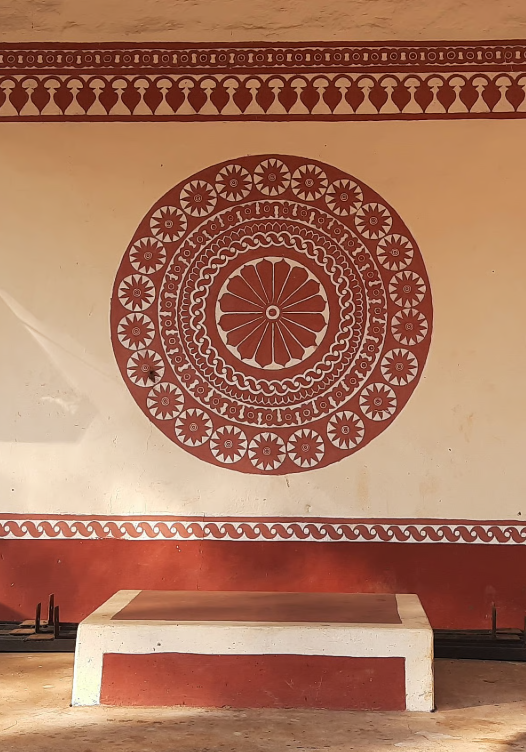
Image from Gomantak Times
Evolution of Kaavi Art
Over time Kaavi art has evolved in response to changes in architecture and material practices.
Originally associated primarily with temple architecture, the technique gradually appeared in residential and Indo-Portuguese buildings as decorative panels or borders. The craft also adapted to different scales. Large narrative panels coexisted with smaller repetitive motifs used along plinths, niches, and verandahs.
However, with the rise of modern cement-based construction, traditional lime techniques began to decline. Cement surfaces do not allow the same carving process that Kaavi requires. As a result, many existing Kaavi surfaces today survive primarily in historic temples and older homes.
Recent conservation efforts and workshops have begun to revive interest in the craft, encouraging architects, artisans, and heritage practitioners to understand the material knowledge behind it.
Learning Through Making: The Workshop Experience
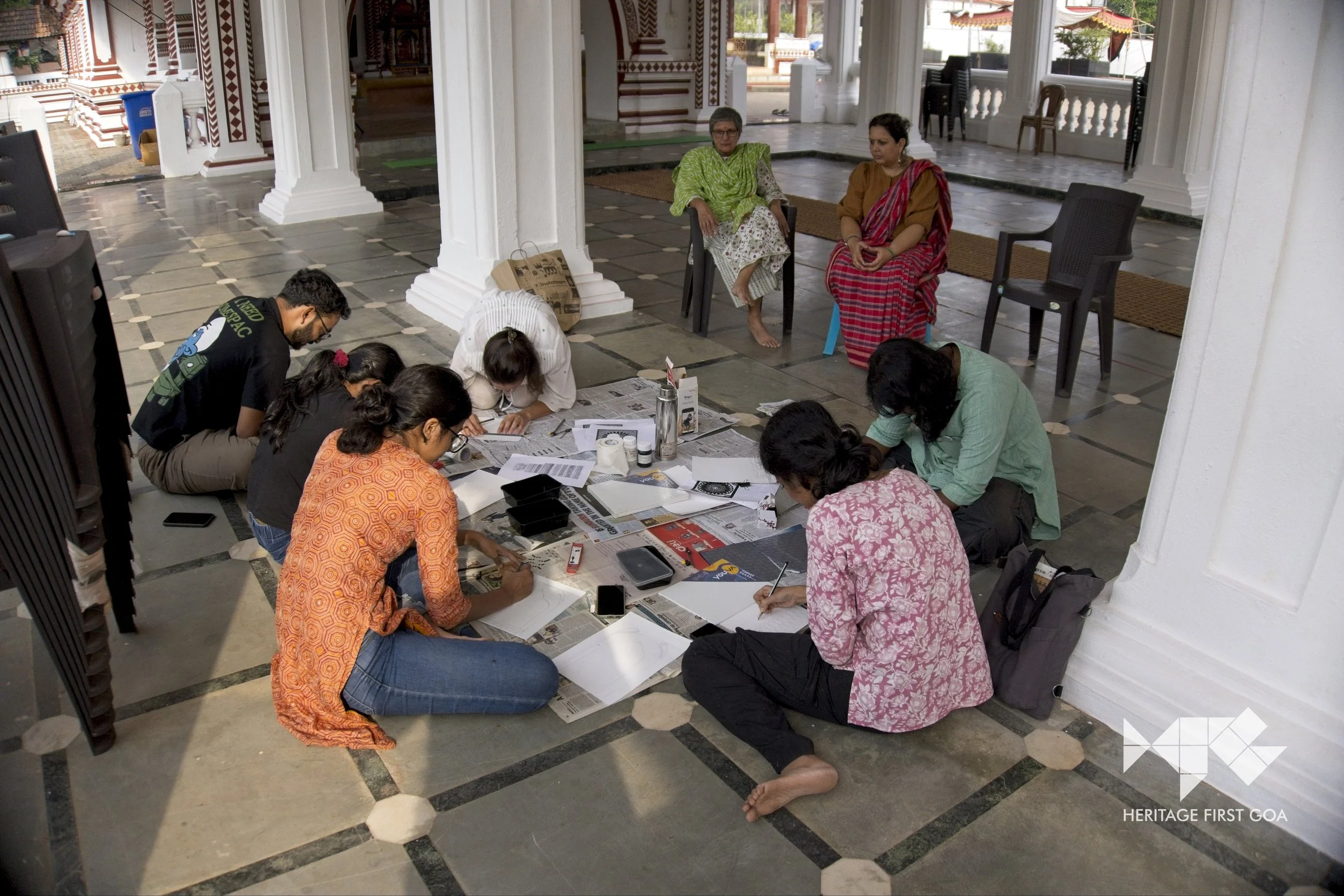
The Kaavi art workshop organized by Heritage First Goa at Morjai Temple was designed to make this tradition accessible through practice.
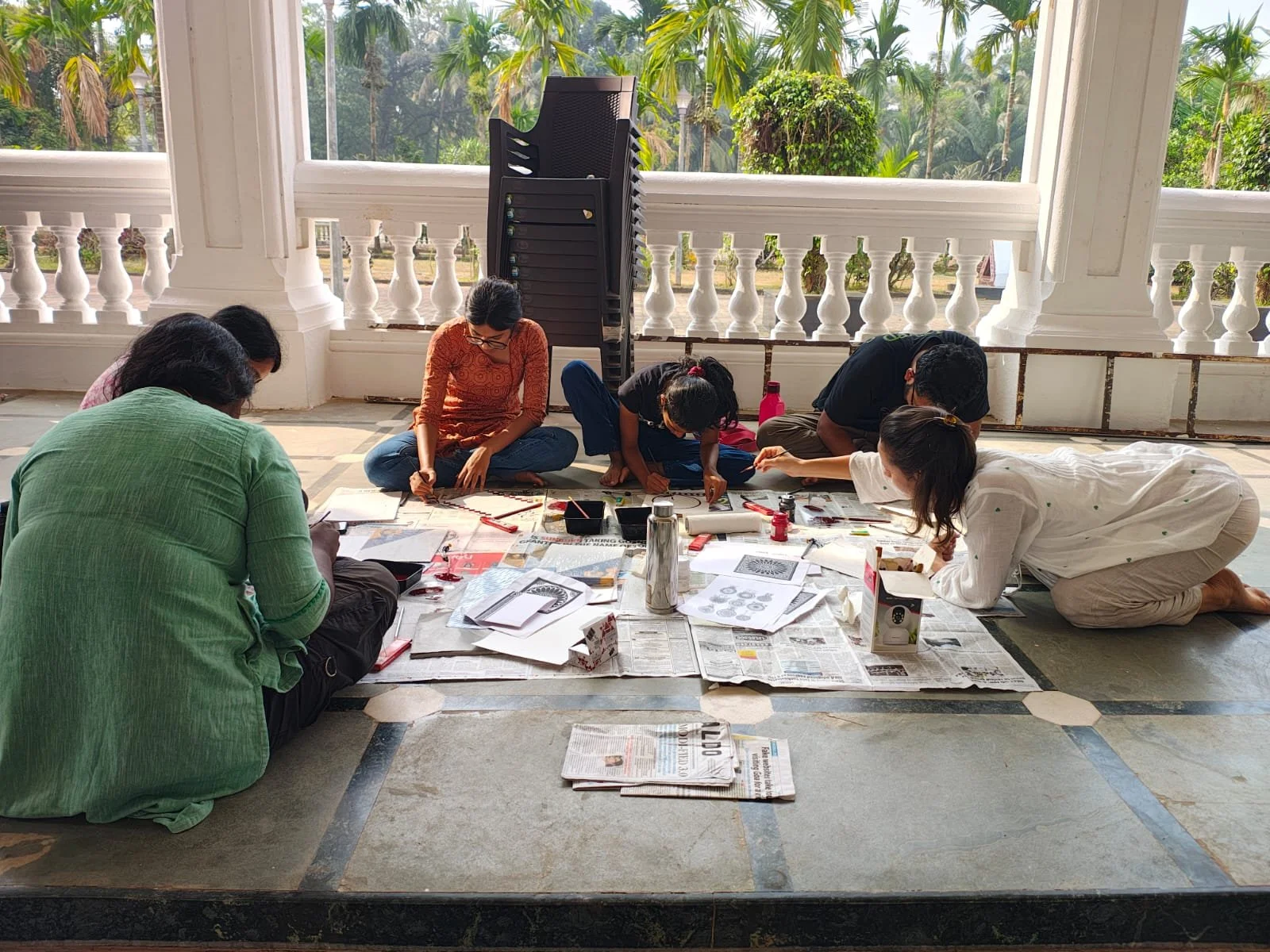
Participants were provided with materials that allowed them to experiment with the visual language of Kaavi. The workshop kits included canvas boards, pigments, brushes, stamps, templates, and carbon tracing paper.
Using these tools, participants traced motifs, built compositions, and filled surfaces with the characteristic red and white palette associated with Kaavi art. The process revealed how much patience and control is required to create balanced patterns.
Even within a simplified workshop format, the exercise offered insight into the depth of the craft. Each motif demanded careful alignment, steady handwork, and attention to rhythm within the composition.
More importantly, the workshop created a space to understand Kaavi art not as a static heritage object but as a living practice.
Why Traditions Like Kaavi Matter Today
Kaavi art sits at the intersection of architecture, craft, and community memory. It reflects how local materials, devotional practices, and artistic expression come together on the surface of buildings.
For architects and designers working in Goa today, studying Kaavi art offers more than aesthetic inspiration. It reveals a deeper understanding of lime construction, local pigments, climatic adaptation, and cultural symbolism embedded in traditional architecture.
Workshops such as the one conducted at Morjai Temple help keep these conversations alive. By learning the techniques and histories behind Kaavi, participants gain a renewed appreciation for the craft traditions that shape the architectural identity of Goa.
In many ways, the red surfaces of Kaavi art continue to tell stories. They speak of earth, ritual, patience, and the quiet skill of artisans who transformed plaster walls into enduring works of art.
Text by V V Kusum Priya
Photographs sourced from Heritage First Goa unless specified