
PAUSE at serendipity arts festival 2025
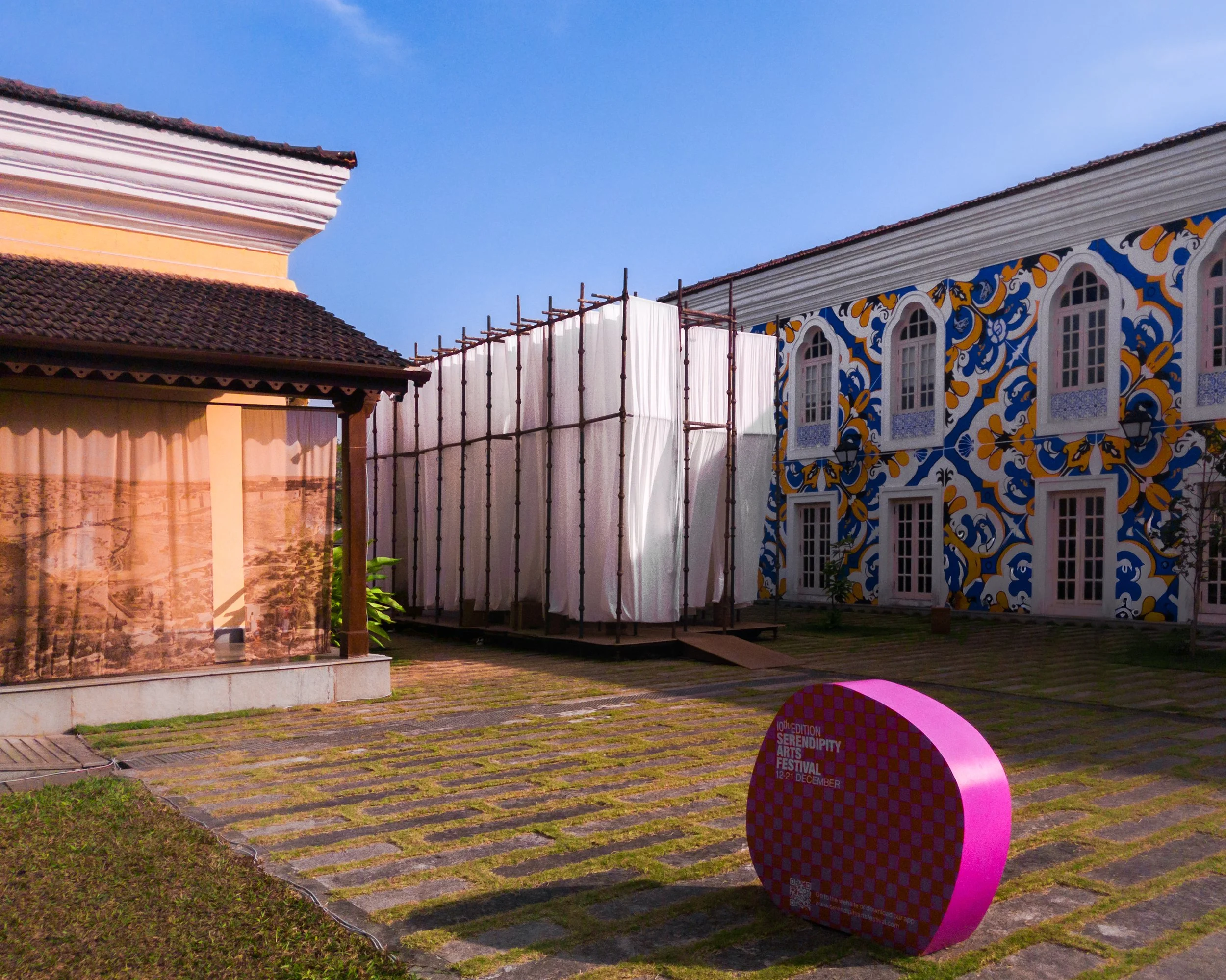
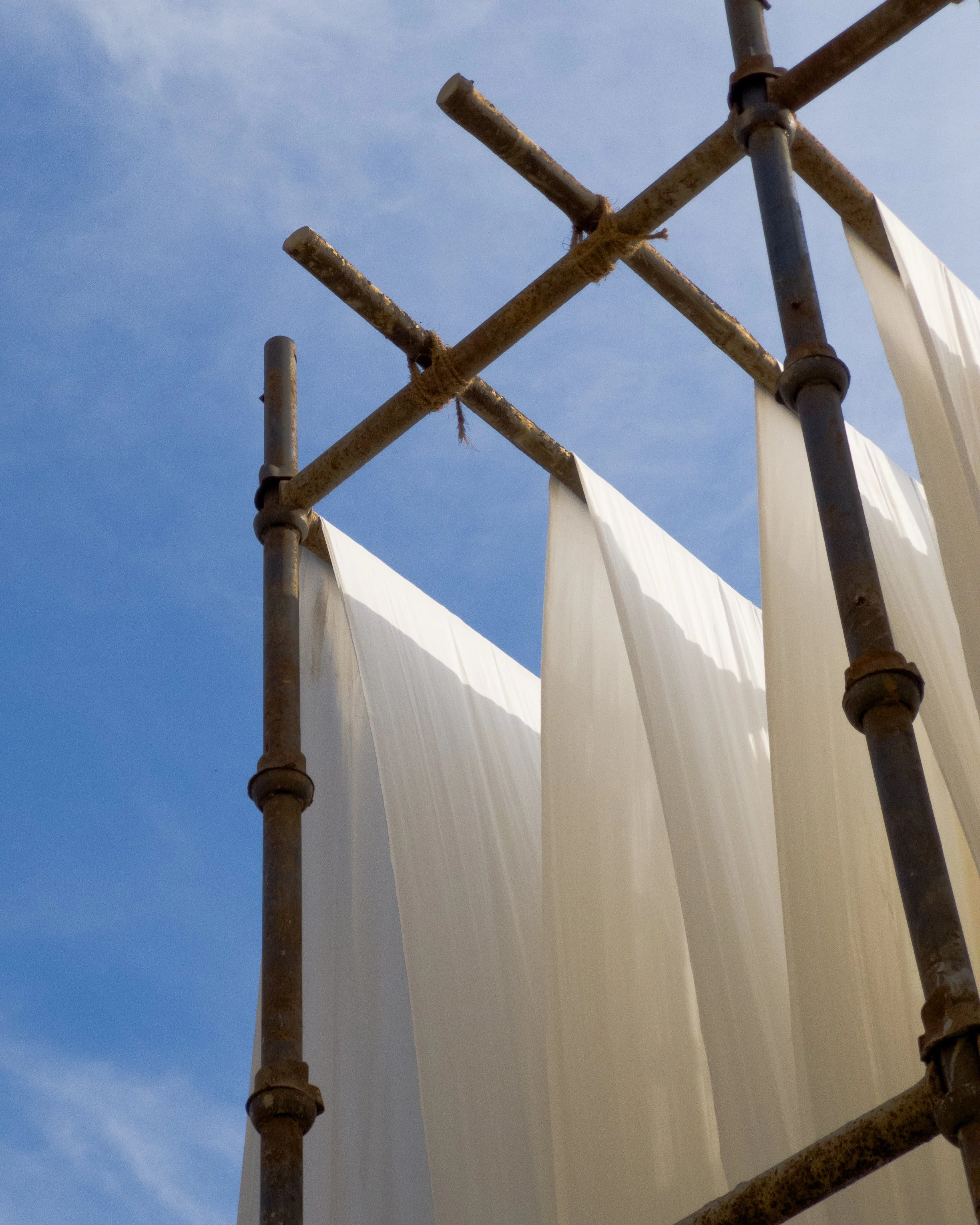
PAUSE is an immersive site-referential installation that was inspired by the witnessing of a daily act of drying natural fabric on a 3-dimensional framework in Rajasthan prior to applying dyes or color. The practice and the resulting artwork thus have its roots in India’s complex and historical association with textiles and the social implications of the industry.


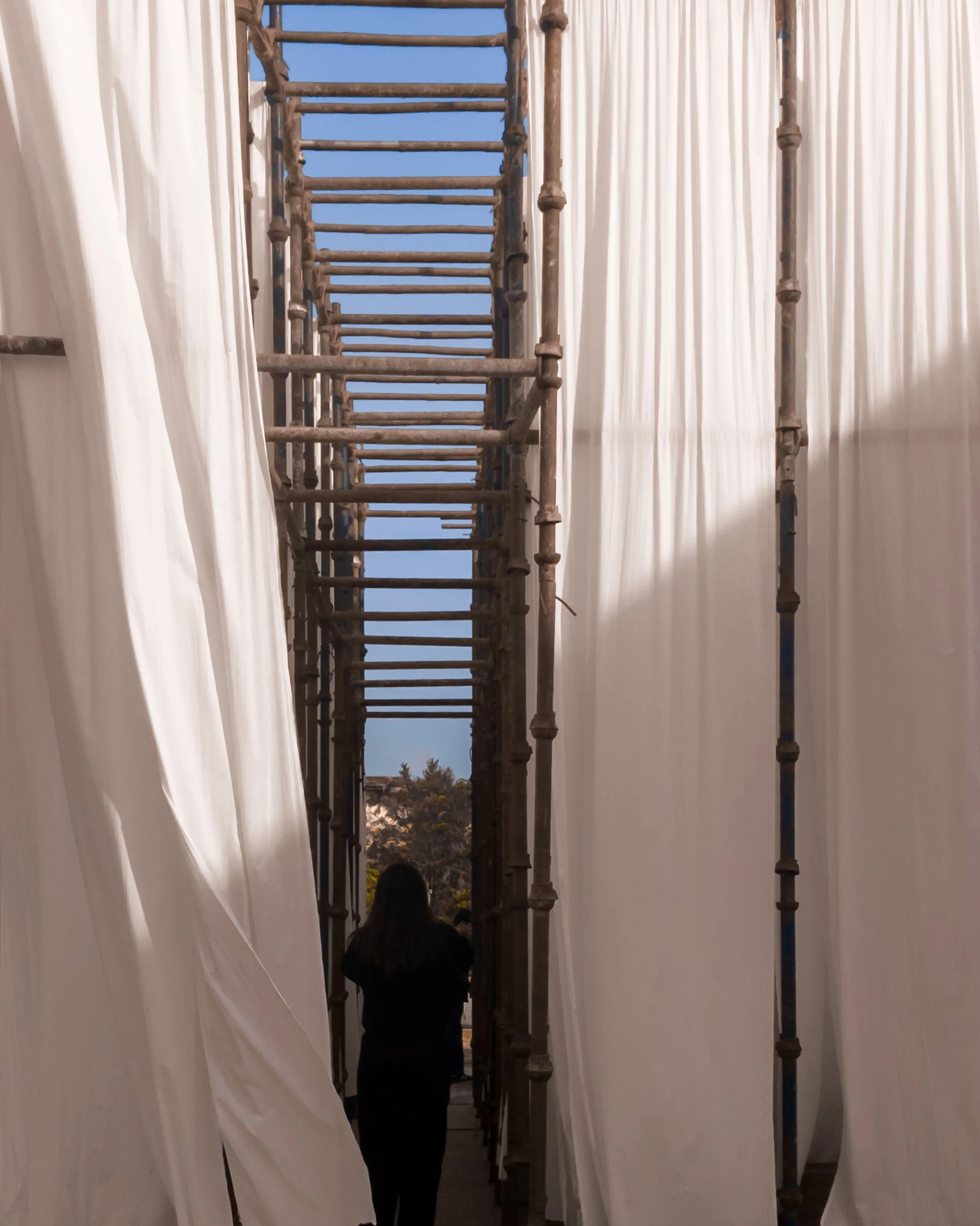
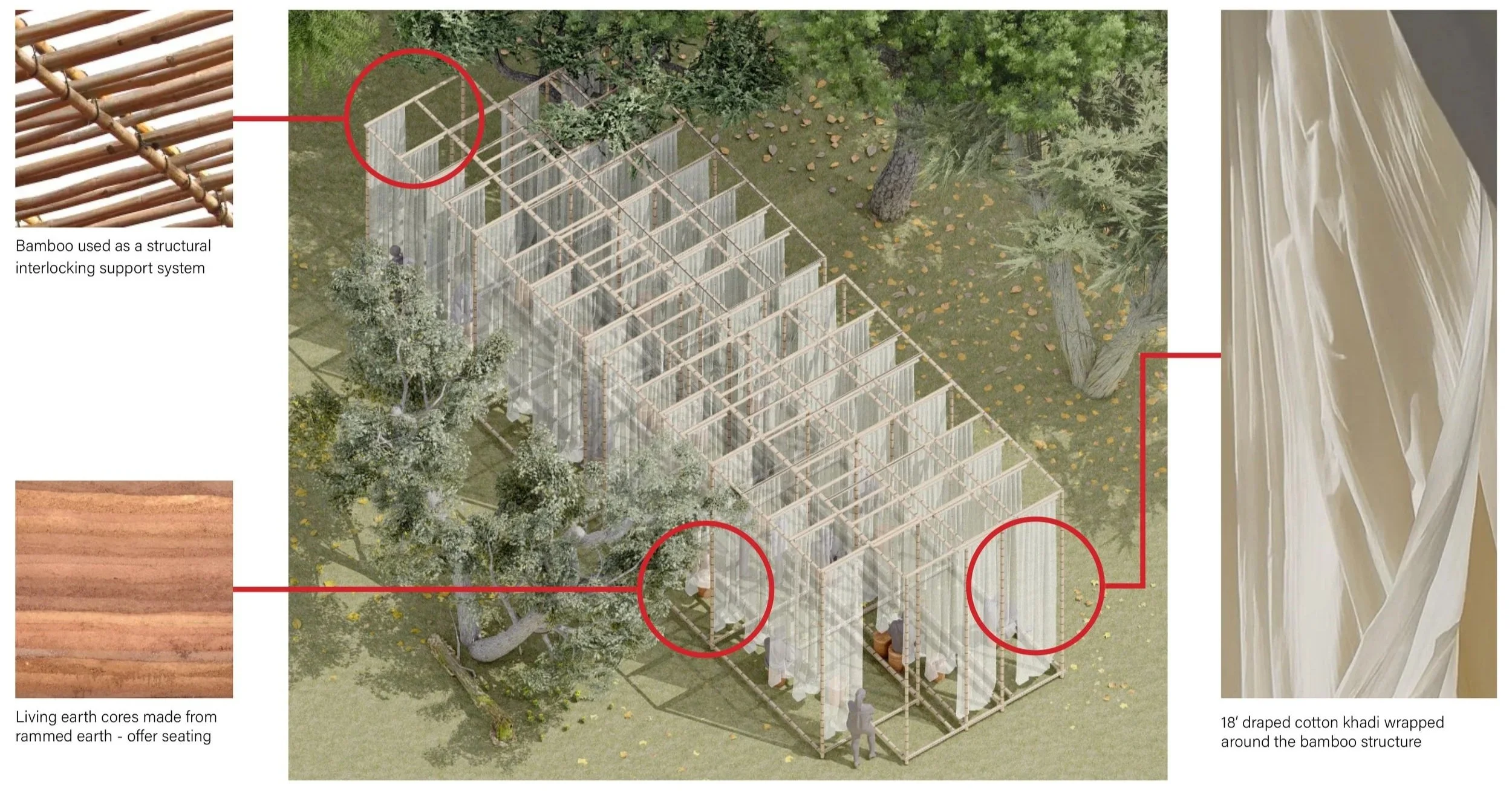
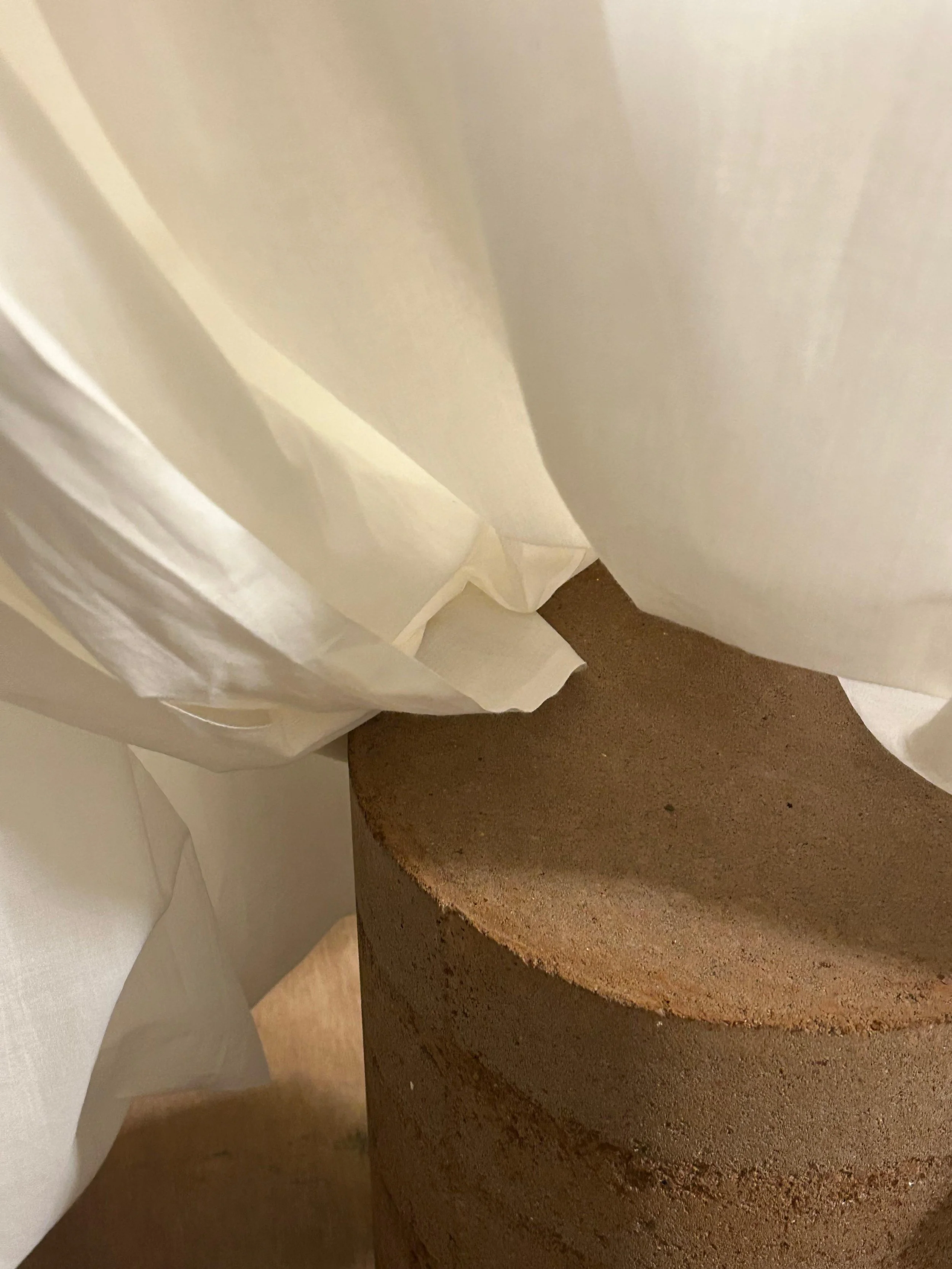
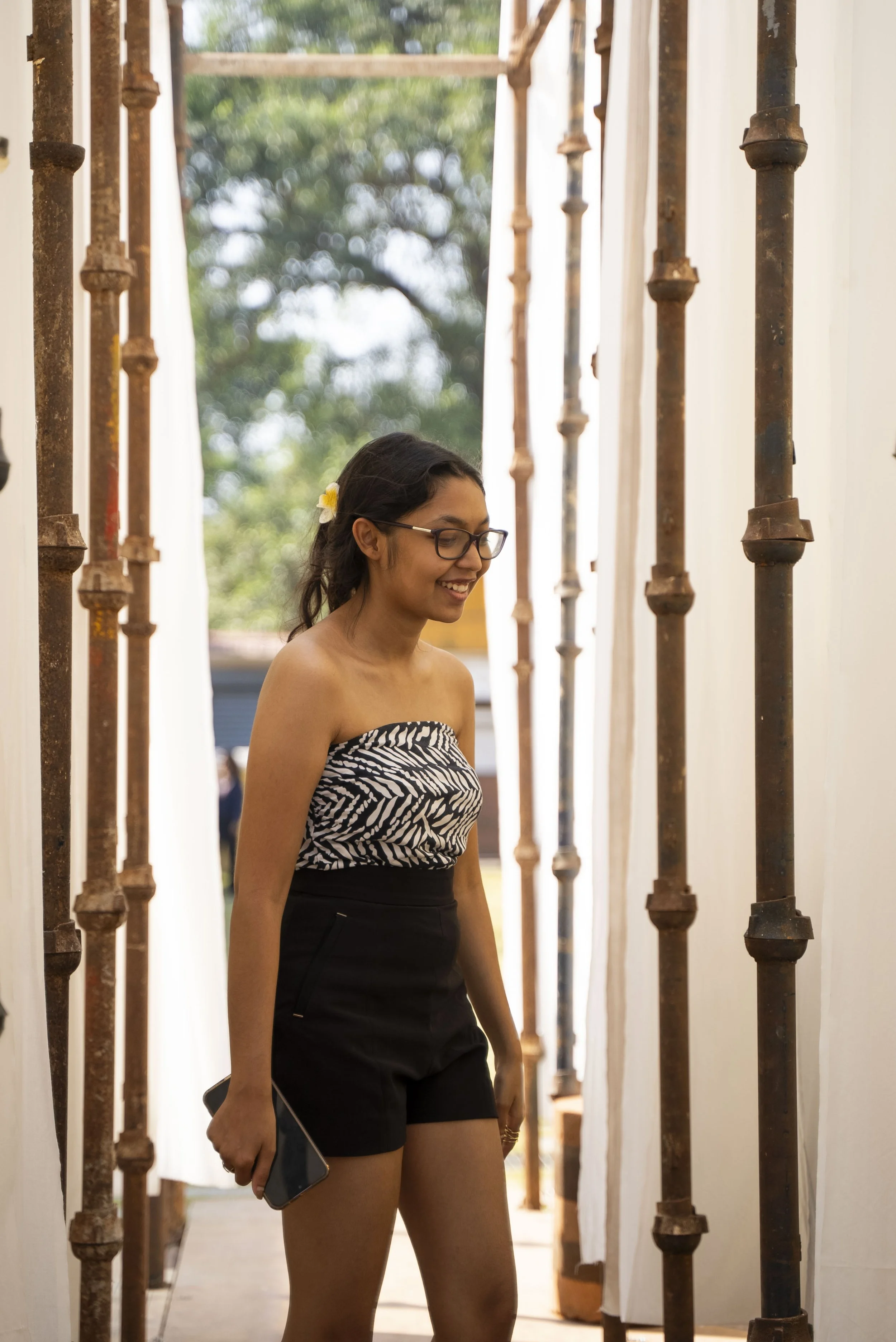
Responding to the heightened anxiety across ages and geographies, the work is informed by the intensifying climate crisis, the advent of AI, addiction to digital social platforms, wars, increasing displacement and migration, and the growing global shift towards authoritative leadership. Within this landscape of uncertainty and unease, viewers are invited to explore and reflect on a more extensive manifestation of the artist’s initial experience by walking through hanging panels of unbleached fabric. As viewers traverse the work, the 18’ draped cotton fabric, will touch skin, face, or fingers either intentionally or accidentally, compelling the participant to be more present and mindful. A sound element, a deconstruction of a composition from a found 100-year old player piano roll titled ‘Meditation’, will reverberate within the the structure, further heightening the experience and enabling the viewer to disconnect and be present in the moment.
The artwork offers an opportunity for a pilgrimage of sorts, a transformative journey that can be healing, spiritual, and meditative. The path or circulation through the installation is self-determined, allowing each participant to find their own rhythm and direction through the work.
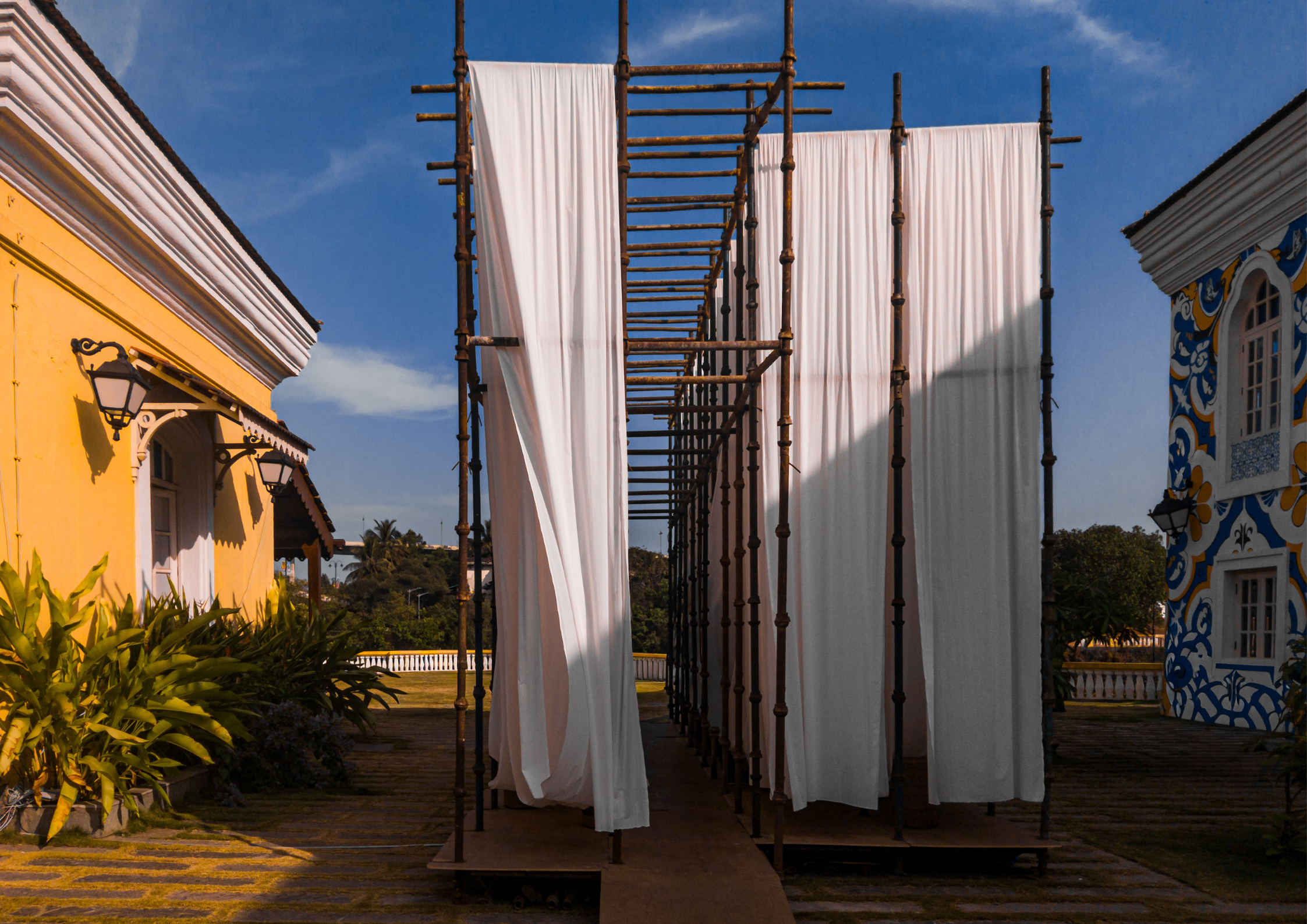
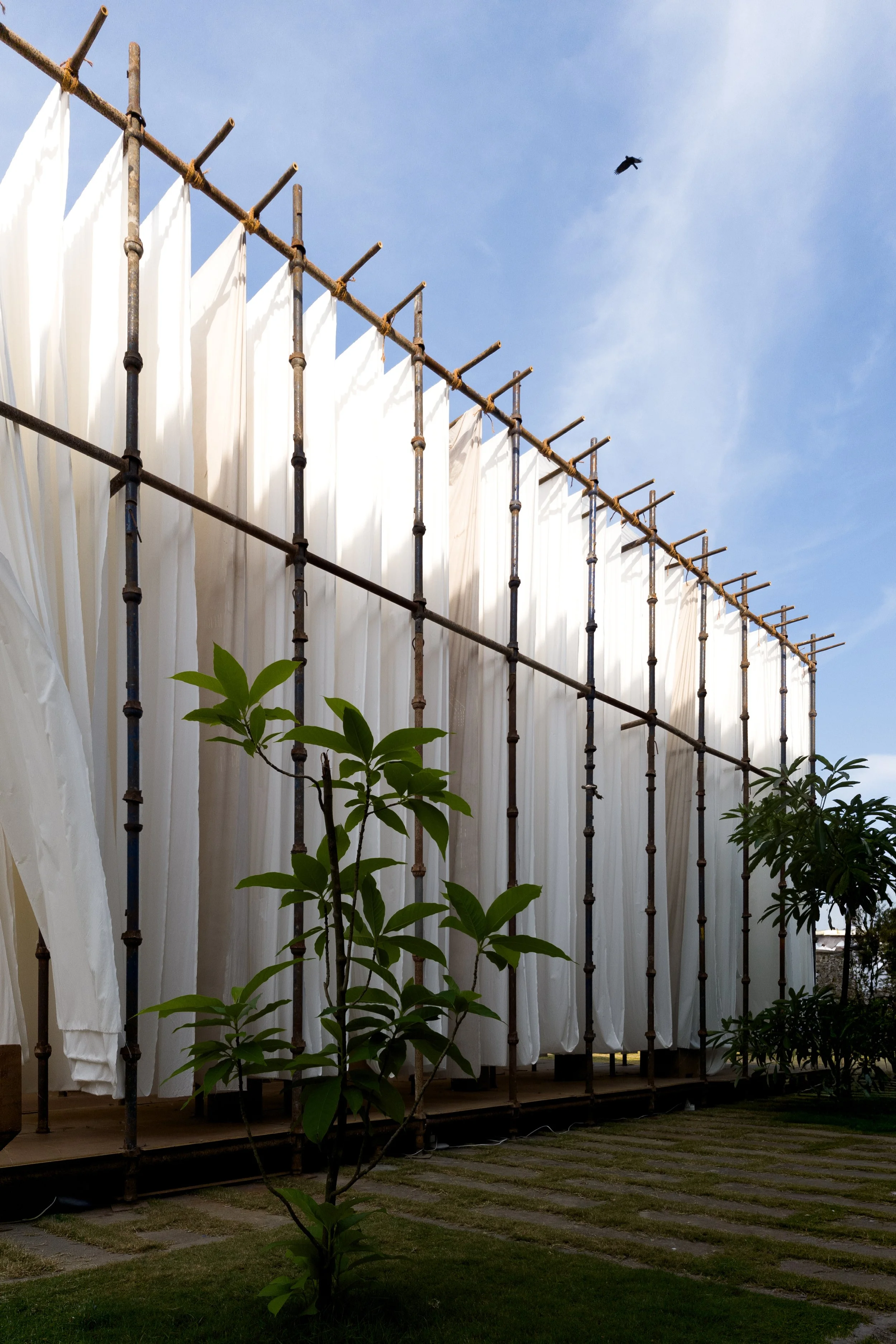
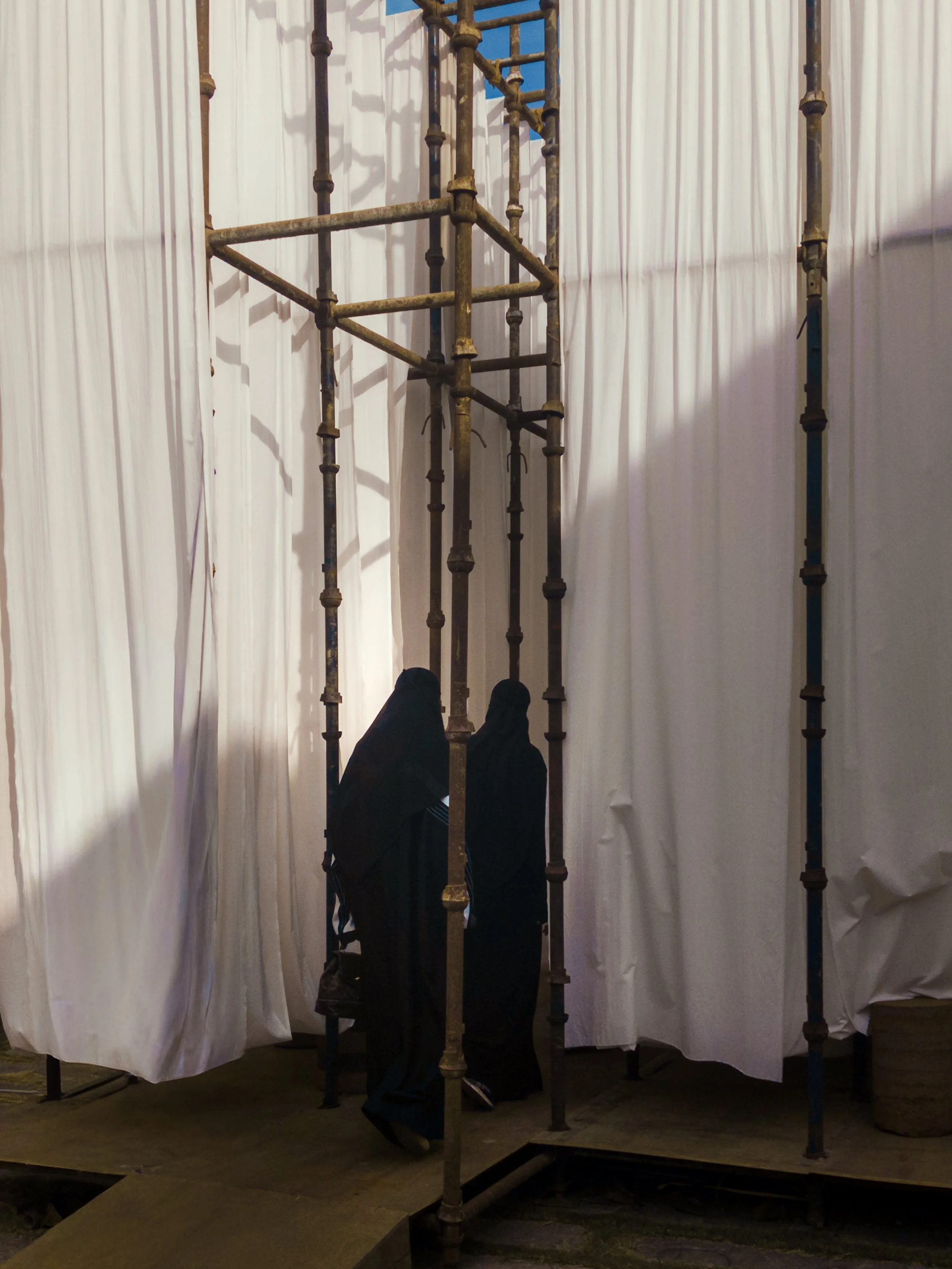
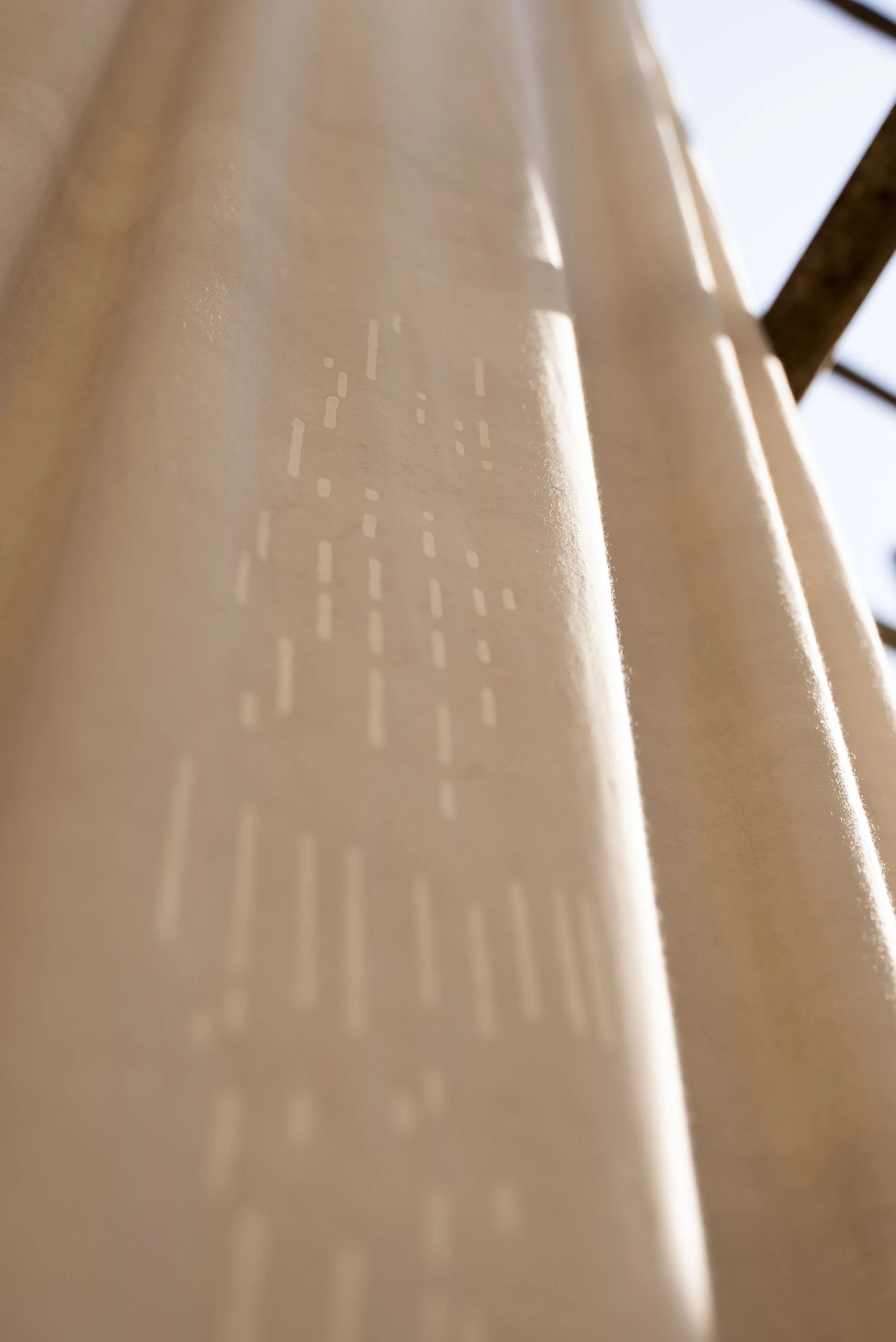
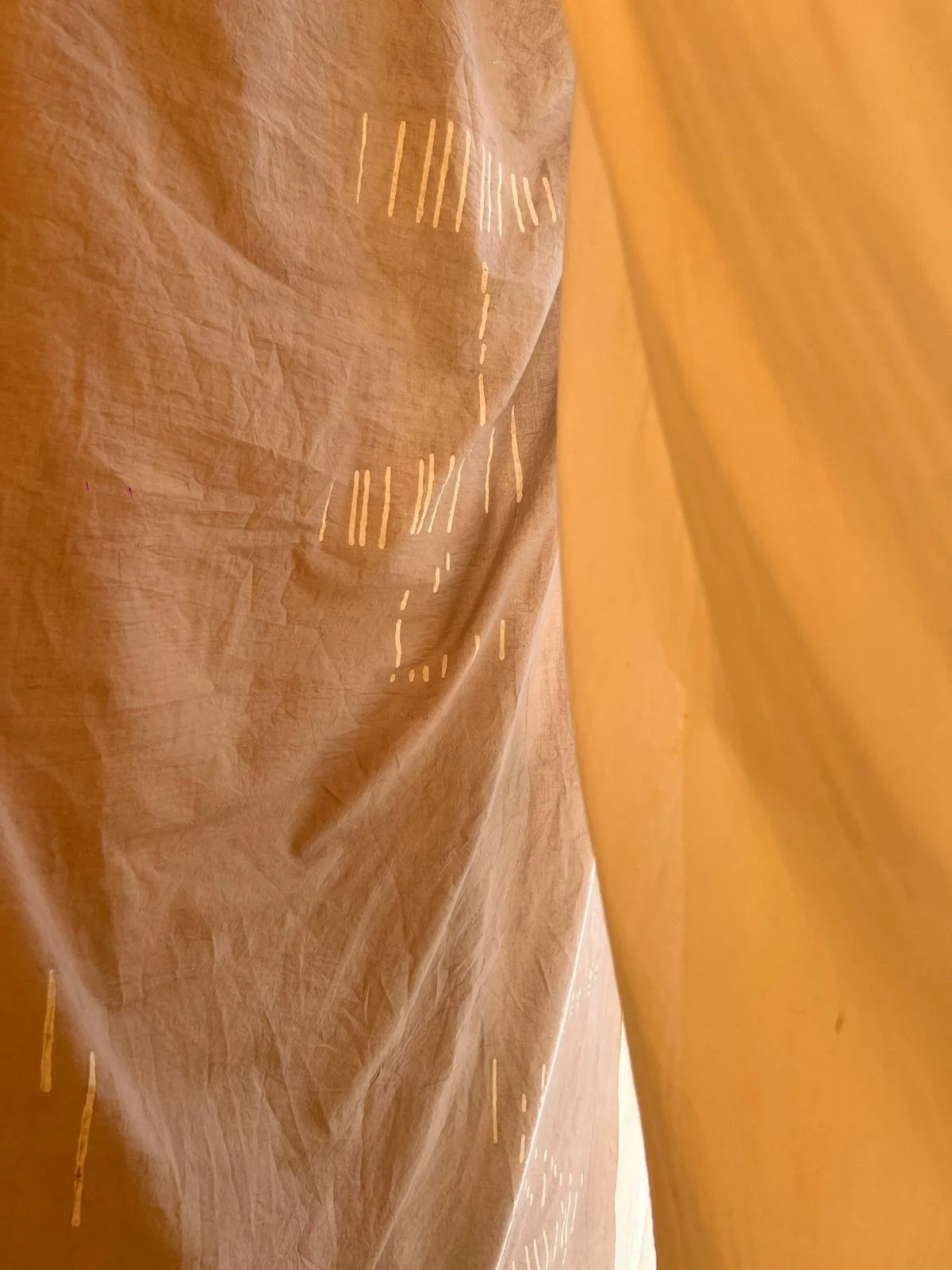
In addition to the bleached fabric, which is randomly marked by block printed notations from the piano roll, the artwork is punctuated with a number of identical cylindrical earth cores made from compacted rammed earth. As a natural material, the earth cores, in many ways in sync with the textile, are alive and breathing. These earth cores offer seating between and next to the aisles of hanging fabric. They are places to offer respite, and to connect - for the individual themselves and communally with the person seated close by.
Ja Ja Ja Collective
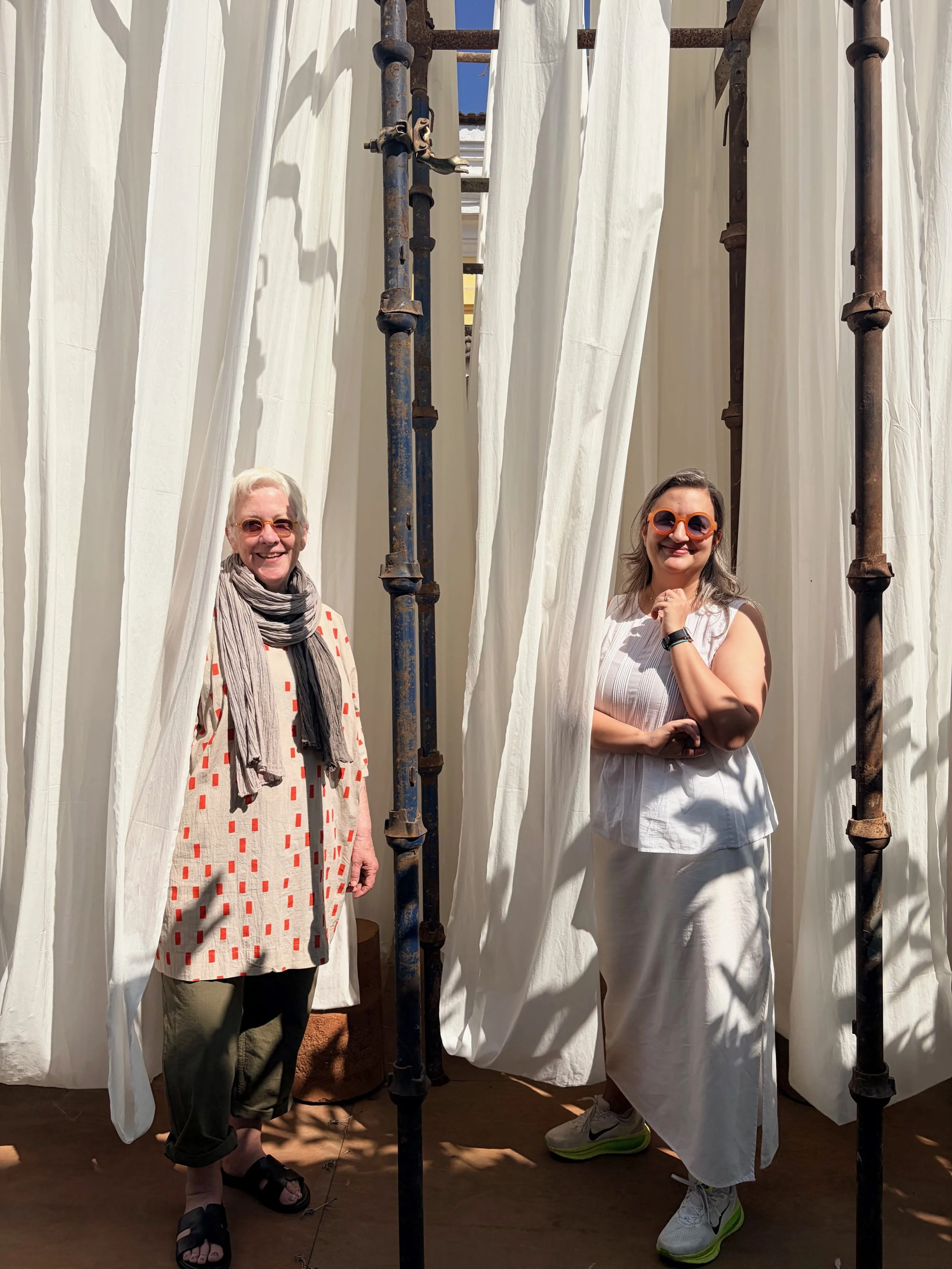
Anjali Mangalgiri and Jo Yarrington first met at the India Art Fair in February 2025. What began as a simple conversation soon grew into an exchange of ideas that revealed deep creative connections. Both artists are drawn to light, material, and the natural world, Anjali through the spaces she creates and Jo through her installations. Their shared interest in sensory and emotional experiences became the foundation for a lasting dialogue.
Jo’s stories of exploring textile traditions in Jaipur resonated deeply with Anjali, whose Rajasthani roots have long connected her to the region’s craft and culture. Many conversations followed, each sparking new ideas and shared possibilities.
From these early exchanges, the Ja Ja Ja Collective was born. It is a collaborative space that brings together art, architecture, and craft. Their work moves across places and generations, reflecting on how creativity can foster connection, reflection, and shared humanity.
Photographs taken by Swaraj K, Rajas Rajopadhye, Saiesh Mahale & V V Kusum Priya
SINGAPORE DESIGN WEEK 2018
-
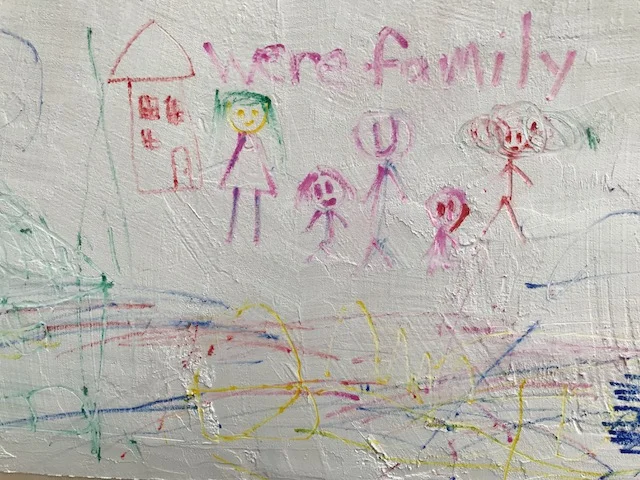
A HOME FOR EVERYONE
What is 'home' to you? A sanctuary, a moment of respite, a sense of ease & familiarity, or a person.
In 2018, Grounded partnered with a Singapore based NGO, BillionBricks to organize an exhibition on the crisis of homelessness in India. This exhibition was part of Singapore Design Week and was presented at the National Design Center in Singapore.




SINGAPORE DESIGN WEEK 2019
-
nature design week
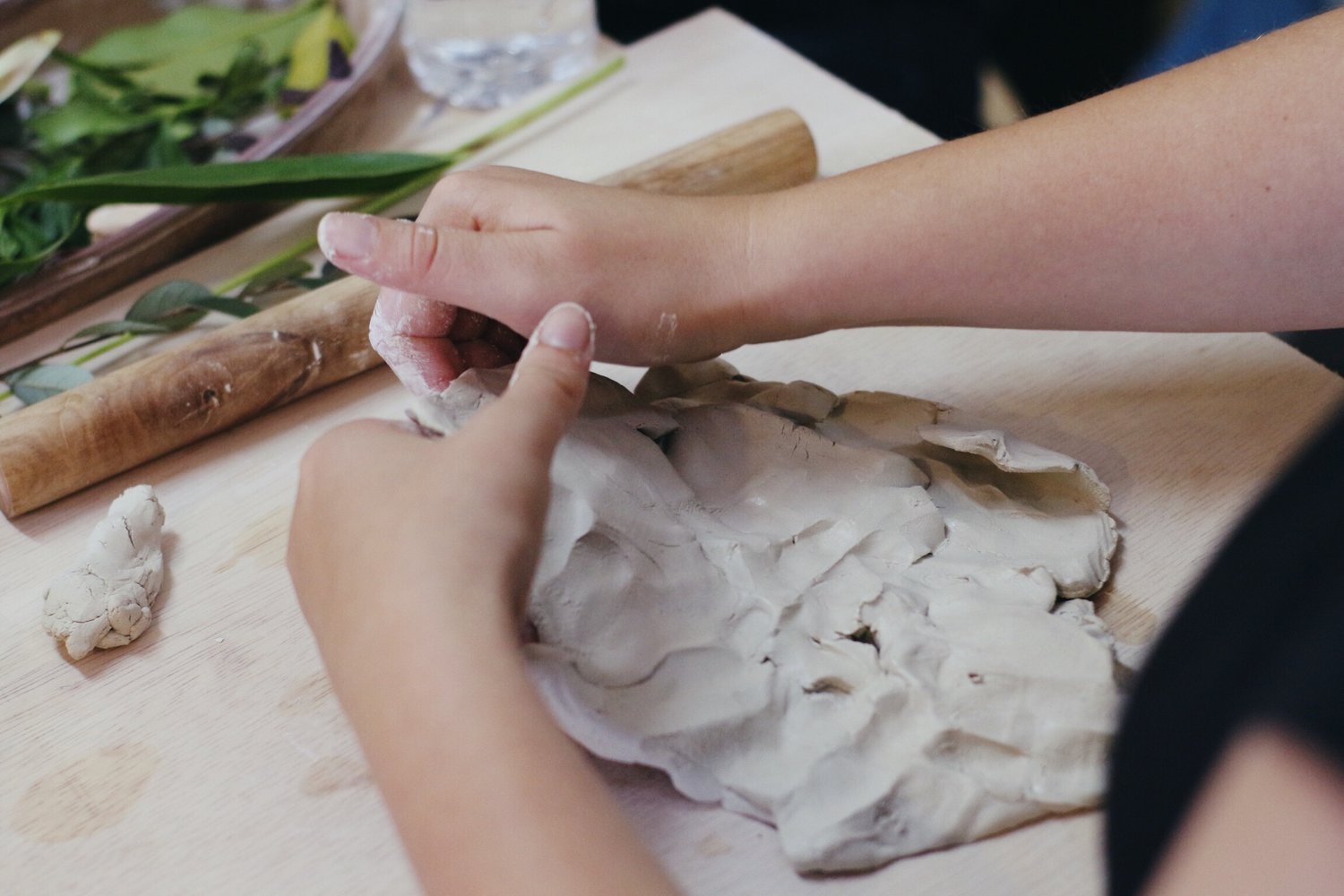
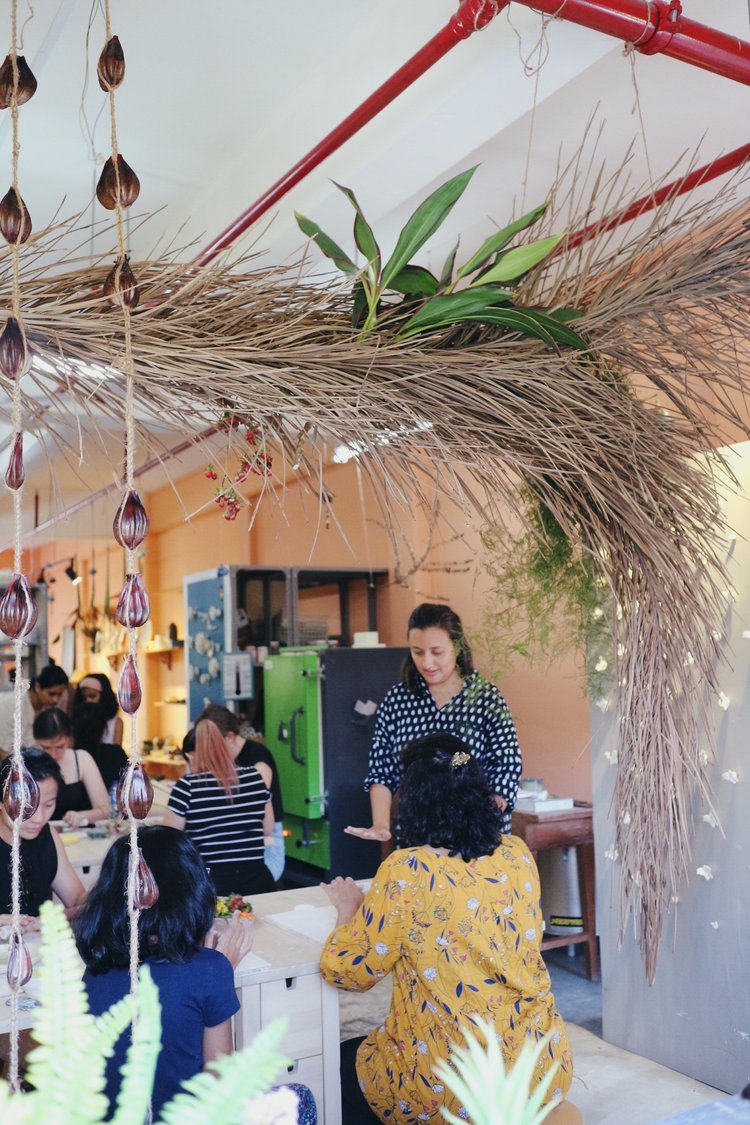
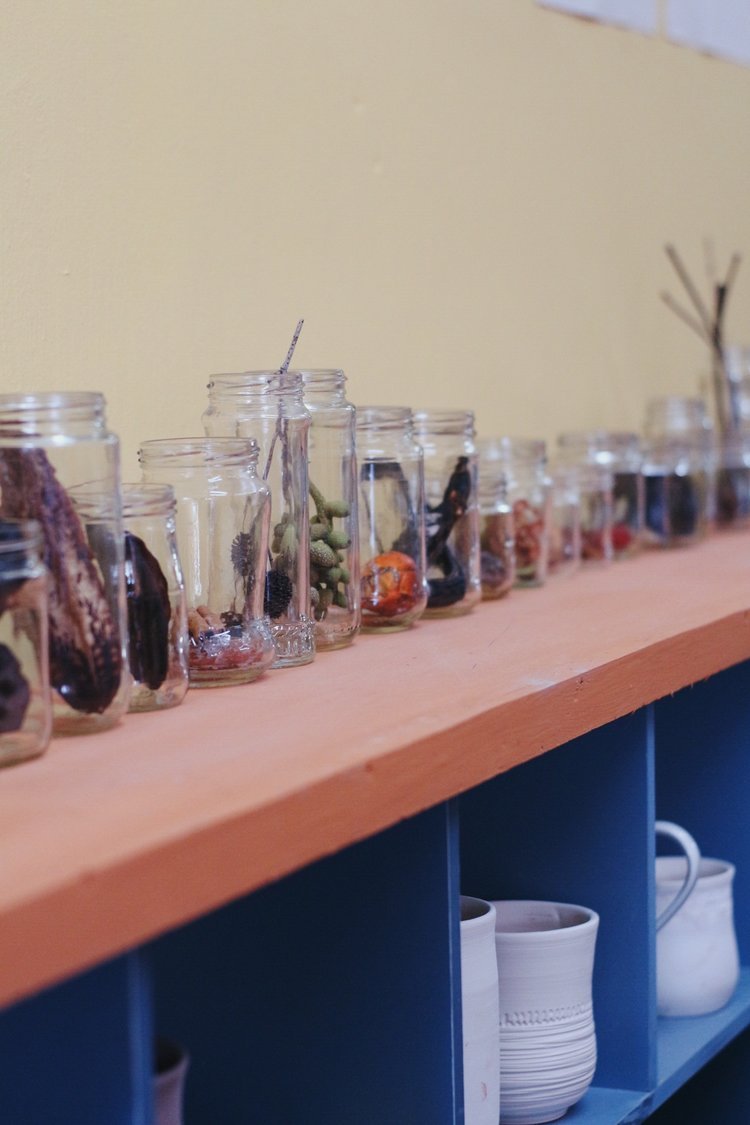
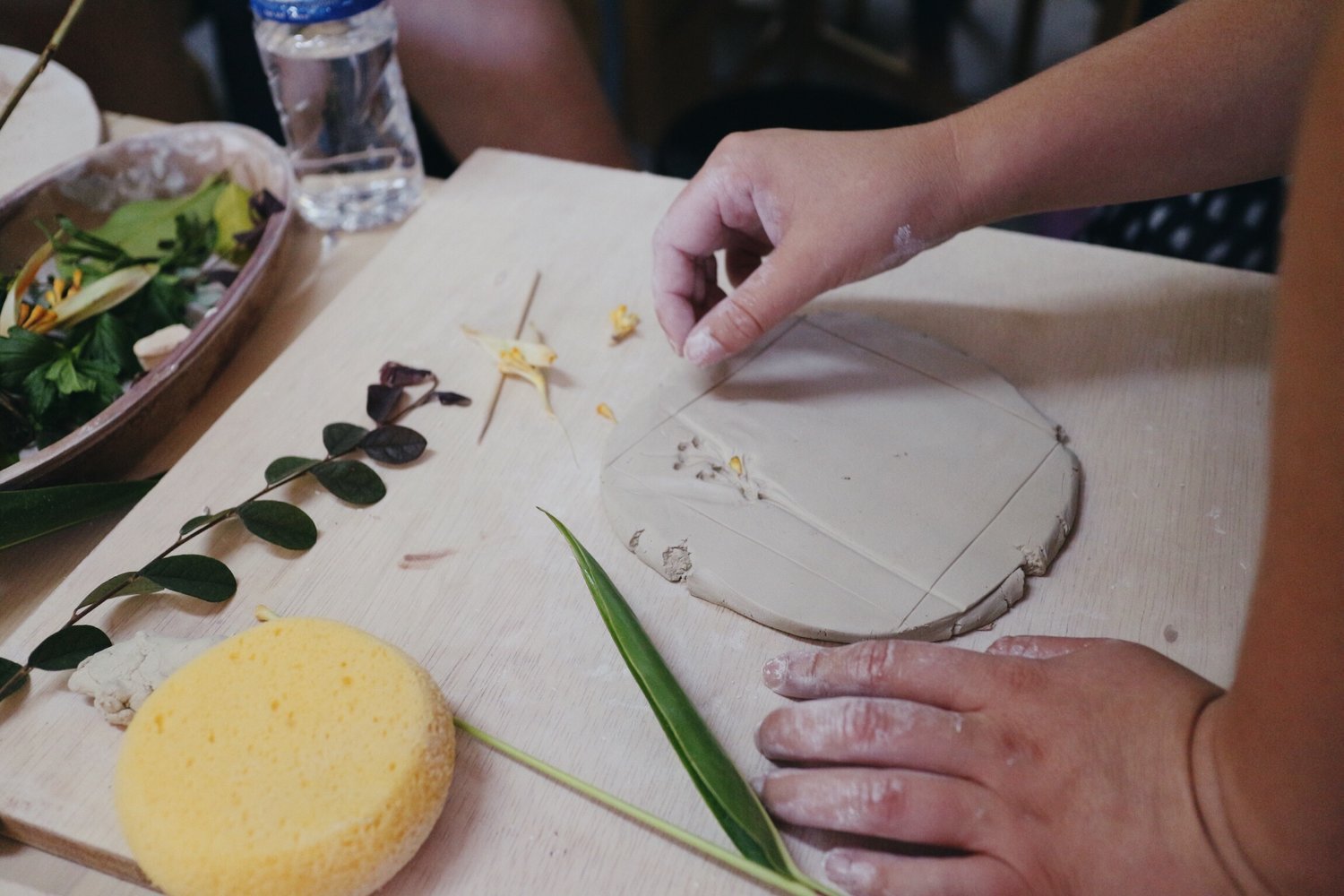
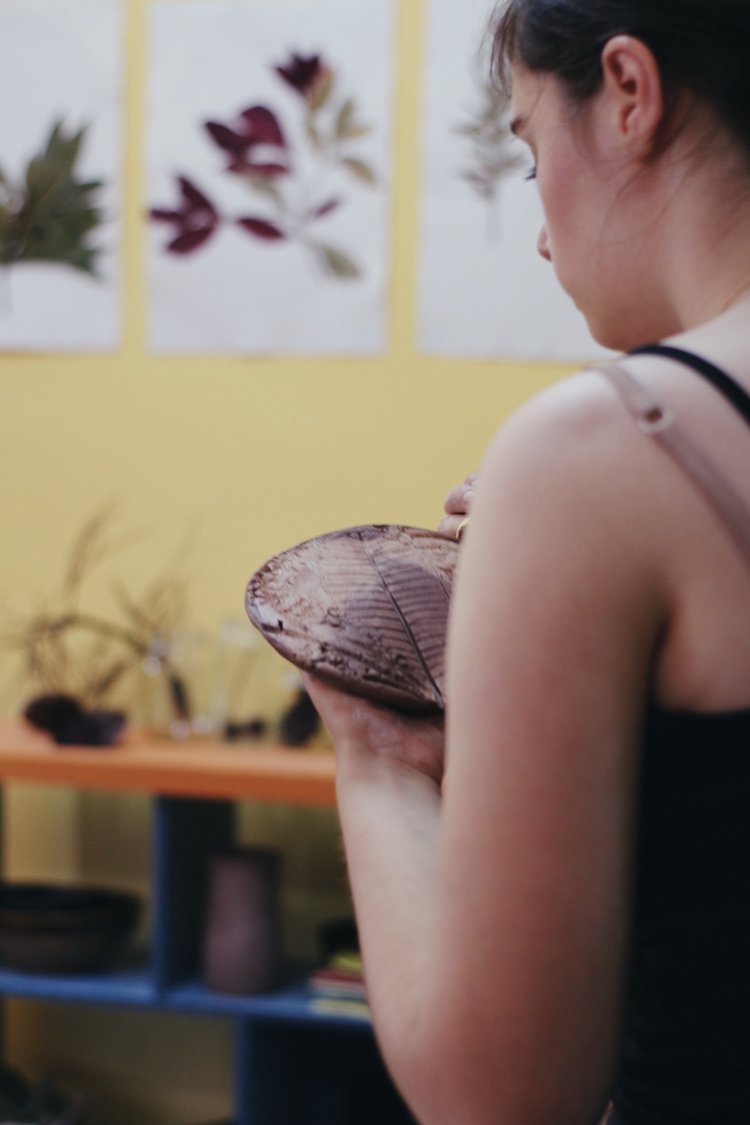
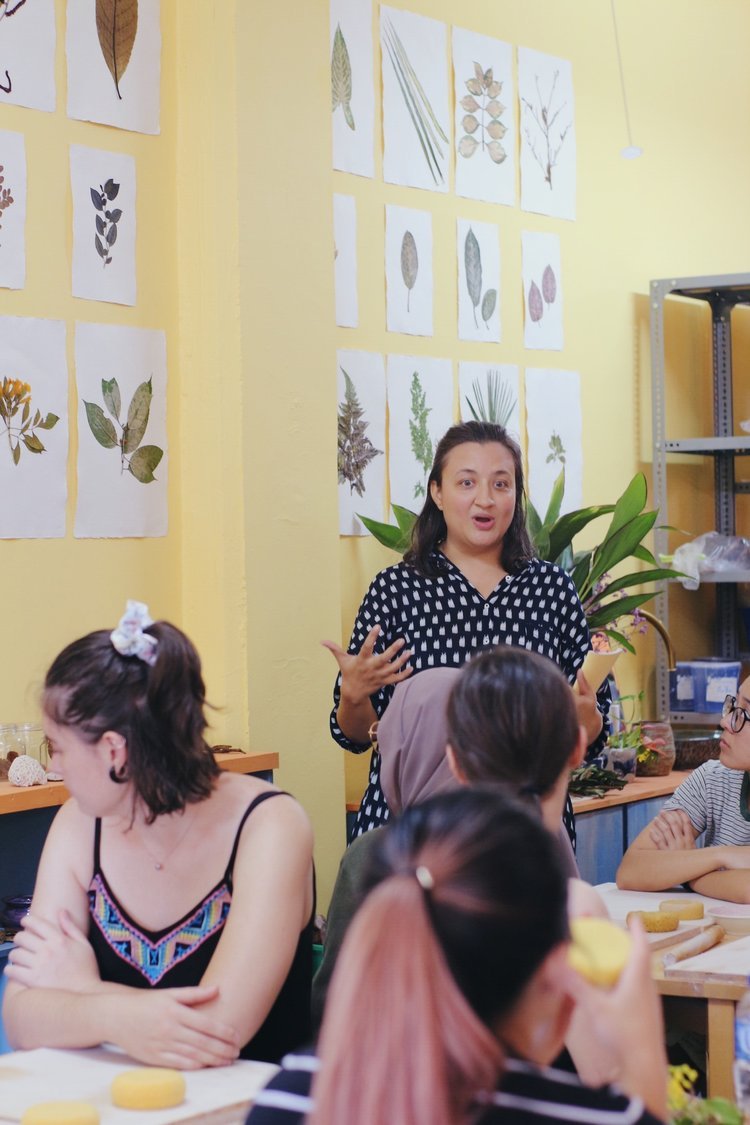
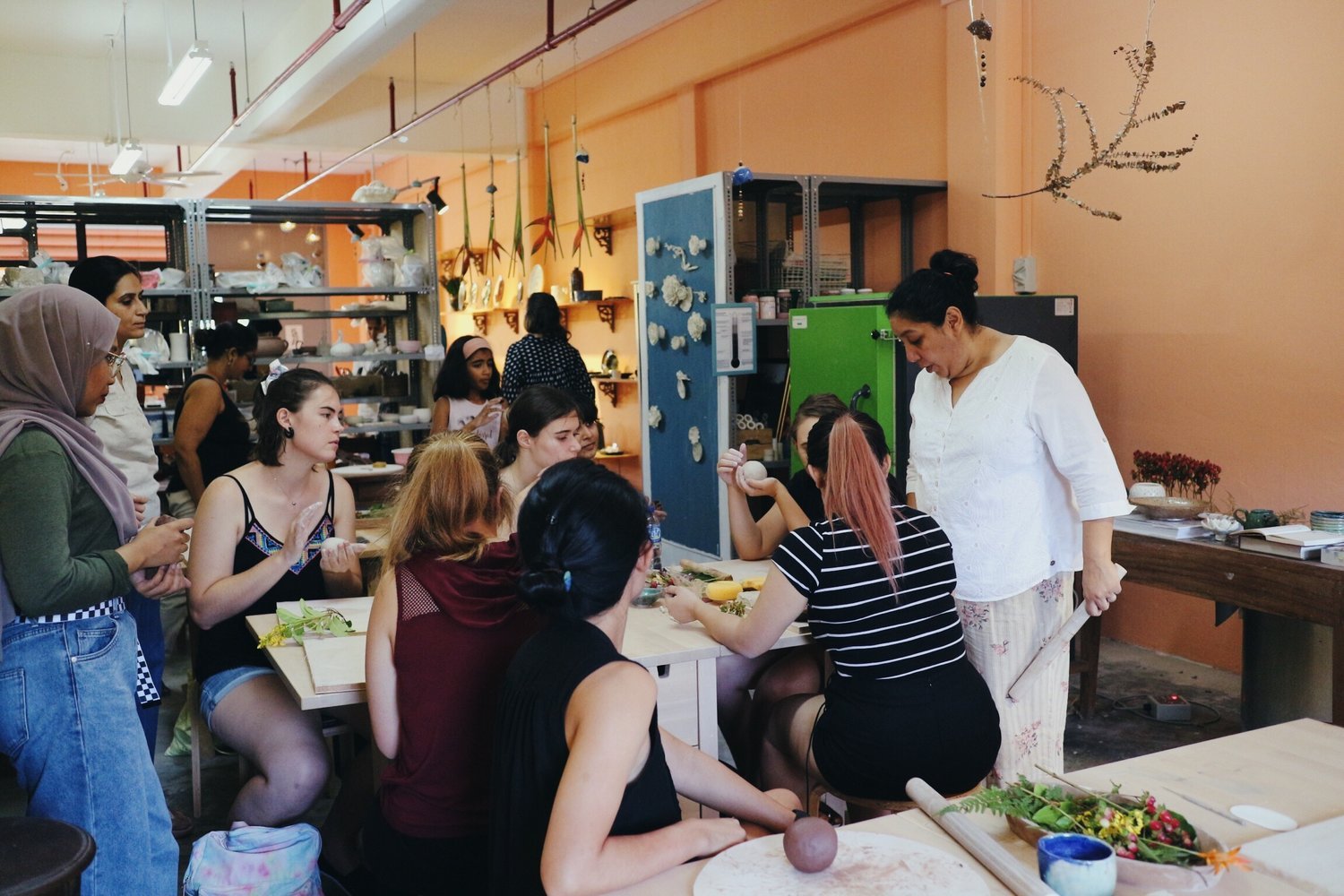
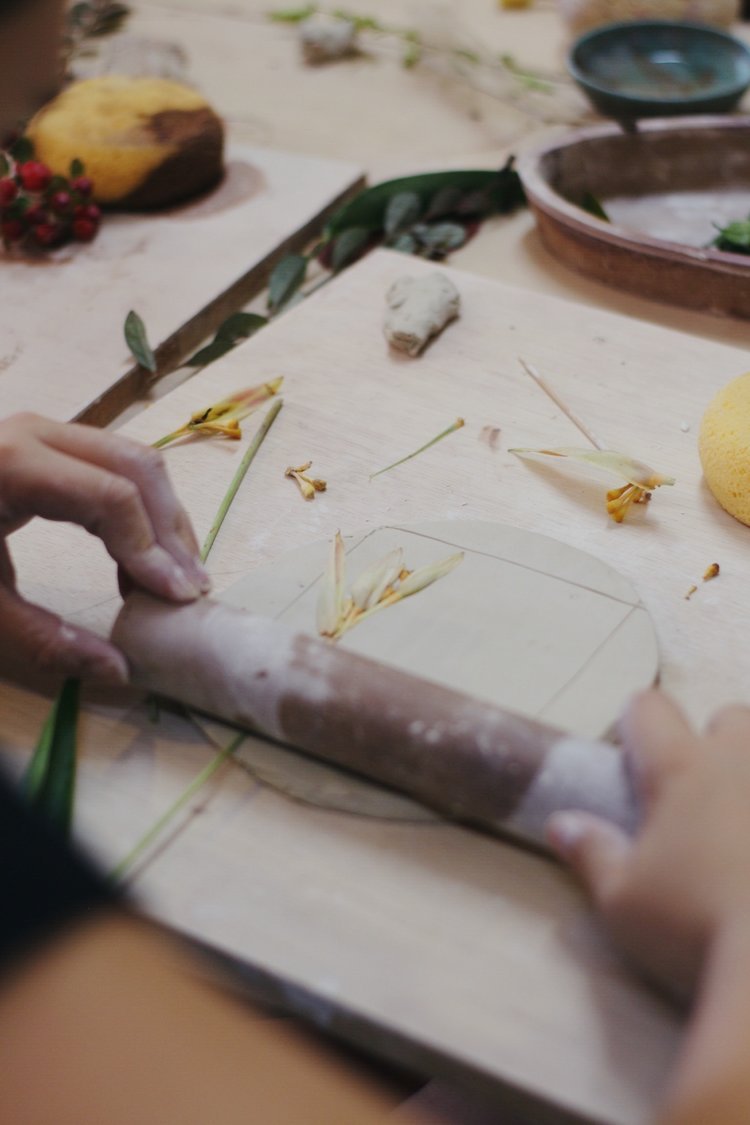
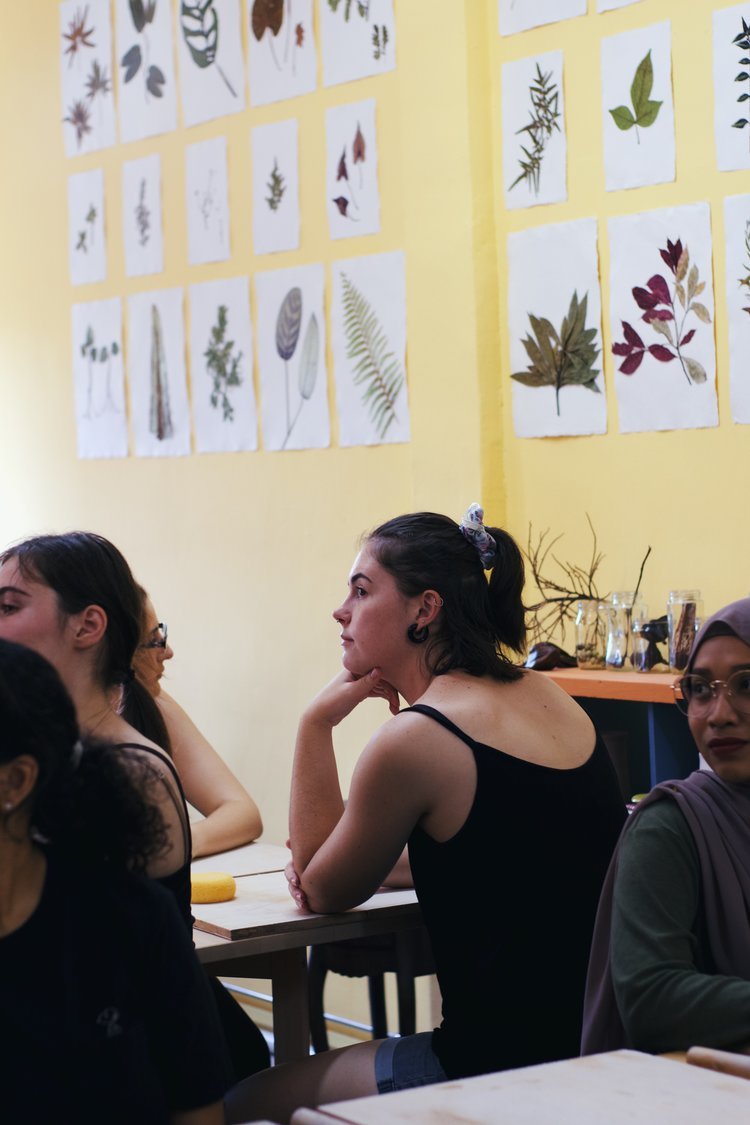
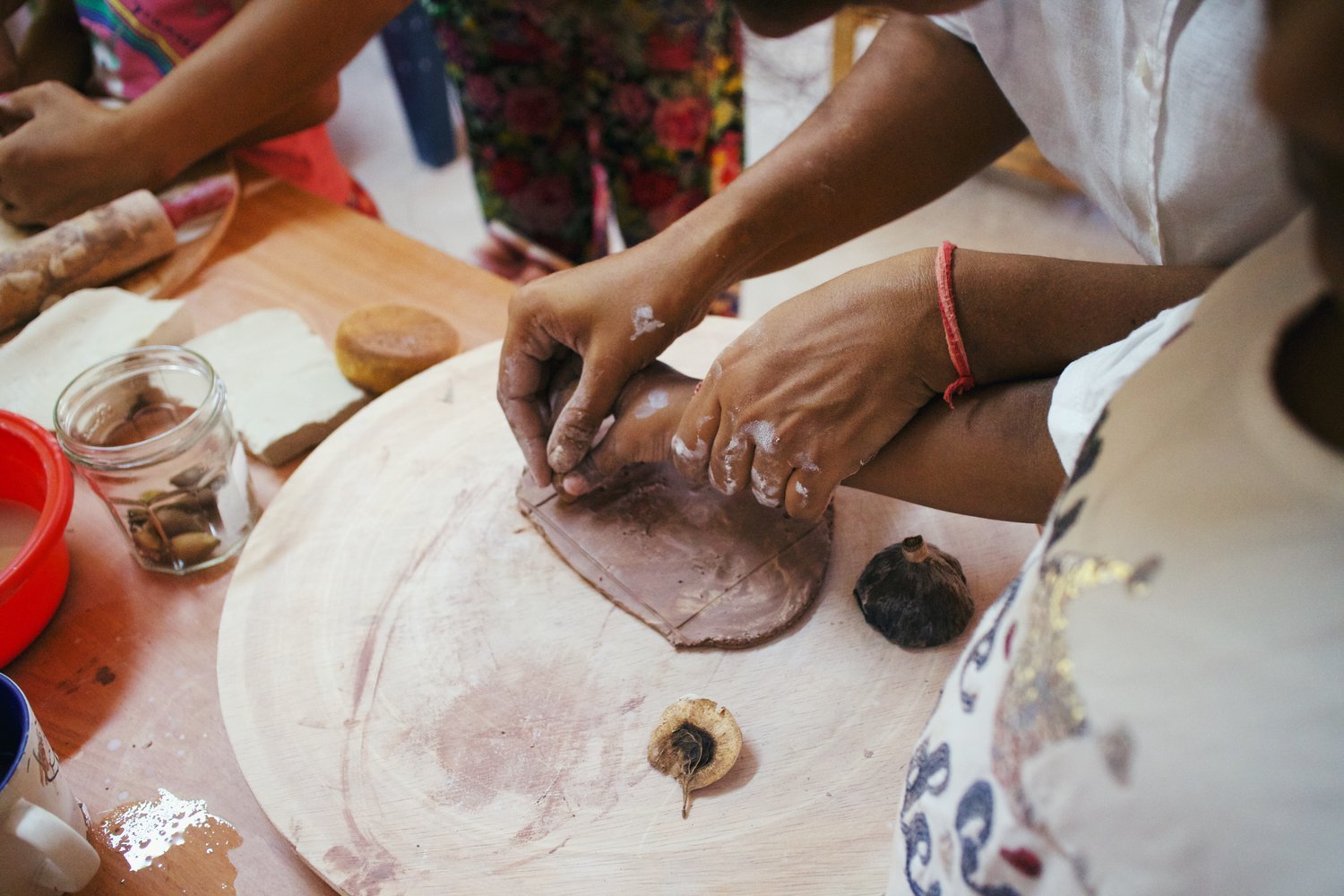
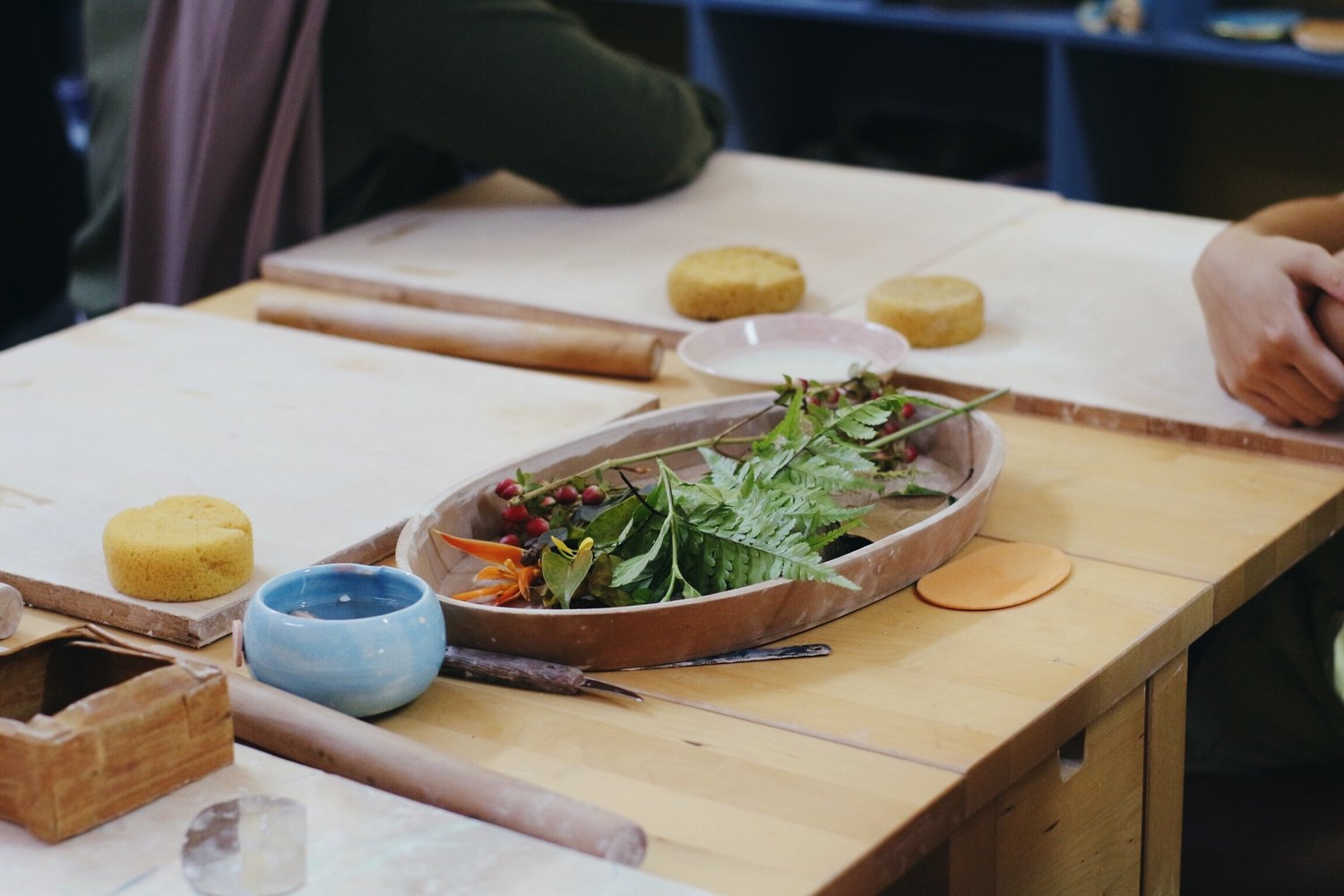
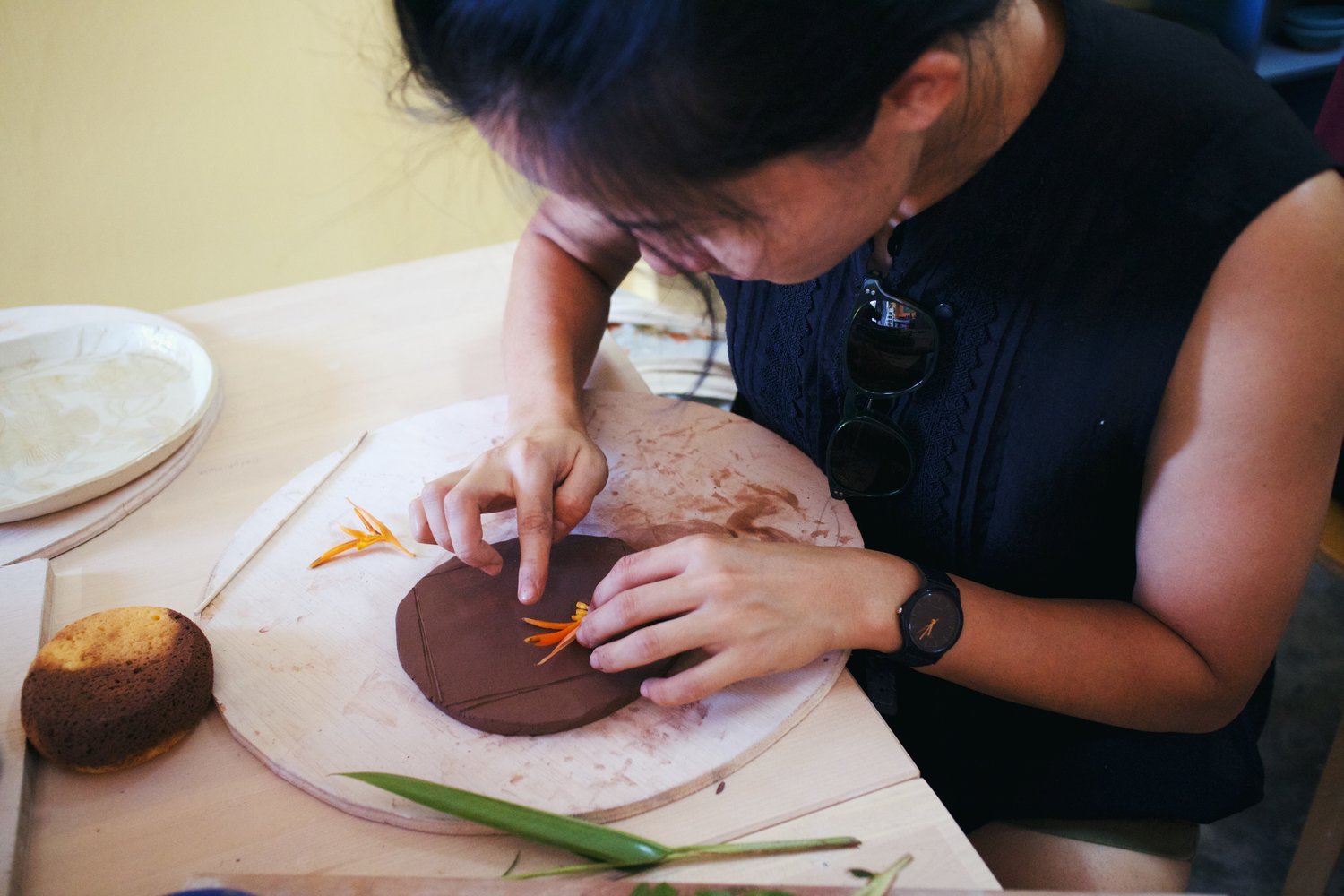
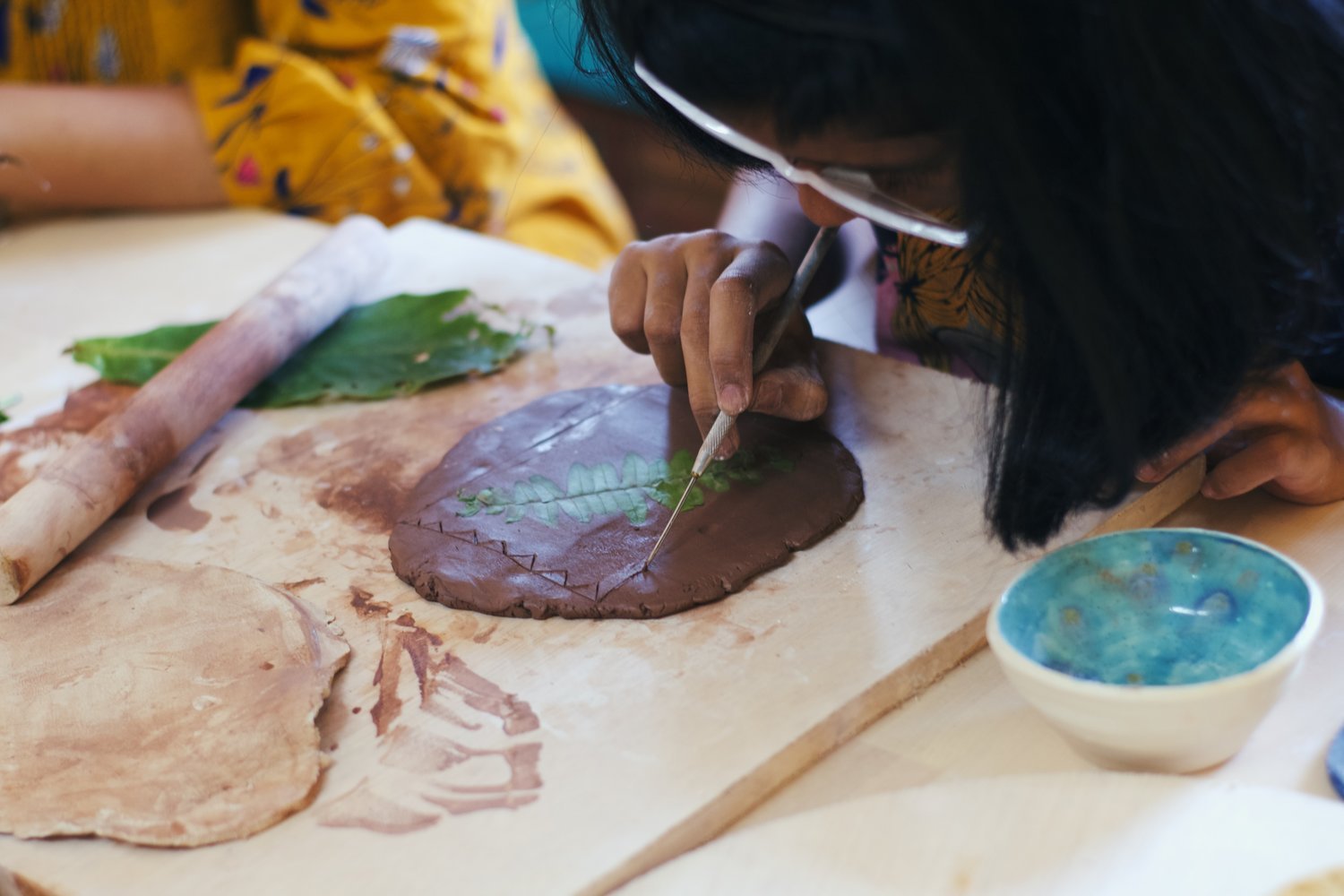
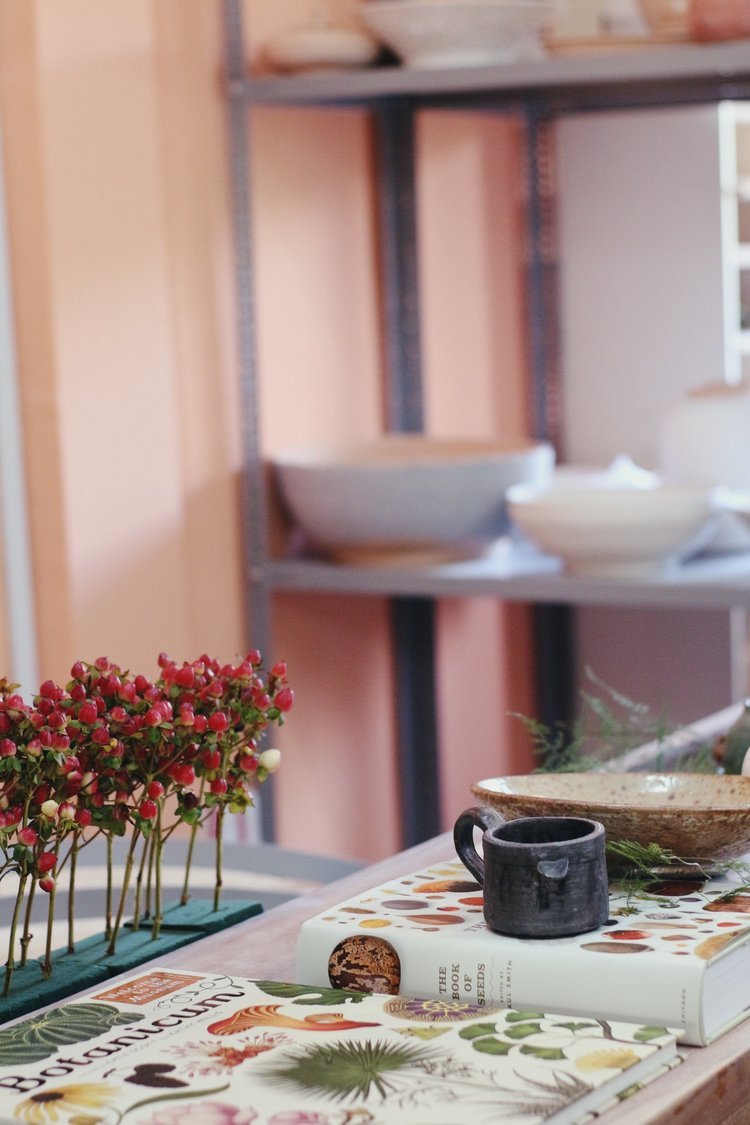
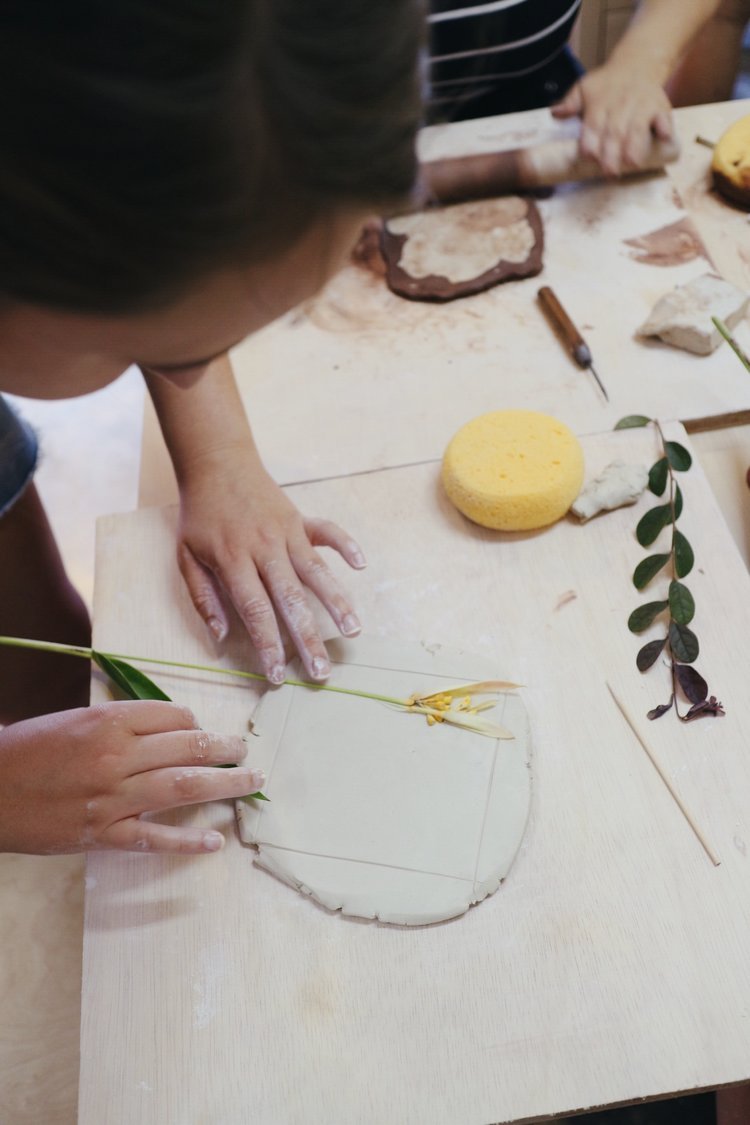
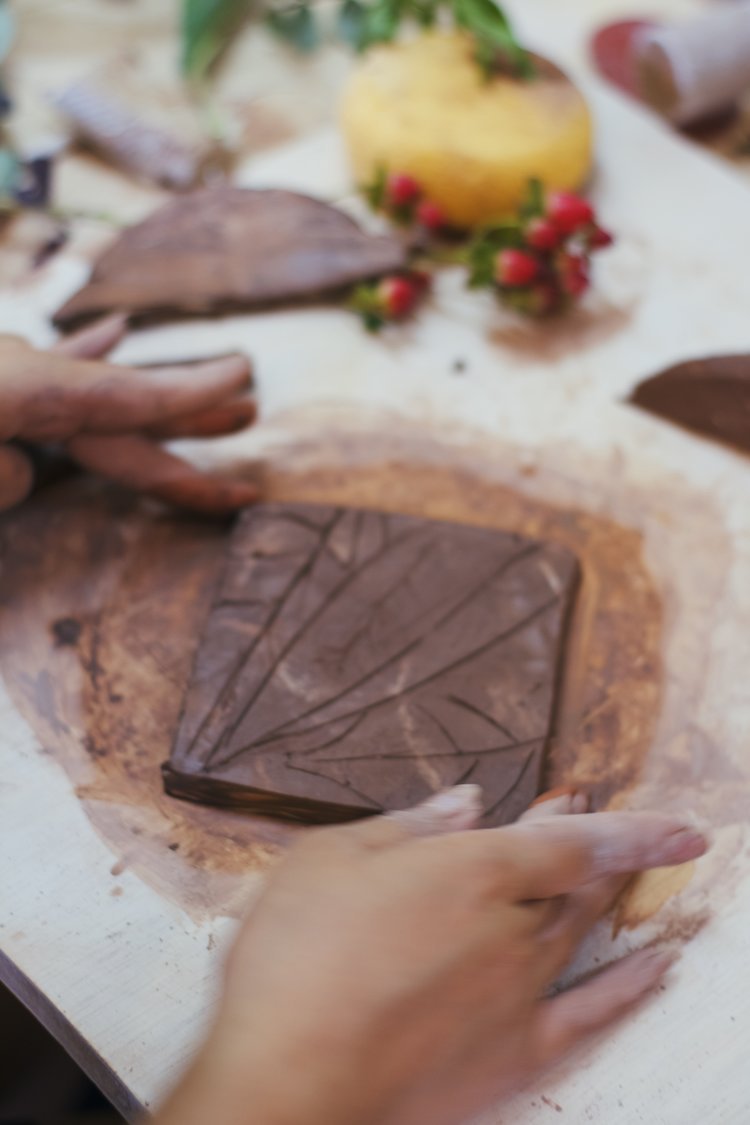
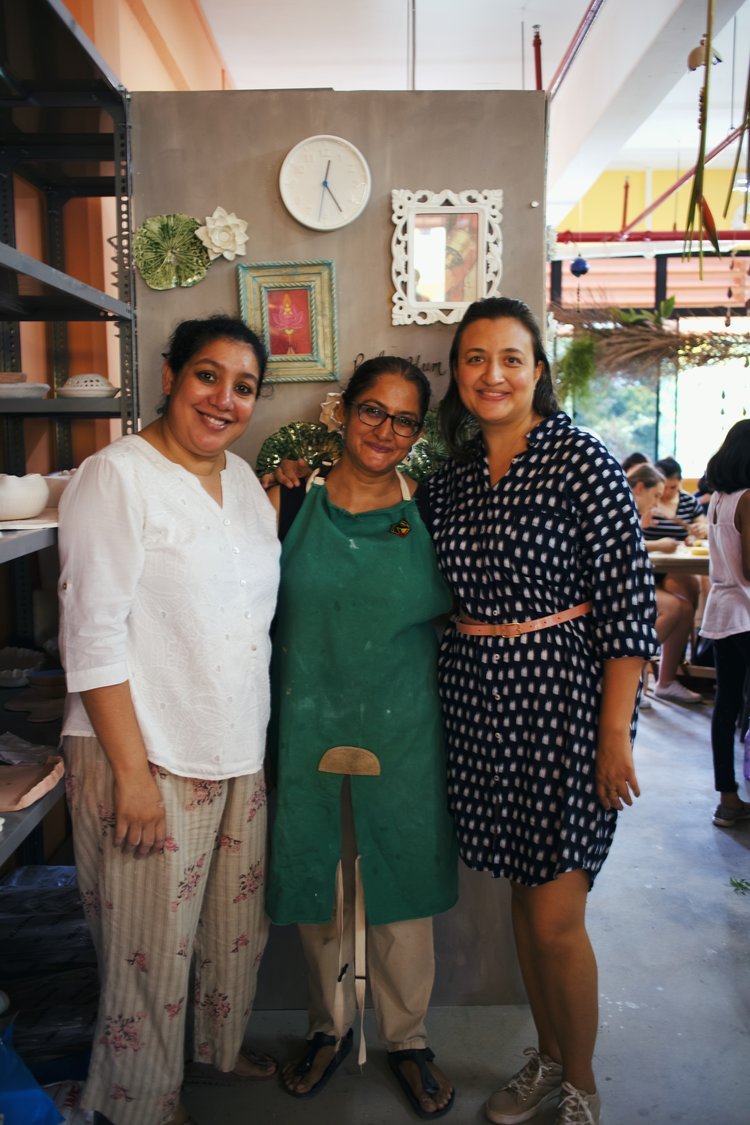
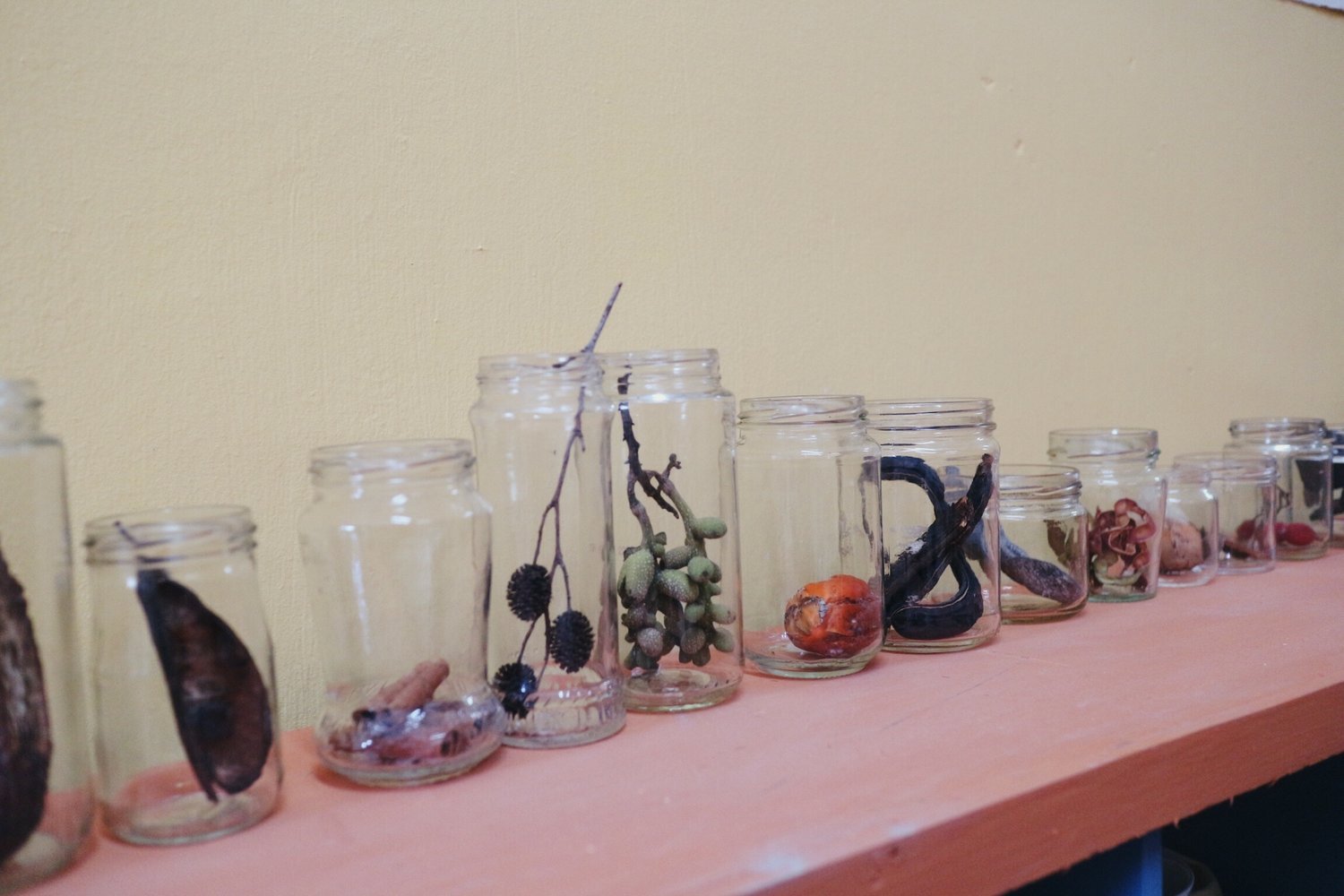
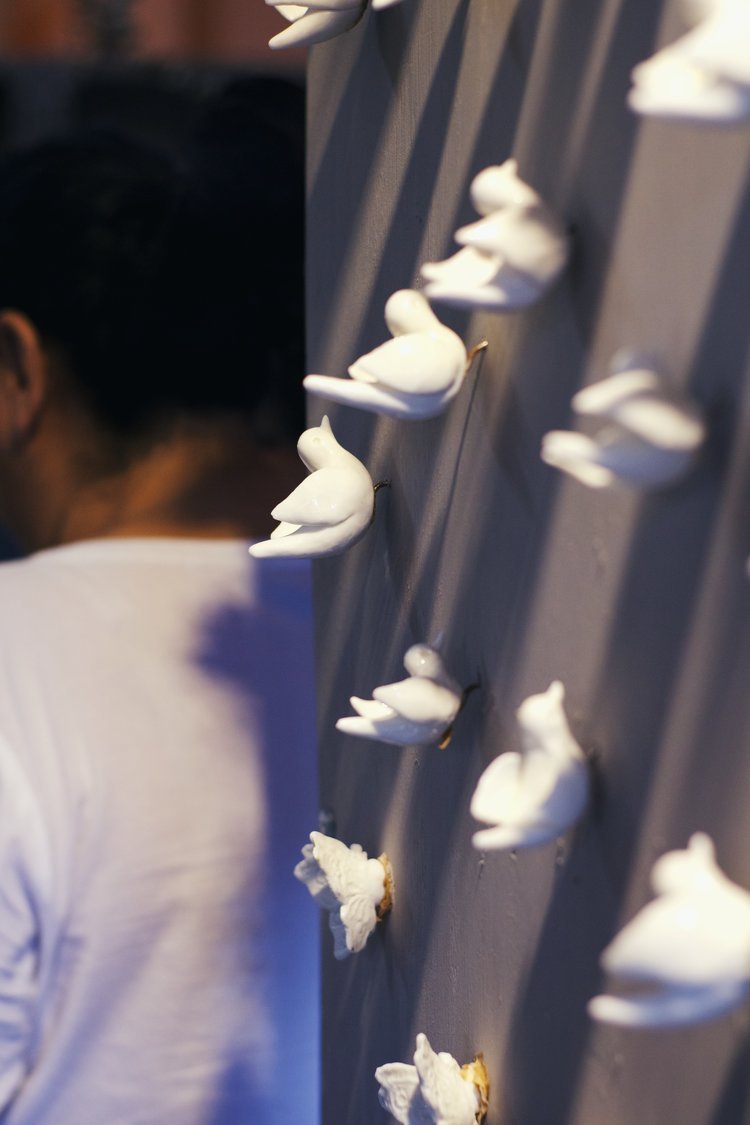
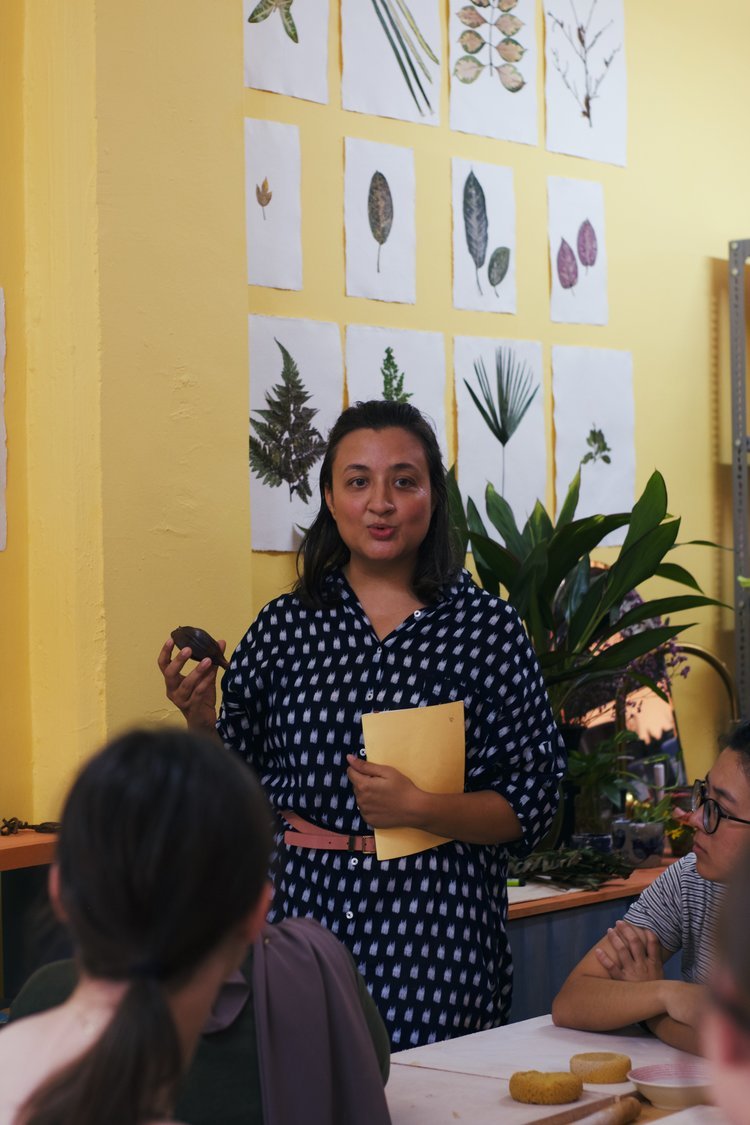
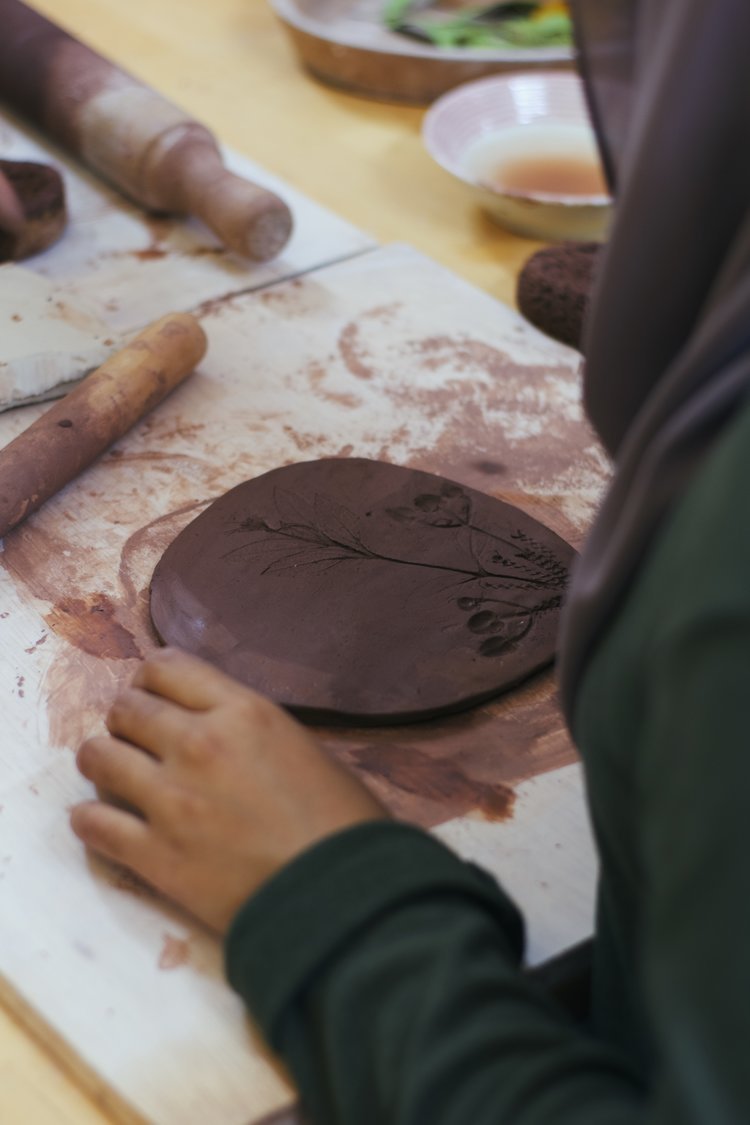
A clay tile making workshop celebrating humankind’s biophilia. The event was a collaboration with Padme Hum Clay Studio. Grounded created a site-specific installation to transform the space into a mini ‘Nature Design Museum’. The objective was to create an immersive sensorial experience and share the wonder of innovation in nature. The installation exhibited over 60 different samples of leaves and about 25 different seed varieties. Participants were encouraged to explore the complexities found in nature and use that as inspiration for their clay work.
