EPIC.png

This Is Epic

A curation of our design ideas and inspirations for houses in Goa, contemporary art and architecture.


Posts in Heritage
Kaavi Art of Goa: History, Symbolism, & Living Tradition

A Living Surface of Goa’s Sacred Architecture

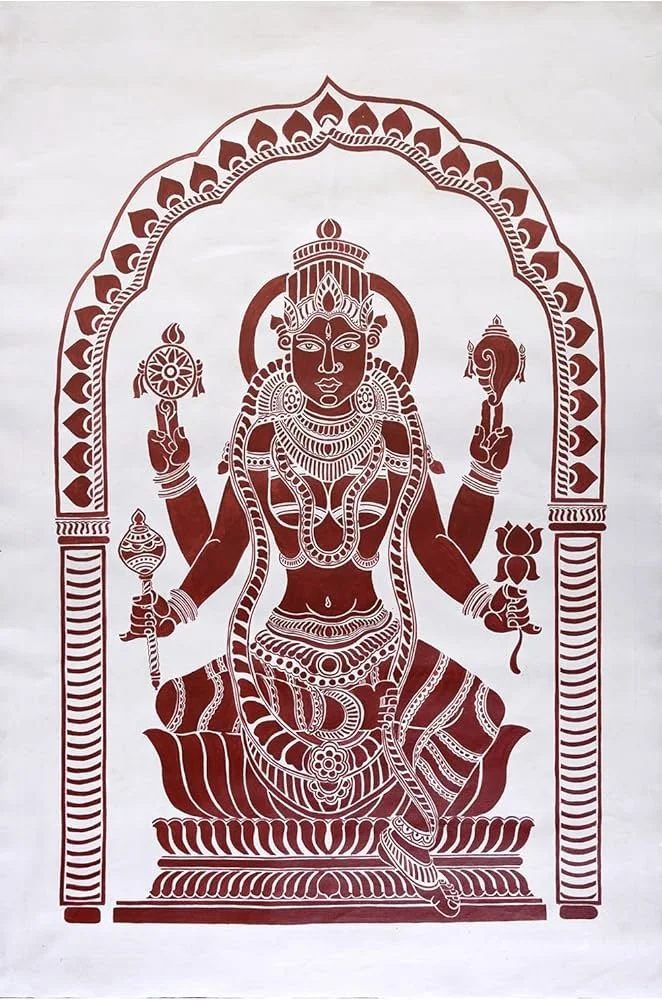
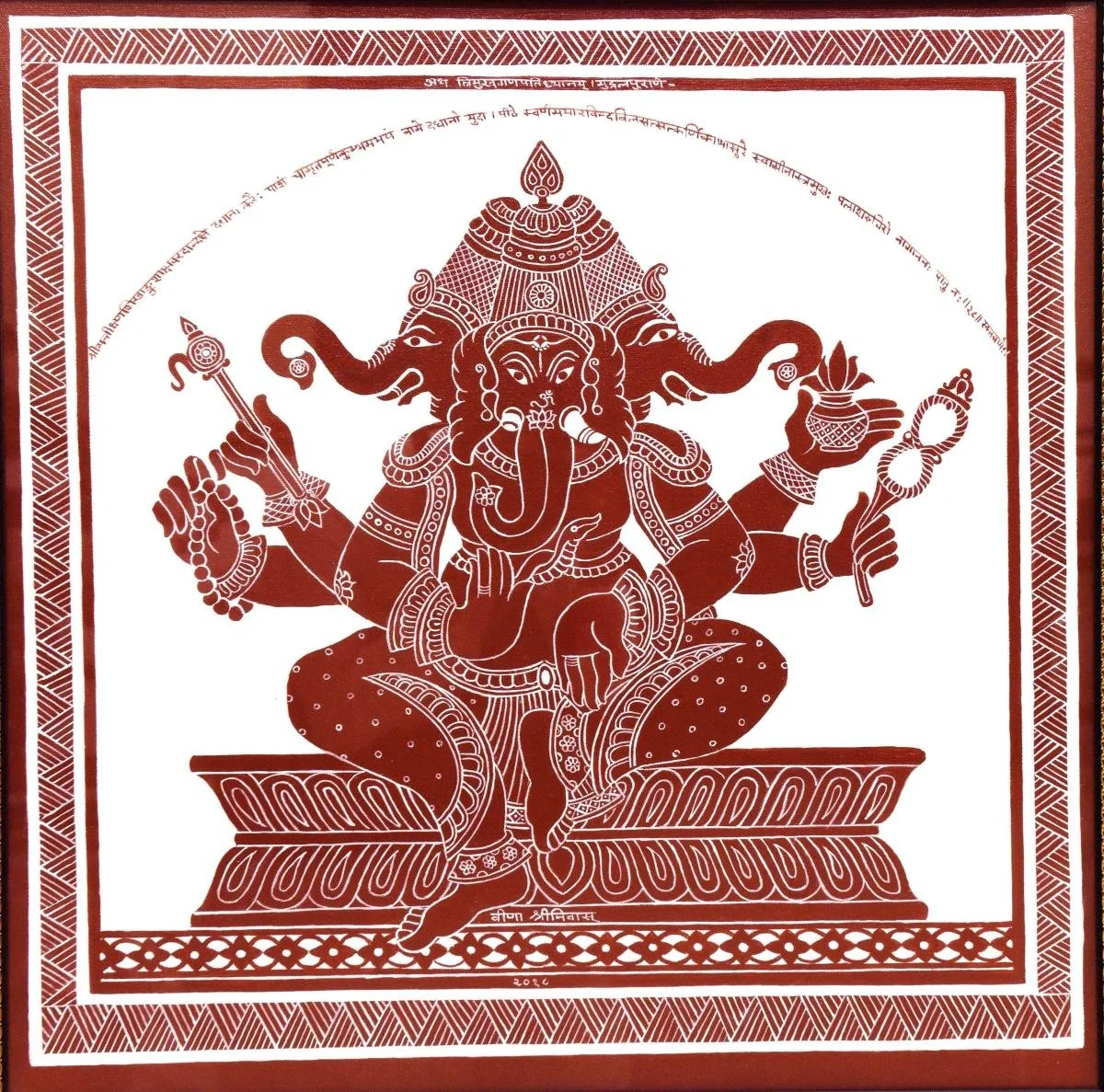
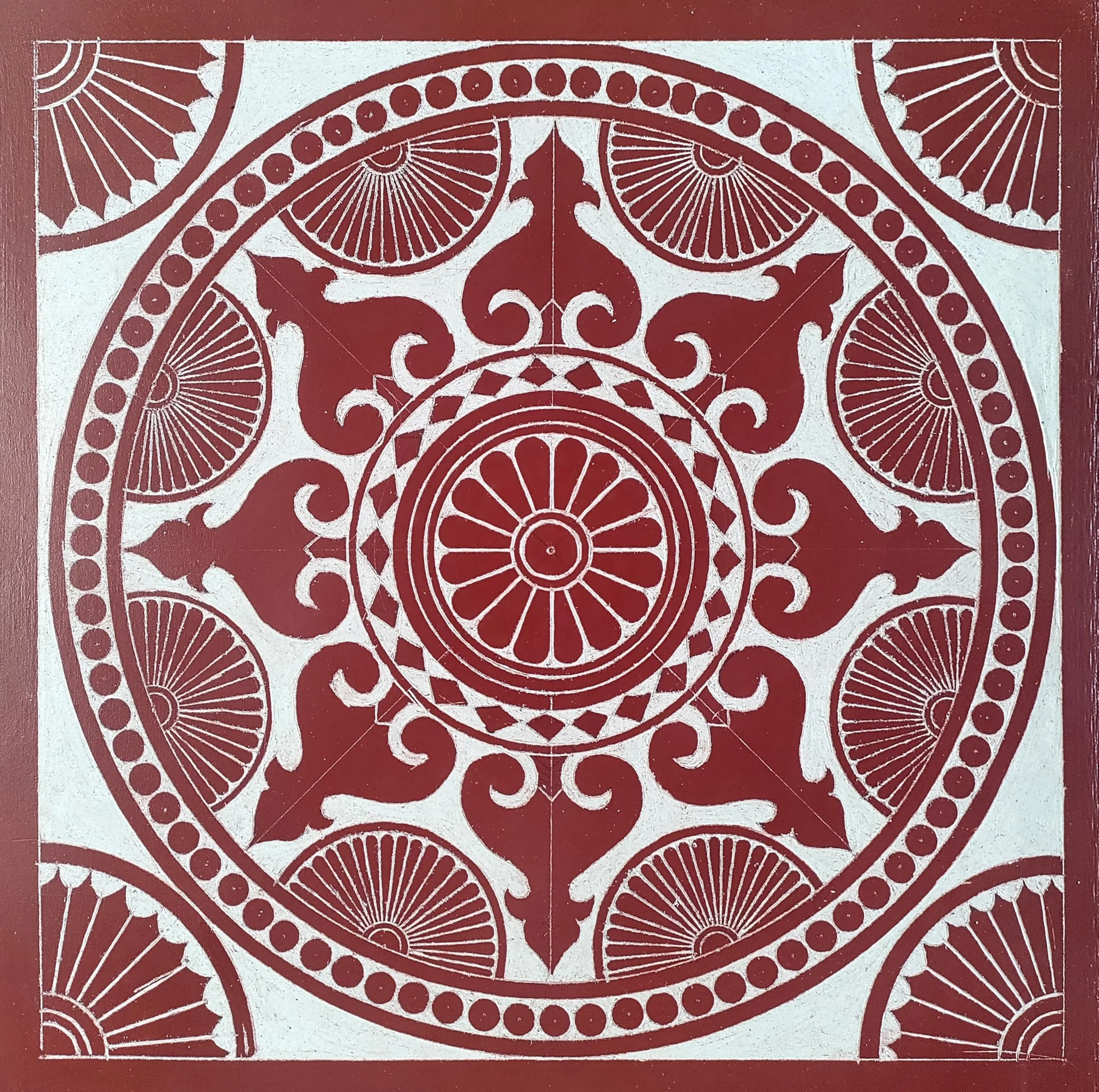
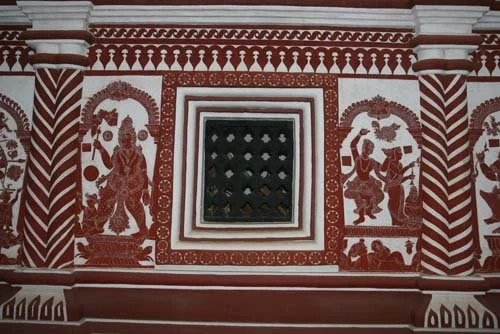
Across temples and traditional homes in Goa, one often encounters a striking visual language. Deep red surfaces emerge through crisp white patterns of flowers, geometry, and mythological symbols. This technique is known as Kaavi art, one of the region’s most distinctive decorative traditions.

Kaavi art is not simply ornamentation. It is a layered craft that combines architecture, material knowledge, ritual symbolism, and local mythology. Historically found on temple walls, prayer spaces, and occasionally residential architecture, Kaavi carries within it stories of place, belief, and craft traditions that evolved over centuries.

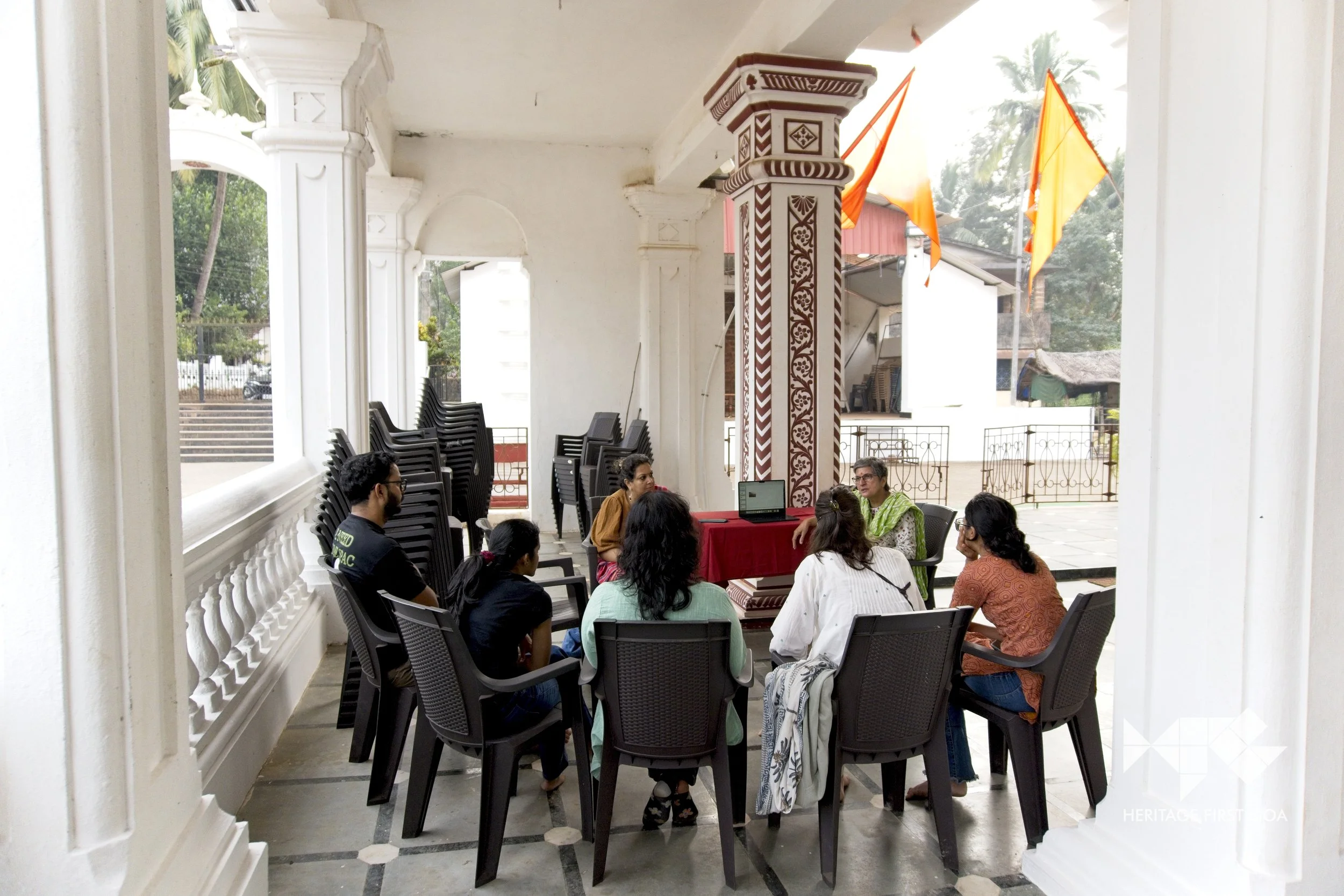
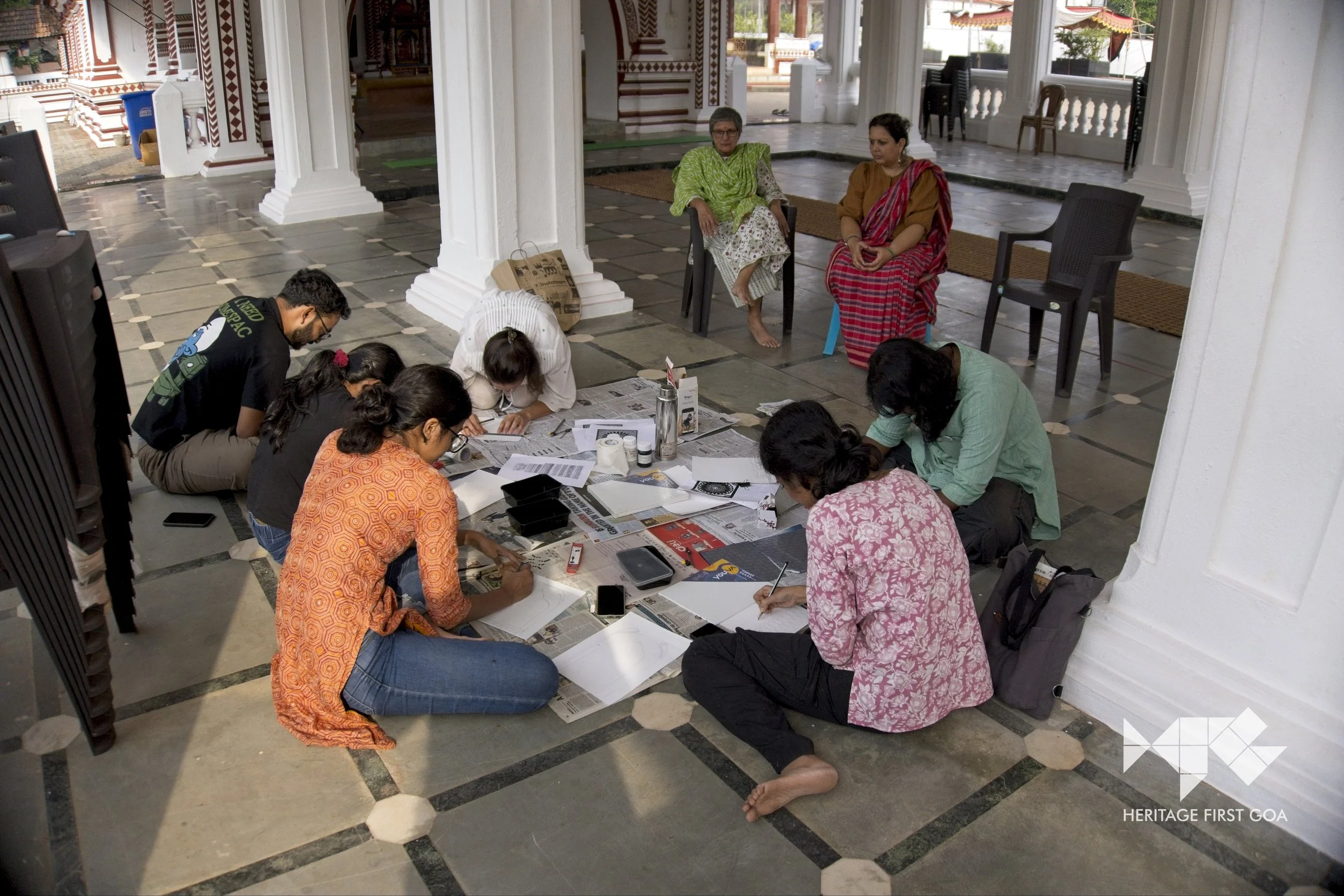
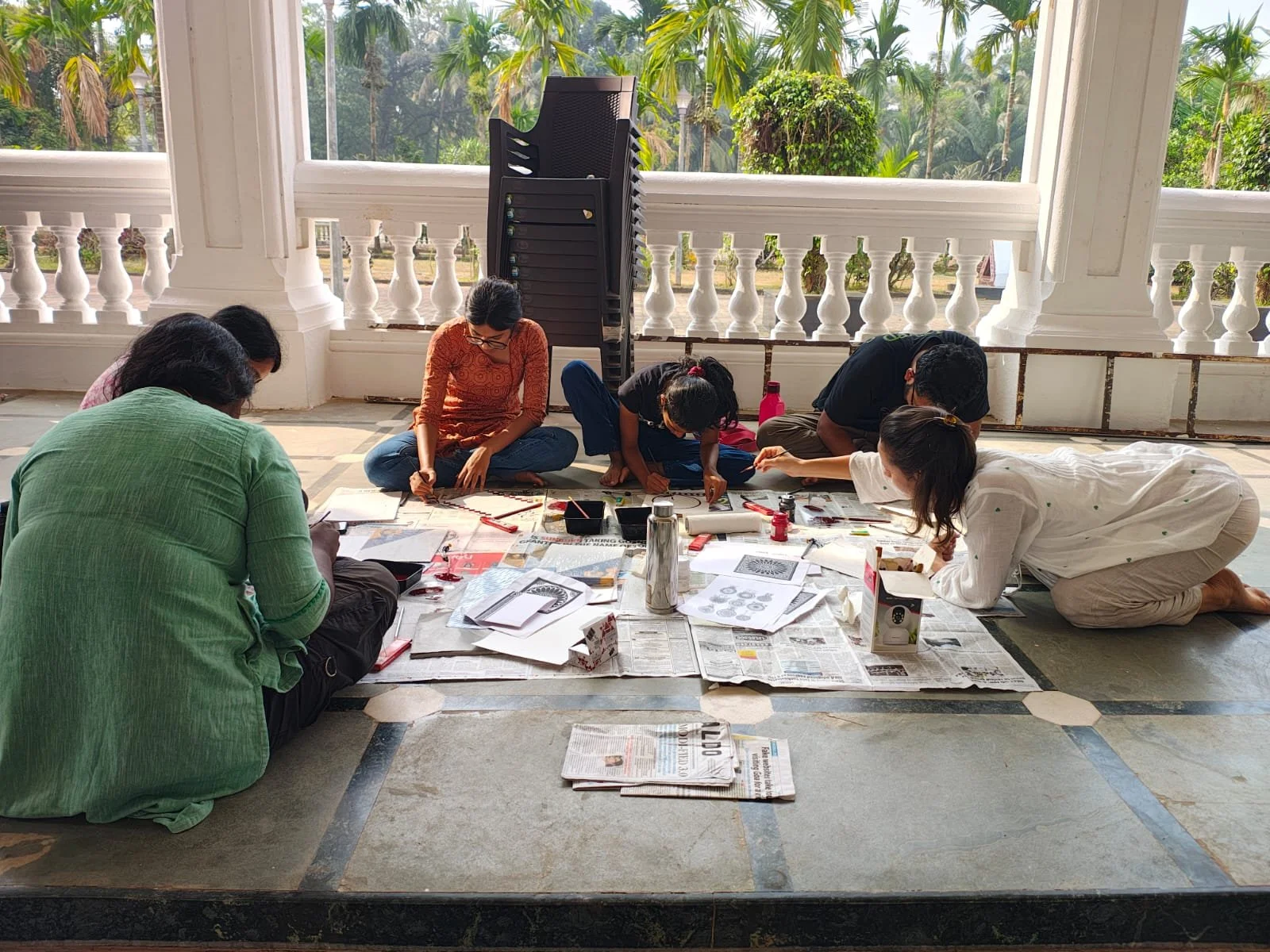
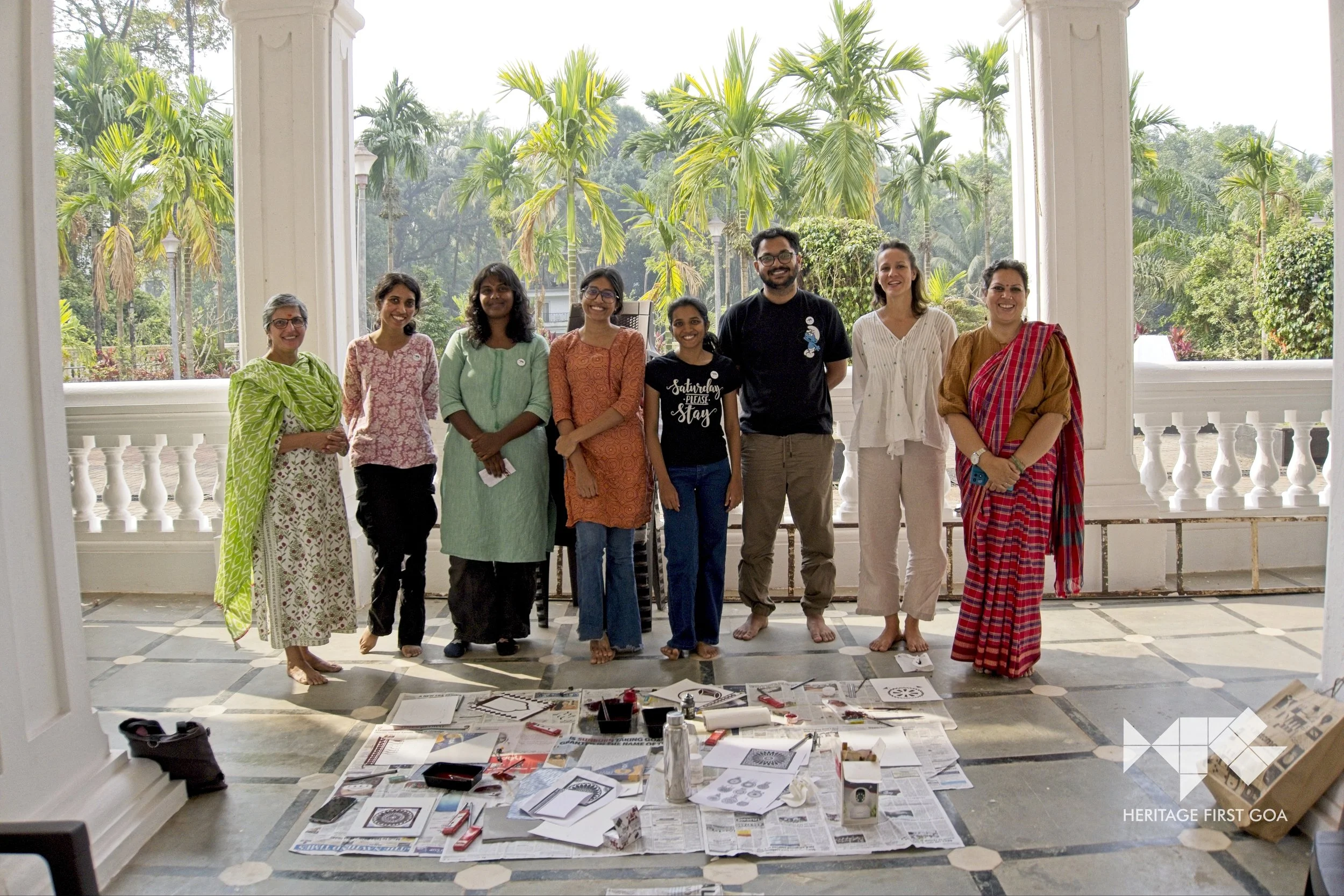
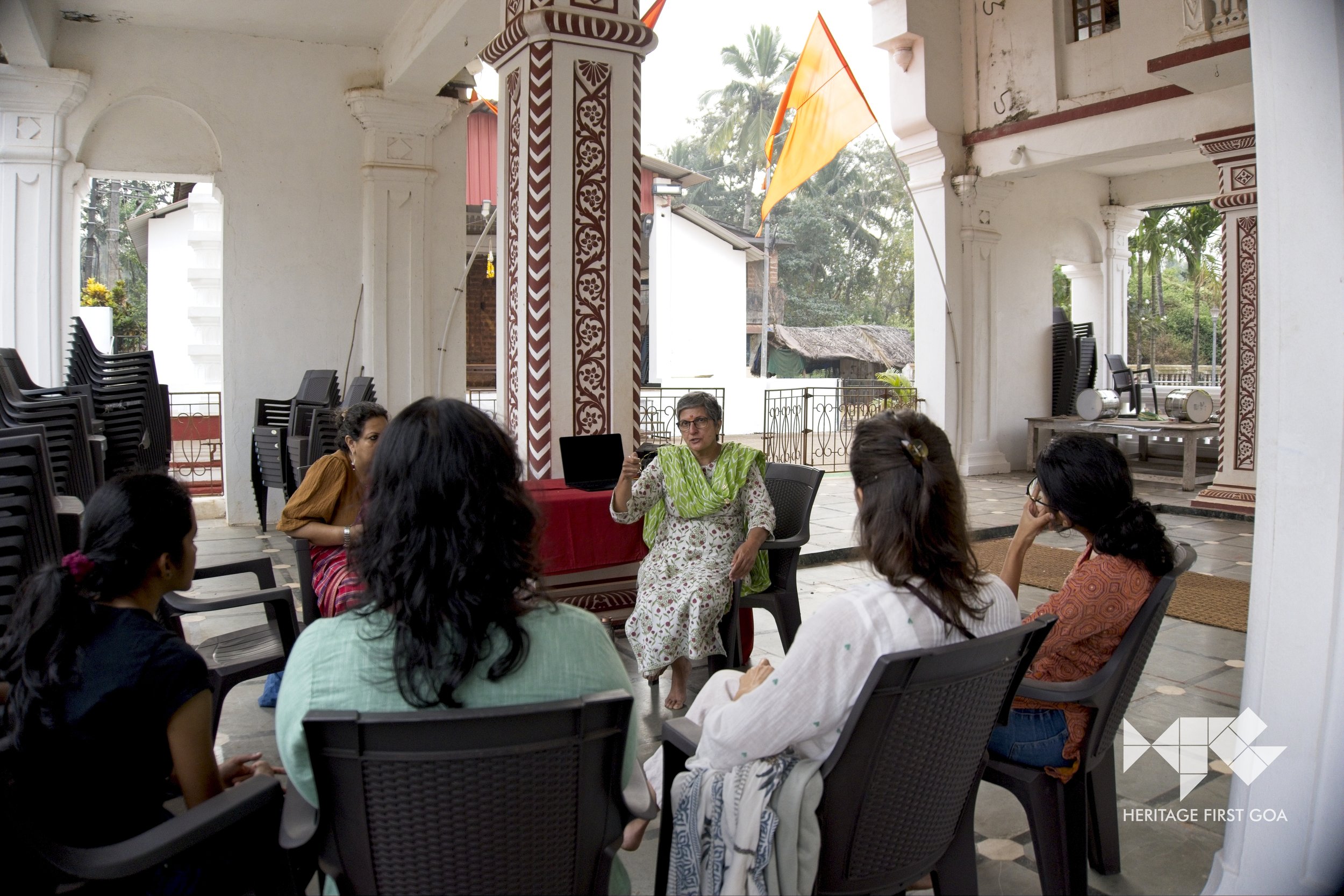
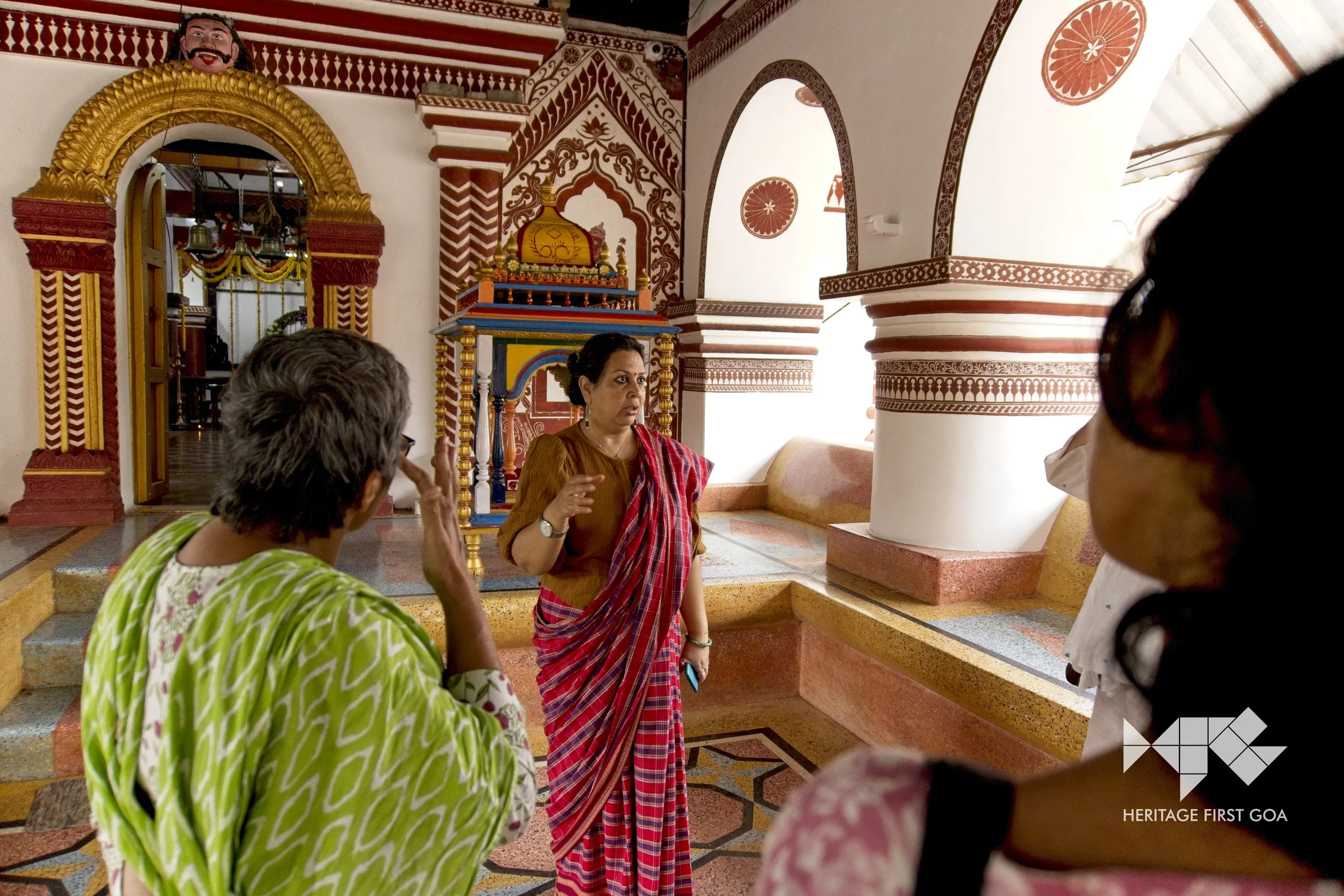
On 6 December 2025, a Kaavi art workshop organized by Heritage First Goa at Morjai Temple offered an opportunity to engage directly with this tradition. The workshop allowed participants to explore both the cultural context and the hands-on techniques that define Kaavi art.
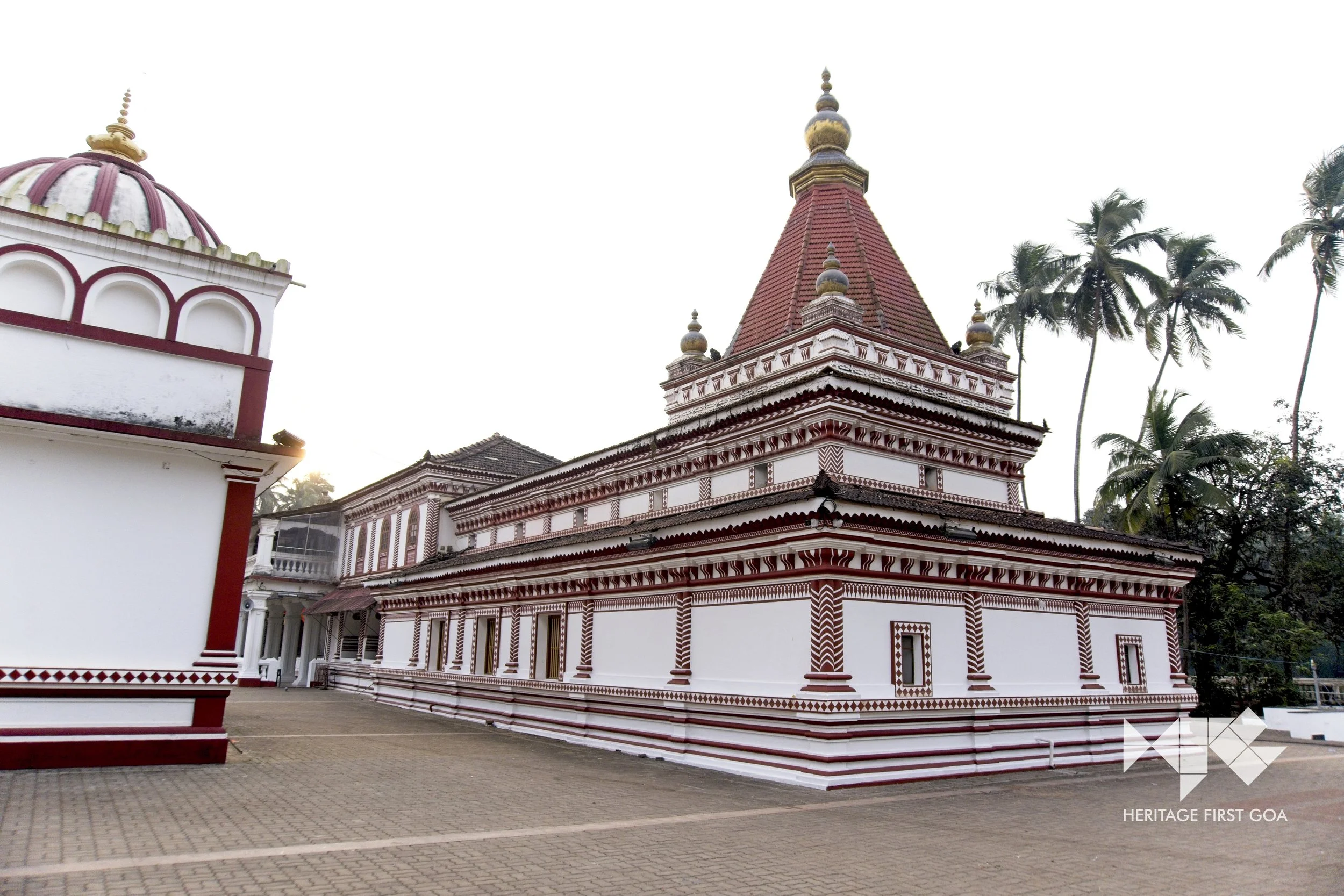
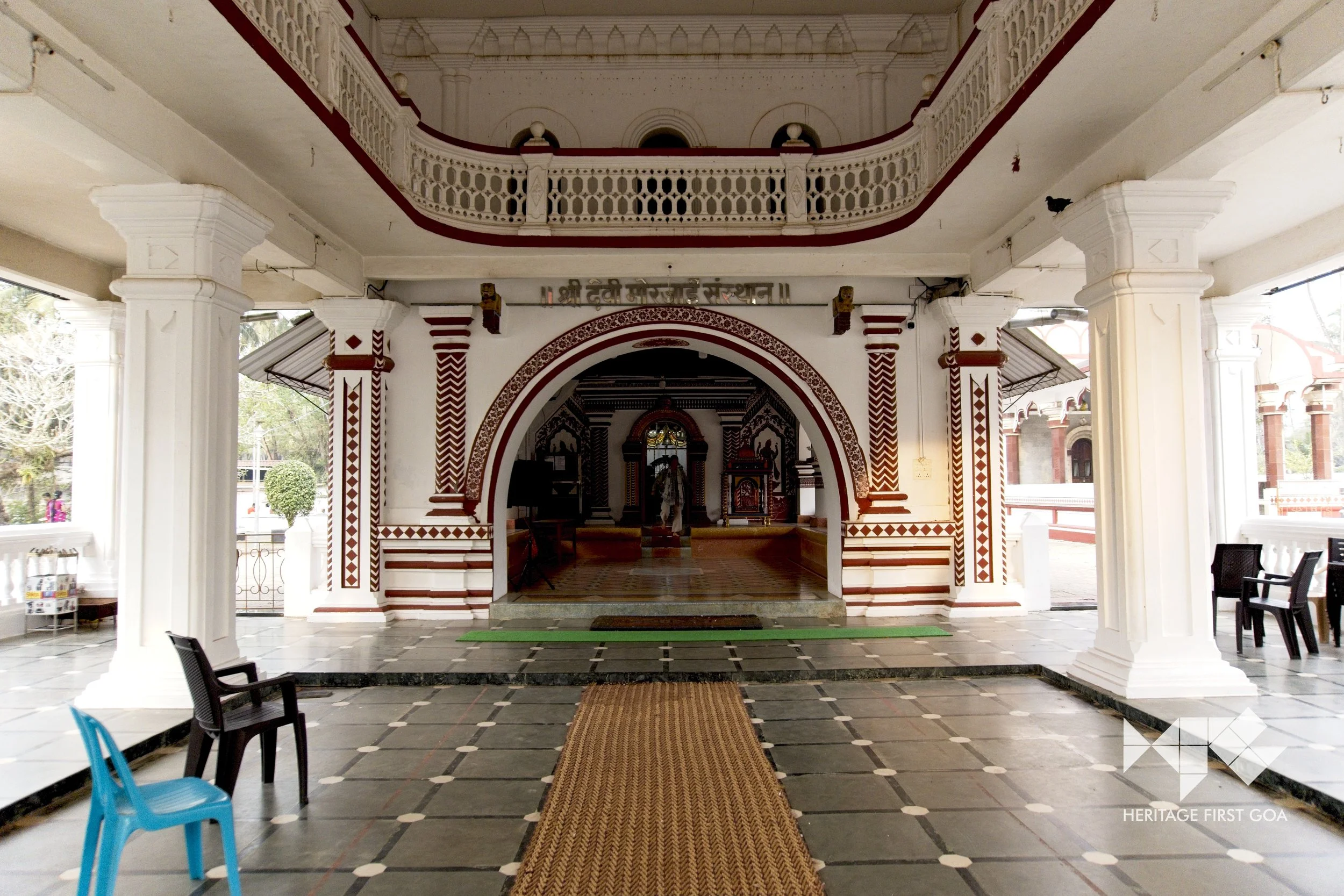
Morjai Temple, Morjim

The Story of the Seven Sisters

Several temples across Goa are tied together through the local mythology of the Seven Sisters, a group of goddesses believed to have once lived together before establishing their own sacred spaces across the region. Over time, each sister came to be worshipped in a different temple, forming a network of shrines that are culturally and spiritually connected.

Morjai is regarded as one of these sisters.

According to local narratives, the sisters eventually chose their own territories, where they became guardians of the surrounding communities. These temples grew into important social and cultural centers for nearby villages, hosting rituals, festivals, and gatherings that continue to shape community life today.

Within such sacred spaces, decorative traditions like Kaavi art take on deeper meaning. The motifs and patterns are not only ornamental but also part of the visual language of devotion. At Morjai Temple, this layered relationship between mythology, architecture, and craft becomes particularly visible, where the built environment reflects both belief and artistic tradition.
Understanding the Red in Kaavi Art

One of the defining features of Kaavi art is its intense red background.

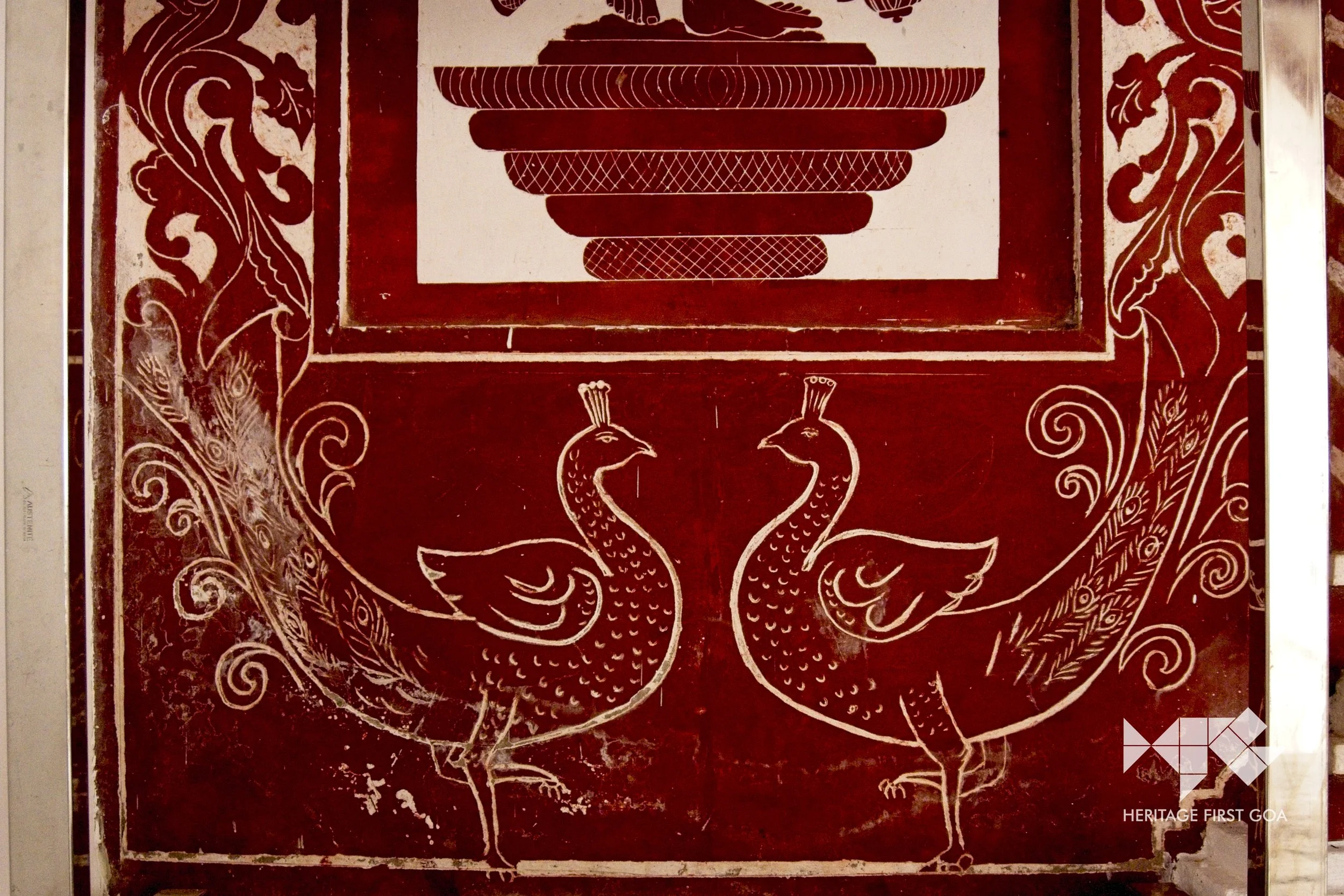
The colour comes from red ochre pigment, traditionally derived from locally available lateritic soils. Goa’s laterite-rich landscape naturally lends itself to this palette. The red surface is not painted in a superficial sense. Instead it forms part of the layered lime plaster system used on the wall.

In traditional practice, a layer of lime plaster is mixed with red ochre pigment. While the plaster remains moist, artisans carve or scrape patterns into the surface to reveal the white lime beneath. This process creates the characteristic contrast of white motifs emerging from a red field.

The red colour carries several associations. It connects to the earth, to laterite stone, and to ritual symbolism where red often represents fertility, strength, and protection. In temple architecture the colour also visually anchors the building to its landscape.
The Craft and Process of Kaavi Art

Kaavi art is defined as much by its process as by its visual outcome.

The traditional technique involves several stages:
1. Lime plaster preparation
A smooth plaster surface is prepared using lime and sand mixtures. The quality of the plaster determines the clarity of the carved patterns.
2. Red ochre layer
A layer of lime mixed with red pigment is applied over the plaster.
3. Pattern tracing
Designs are marked onto the surface using stencils, charcoal, or freehand drawing.
4. Scratching or carving
Artisans carefully scrape away sections of the red layer using metal tools. This reveals the white lime base beneath.

The result is a relief-like graphic surface where motifs appear crisp and precise.

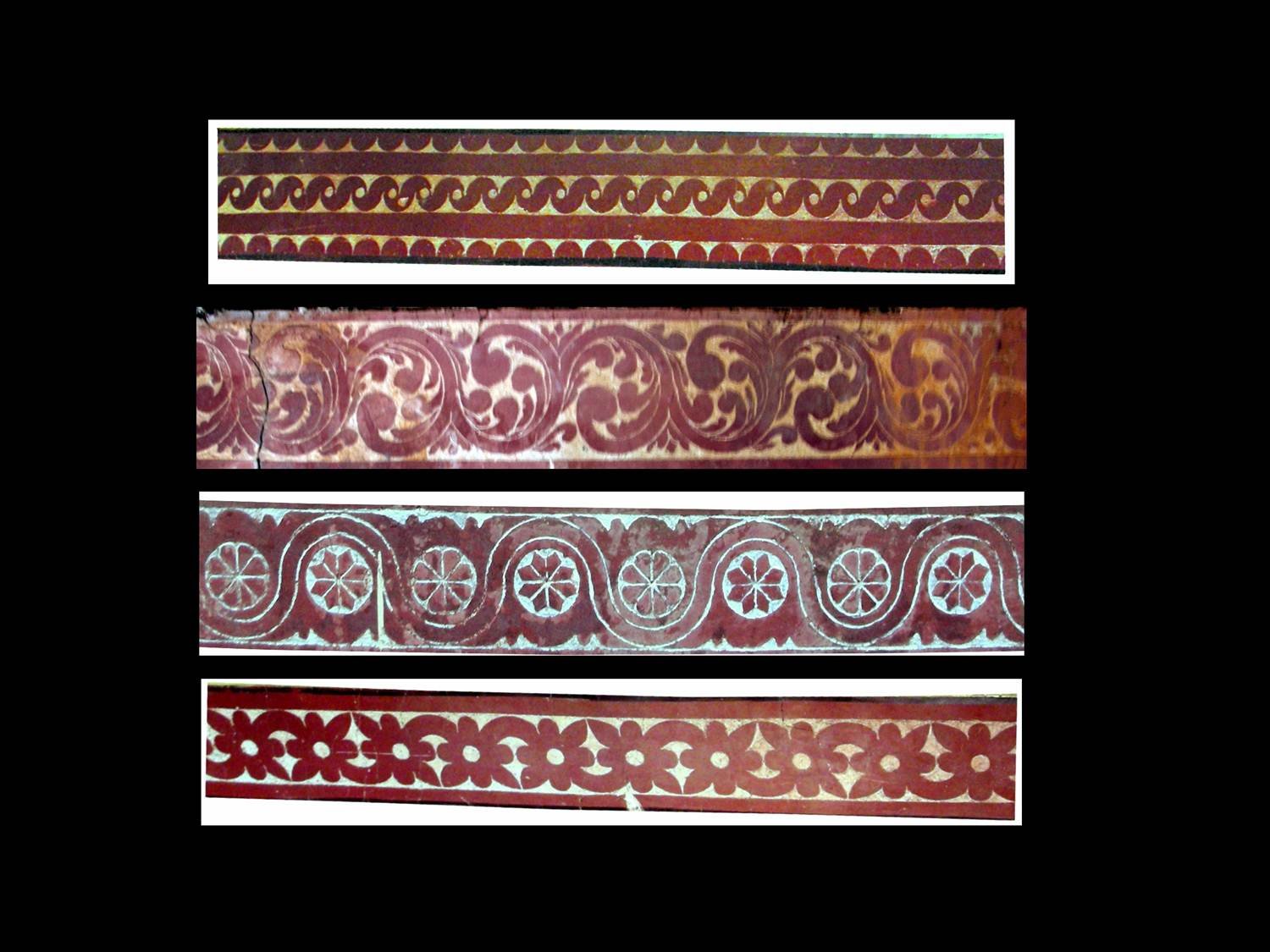
Common motifs include floral patterns, mythological symbols, sacred geometry, and decorative borders. Many patterns carry influences from both local Hindu temple traditions and broader decorative languages that traveled along the western coast through centuries of trade and cultural exchange.
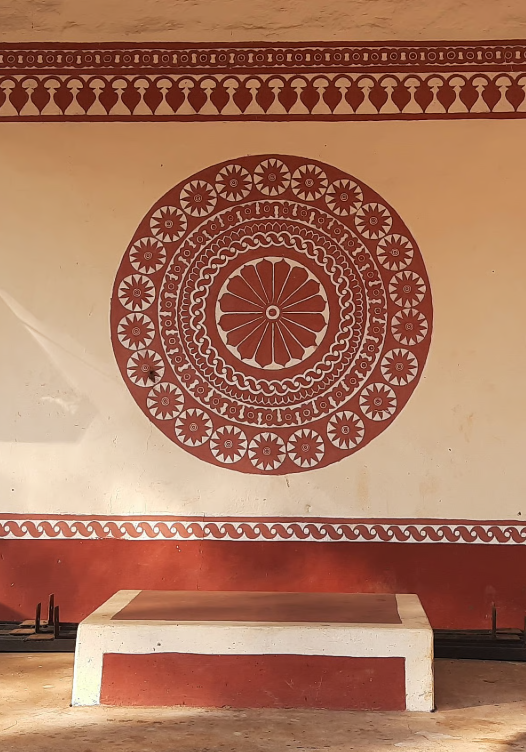
Image from Gomantak Times

Evolution of Kaavi Art

Over time Kaavi art has evolved in response to changes in architecture and material practices.

Originally associated primarily with temple architecture, the technique gradually appeared in residential and Indo-Portuguese buildings as decorative panels or borders. The craft also adapted to different scales. Large narrative panels coexisted with smaller repetitive motifs used along plinths, niches, and verandahs.

However, with the rise of modern cement-based construction, traditional lime techniques began to decline. Cement surfaces do not allow the same carving process that Kaavi requires. As a result, many existing Kaavi surfaces today survive primarily in historic temples and older homes.

Recent conservation efforts and workshops have begun to revive interest in the craft, encouraging architects, artisans, and heritage practitioners to understand the material knowledge behind it.
Learning Through Making: The Workshop Experience

The Kaavi art workshop organized by Heritage First Goa at Morjai Temple was designed to make this tradition accessible through practice.

Participants were provided with materials that allowed them to experiment with the visual language of Kaavi. The workshop kits included canvas boards, pigments, brushes, stamps, templates, and carbon tracing paper.

Using these tools, participants traced motifs, built compositions, and filled surfaces with the characteristic red and white palette associated with Kaavi art. The process revealed how much patience and control is required to create balanced patterns.

Even within a simplified workshop format, the exercise offered insight into the depth of the craft. Each motif demanded careful alignment, steady handwork, and attention to rhythm within the composition.

More importantly, the workshop created a space to understand Kaavi art not as a static heritage object but as a living practice.
Why Traditions Like Kaavi Matter Today

Kaavi art sits at the intersection of architecture, craft, and community memory. It reflects how local materials, devotional practices, and artistic expression come together on the surface of buildings.

For architects and designers working in Goa today, studying Kaavi art offers more than aesthetic inspiration. It reveals a deeper understanding of lime construction, local pigments, climatic adaptation, and cultural symbolism embedded in traditional architecture.

Workshops such as the one conducted at Morjai Temple help keep these conversations alive. By learning the techniques and histories behind Kaavi, participants gain a renewed appreciation for the craft traditions that shape the architectural identity of Goa.

In many ways, the red surfaces of Kaavi art continue to tell stories. They speak of earth, ritual, patience, and the quiet skill of artisans who transformed plaster walls into enduring works of art.

Text by V V Kusum Priya
Photographs sourced from Heritage First Goa unless specified


Old Goa Heritage Walk with Noah Fernandes

Old Goa is a place where time either stands still or carries you elsewhere entirely. Walking through its avenues and ruins feels like a quiet teleportation into another world, one shaped by centuries of faith, belief, myths, hymns, power, and artistry. At moments it resembles stepping into a fragment of old European architecture, yet it remains distinctly Goan in spirit. Team Grounded experienced this magic firsthand on a heritage walk guided by the engaging and insightful Noah Fernandes. It was not just a walk but an immersion into stories carved in stone.

Our Lady of Rosary Church

We began at the Our Lady of Rosary Church, perched quietly on the Holy Hill. It’s simple laterite façade does not boast the grandeur of some of Old Goa’s other monuments, yet it holds deep significance. It is one of the oldest surviving churches in Goa, a silent witness to the early years of Portuguese conquest and settlement. Standing there, we felt the weight of beginnings, not just of a building, but of a whole era.

As architects, we were struck by how restraint in design can hold more power than ornament. In a world where façades often compete for attention, the Rosary’s simplicity commanded stillness and reverence.

Santa Monica Church

Whispers of Grandeur

From there, we walked to the Santa Monica Church, once Asia’s largest convent. The scale of the structure was overwhelming, yet within its aged walls lingered stories of faith, discipline, and devotion. Noah spoke of the nuns who lived cloistered lives here, shaping a religious culture that extended far beyond Goa. Even in its quiet decay, Santa Monica felt alive, as though its history still resonated through the silence.

Within the Convent of Santa Monica stands the Museum of Christian Art, a remarkable institution that preserves and celebrates the fusion of Indian craftsmanship with Christian themes. Established inside the Convent, the museum holds exquisite works of sculpture, paintings, textiles, and liturgical objects that reflect how local artisans reinterpreted European styles through their own traditions. What struck us most is how unique the museum feels, not only because it houses an extraordinary collection of Indo-Portuguese art, but because of the way it is integrated into the convent itself. MoCA is not just a repository of objects; it acts as a living bridge between worlds of art and devotion.

Through its carefully curated displays, it reveals how local Goan artisans reimagined Christian themes with Indian materials and techniques, creating a body of work that is both global and rooted in place. But beyond its collection, MoCA opens its doors to the community in meaningful ways - through workshops, lectures, heritage walks, and educational programs that invite the public to engage with history on a personal level. In doing so, it transforms art from something to be observed into something to be experienced, keeping the dialogue between past and present very much alive.

We felt the tension of a cultural transplant: European forms re-rooted in a tropical climate. Architecture absorbs the context it inhabits, and here, the marriage of style and environment was palpable.

St. Francis of Assisi

Where Cultures Met

Next was the St. Francis of Assisi Church, a place where the Portuguese Manueline style meets Goan artistry. The gilded altars, the intricate frescoes, and the detailing in every corner spoke of craftsmanship born of both European and Indian hands. It was here that the idea of Goa as a cultural crossroads truly struck us - a place where traditions didn’t just coexist but merged into something new and enduring.

Se Cathedral

Awe in Stone

Nothing quite prepares you for the sheer scale of the Se Cathedral. Its towering façade, its soaring ceilings, and the famed Golden Bell all commanded reverence. As Noah recounted its history, dedicated to St. Catherine and built over nearly a century, we could not help but feel humbled by its presence. It was more than architecture. It was a statement of faith and power carved in stone.

In contrast to human-scaled villages, this grandeur reflected colonial ambition. Today, oversized architecture often feels impersonal, but here scale carried the weight of history and conquest.

St. Cajetan Church -

A Grand Finale

Our walk concluded at the St. Cajetan Church, a Baroque gem inspired by Rome’s St. Peter’s Basilica. With its Corinthian columns, intricate altars, and harmonious proportions, it stood as a reminder that even in Goa, thousands of miles away from Europe, echoes of the Renaissance found a home. It was a fitting finale, graceful, elegant and full of presence.

This imitation does not mimic but transforms through material, climate, and context. Unlike replicas in global cities, here the architecture becomes distinctly Goan.

Reflections Beyond the Walk

Looking back, what made the walk so memorable was not only the grandeur of the churches but the way Noah wove history into lived experience. His storytelling connected stone to soul, helping us see Old Goa not as a collection of monuments, but as a living story of faith, power, art, and resilience.

For us at Grounded, it was a reminder that history isn’t just about the past. It is about how we carry it forward, how it shapes our spaces, our culture, and even the way we see ourselves. We ended our walk under the graceful arches of St. Cajetan’s with a quiet sense of gratitude for the heritage, for stories, and for the chance to walk through history together.


Noah Fernandes is a Conservation Architect, presently working as Assistant Professor at Goa College of Architecture. He has been conducting heritage walks of the Holy Hill in Old Goa since 2013. He has studied and documented the cultural landscape along the River Mandovi during his Masters in Architectural Conservation from the School of Planning and Architecture, New Delhi.

Text by V V Kusum Priya (@the.paper.city)
Photographs by Sanjeet Wahi and Arshita Mehta

Delhi’s living history at Humayun’s Tomb and Mehrauli Archaeological Park

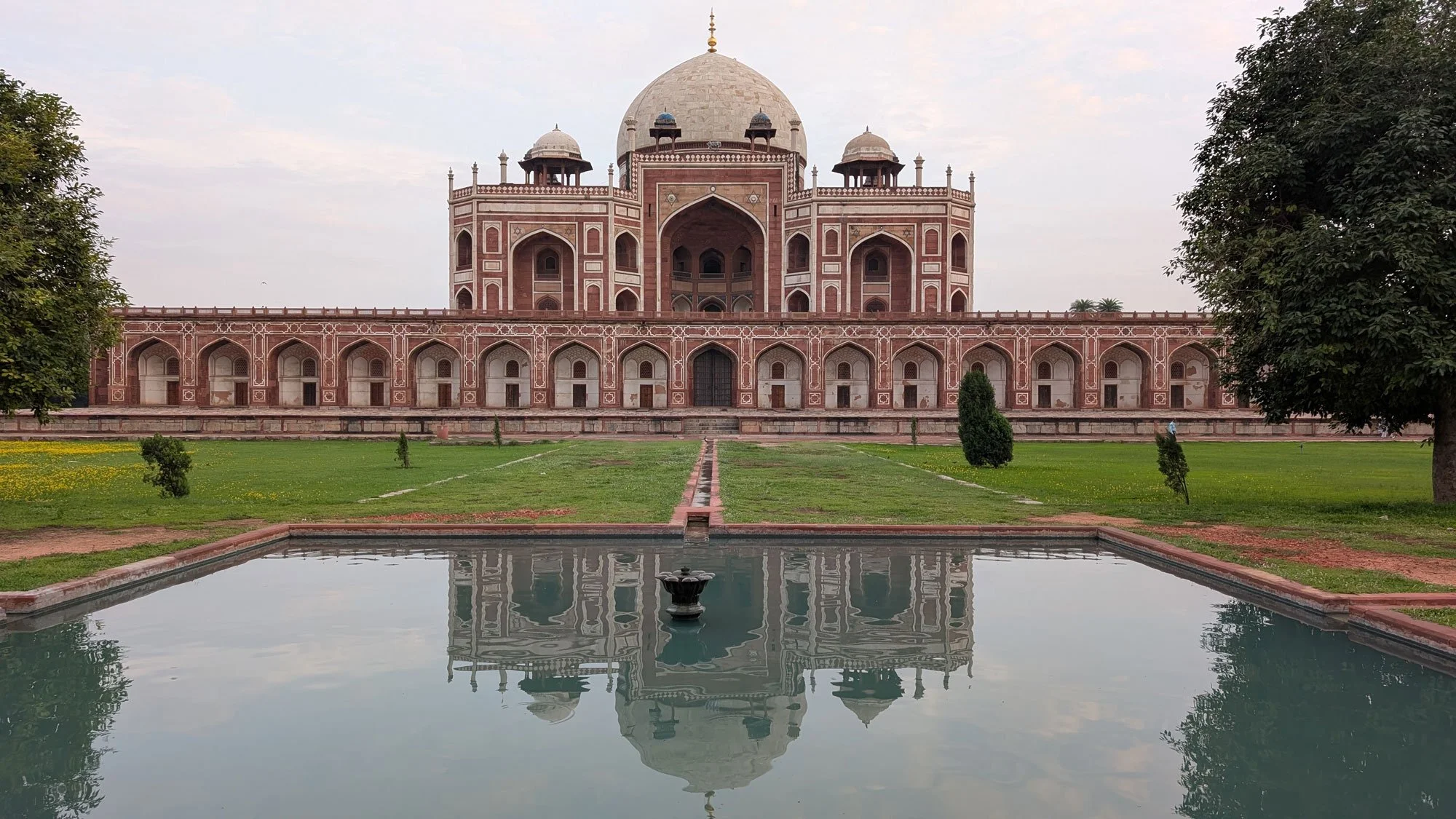
Humayun's Tomb located in Nizamuddin East, Delhi

This summer in Delhi felt a little different. Anjali (our founder), who grew up and studied in the city, wanted her children (9 & 5 years old) to experience the Delhi she has always cherished. For her, Delhi was never just a capital but a living museum of history that has hosted a multitude of kingdoms and settlements over the past. Growing up and studying architecture amidst this historical backdrop became an integral part of her training as an architect. They shaped her sensitivity to context, to time, and to the layers that make a place meaningful. It is interesting that history best leaves its marks through its architecture. Anjali finds it fascinating to imagine the day-to-day life as lived in the historical spaces, the use of material, interaction of light and wind (pre-air conditioning days), role of water and landscaping.

On this summer visit to her kid’s nani’s (grandmother) house, she felt it was time for her children to discover the city in the way she once knew it. She wanted them to see Delhi not as a busy, overwhelming metropolis, but as a place where history and memory come alive in unexpected corners.

Together with Intekhab Alam, a conservation architect, we curated two heritage walks - through Humayun’s Tomb complex and the Mehrauli Archaeological Park. The choice of the two sites was interesting, first due to their current state. The Humayun’s Tomb is a UNESCO World Heritage Site and has been pristinely restored with a new museum on-site and the addition of Sundar Nagar Nursery with its collection of secondary monuments that add a lot of new acreage to the property. While, the Mehrauli Archeological Park seems forgotten in comparison and still retains a ruiness quality that gives the site a heightened romanticism that is prized by creative individuals. The Mehrauli Archeological Park is owned and managed in part by various entities like the DDA, ASI, etc. Each has their own method of addressing ‘heritage’ and that results in varying experiences through the Park. Historically, both complexes were popular sites for construction of important buildings throughout the medieval period and house monuments from various periods beginning in the 11th and 12th Century AD. The reason interestingly would be their proximity to the Dargah of Sufi saints, Nizamuddin Auliya in the case of Humayun’s Tomb and the Dargah of Hazrat Qutubuddin Bhaktiyar in the former.

The new museum at the Humayun’s Tomb offered a well-curated, air-conditioned pause that felt especially welcome in the Delhi heat. The Sunder Nursery area nearby, with its extended opening hours, made us reflect on how tropical countries like ours should rethink attraction timings. Why restrict them to rigid 9–5 slots? Evening hours, when the sun softens and the air cools, allow for experiences that are gentler, more enjoyable, and more memorable.

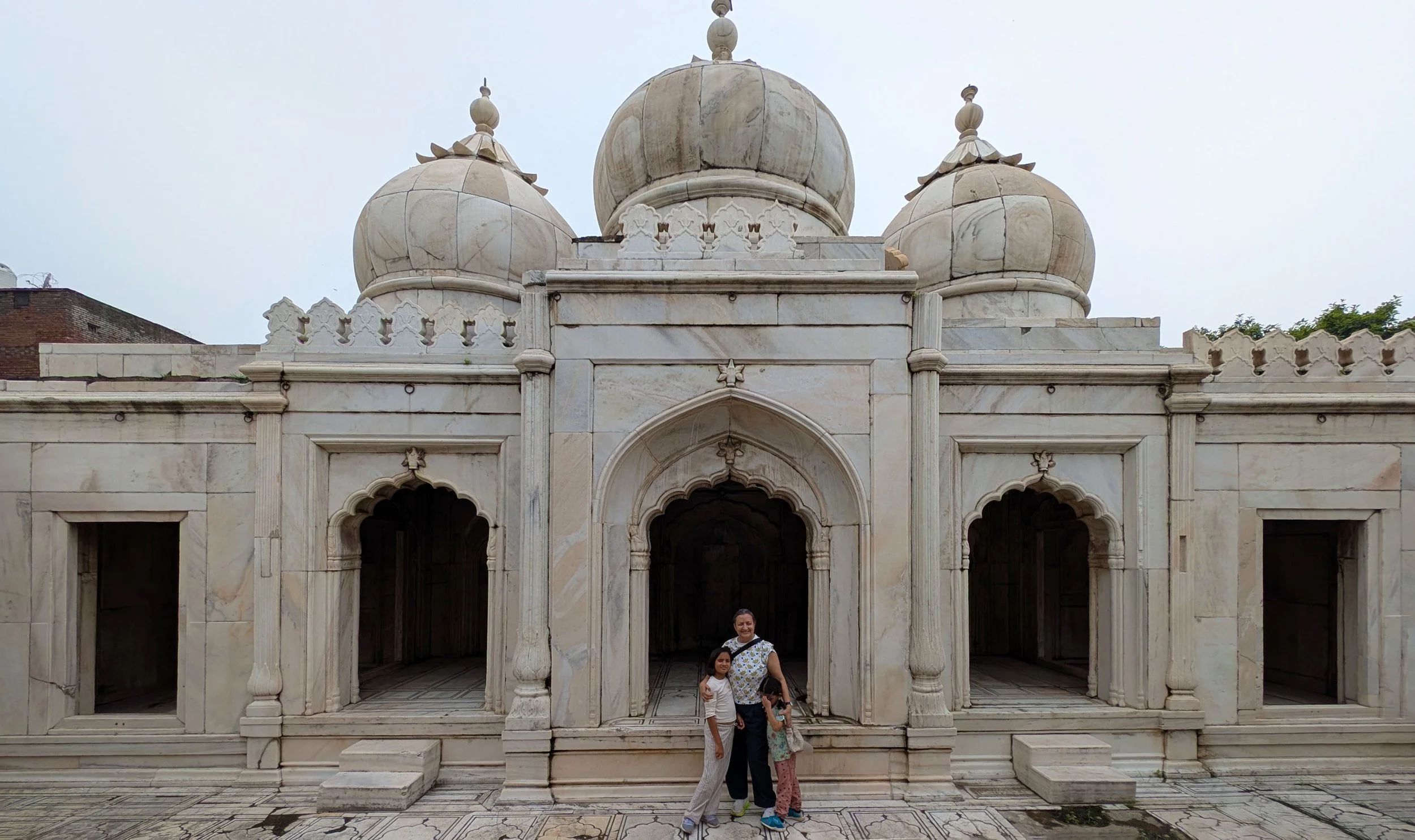
Moti Masjid (Mehrauli) - a gorgeous gem in the middle of a chaotic development

Intekab knows these monuments like the back of his hand, and took us through the labyrinth streets of the Mehrauli settlement to experience a real gem, the Zafar Mahal. Originally built as a palace where the Mughal royals would stay during their visits to the nearby durgah, this was where the British kept Bahadur Shah Zafar imprisoned after the revolt of 1857. The Palace structure is sadly in a ruiness state at present and devoid of any measures to protect it from further deterioration. That said, Anjali notes that she loves ruins and finds them romantic. One can still easily identify the courtyards, covered colonnades and airy upstairs quarters with balconies and dainty columns and arches, promising the splendor of its past. Setting aside romance though, the palace is being encroached from all directions by the surrounding settlement, a common problem with several monuments in Delhi and not an easy one to solve.

For us, these walks were less about monuments and more about perspective. They were about seeing how Delhi, in all its layers, still speaks through water, through ruins, through birdsong, through spaces that have held lives for centuries. And for Anjali’s children, it was perhaps the beginning of their own relationship with the city’s timelessness.

Vickram and Anjali Mangalgiri with conservation architect, Intekhab Alam


Photographs were taken by Anjali and Vickram Mangalgiri
Text written by V V Kusum Priya and Anjali Mangalgiri